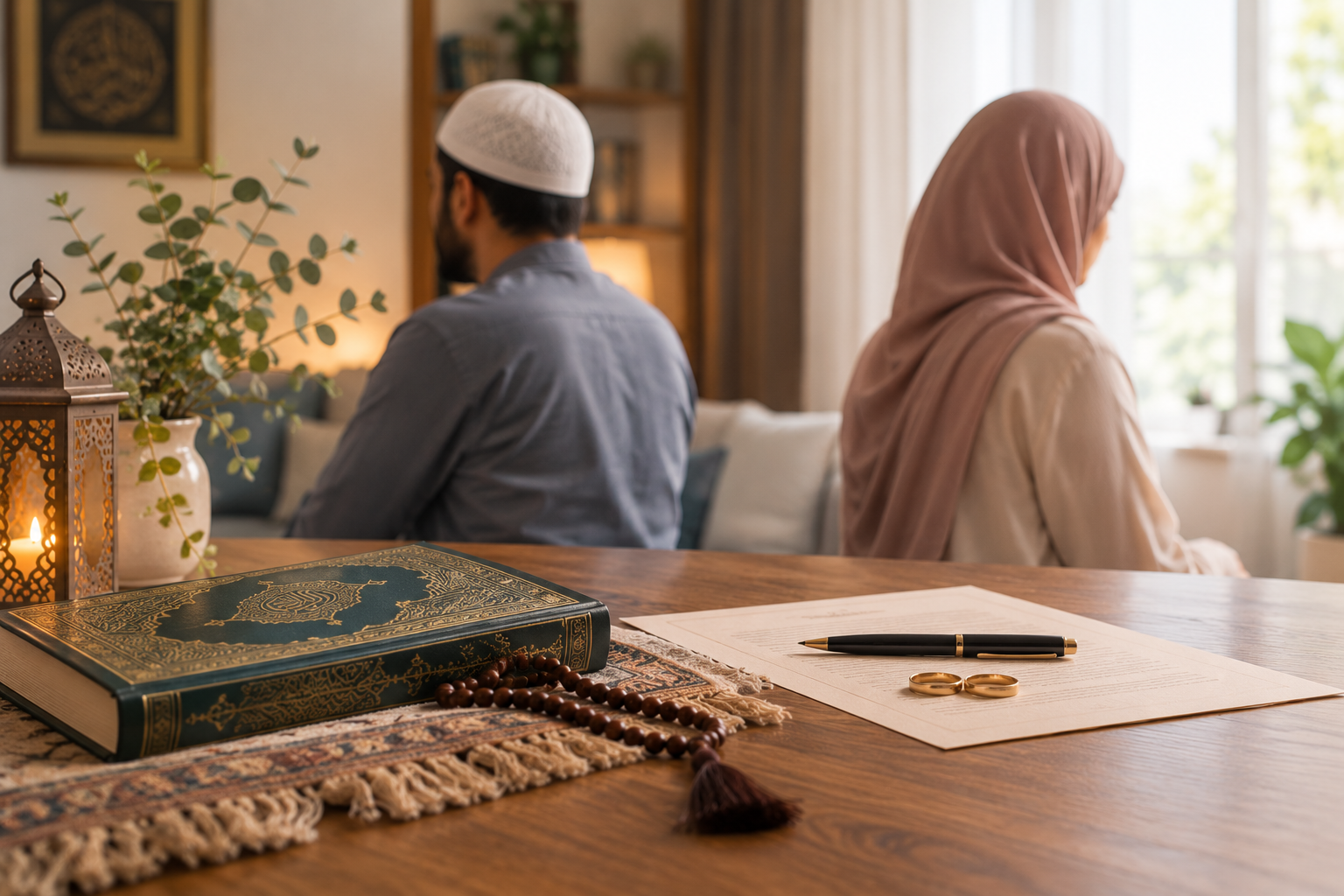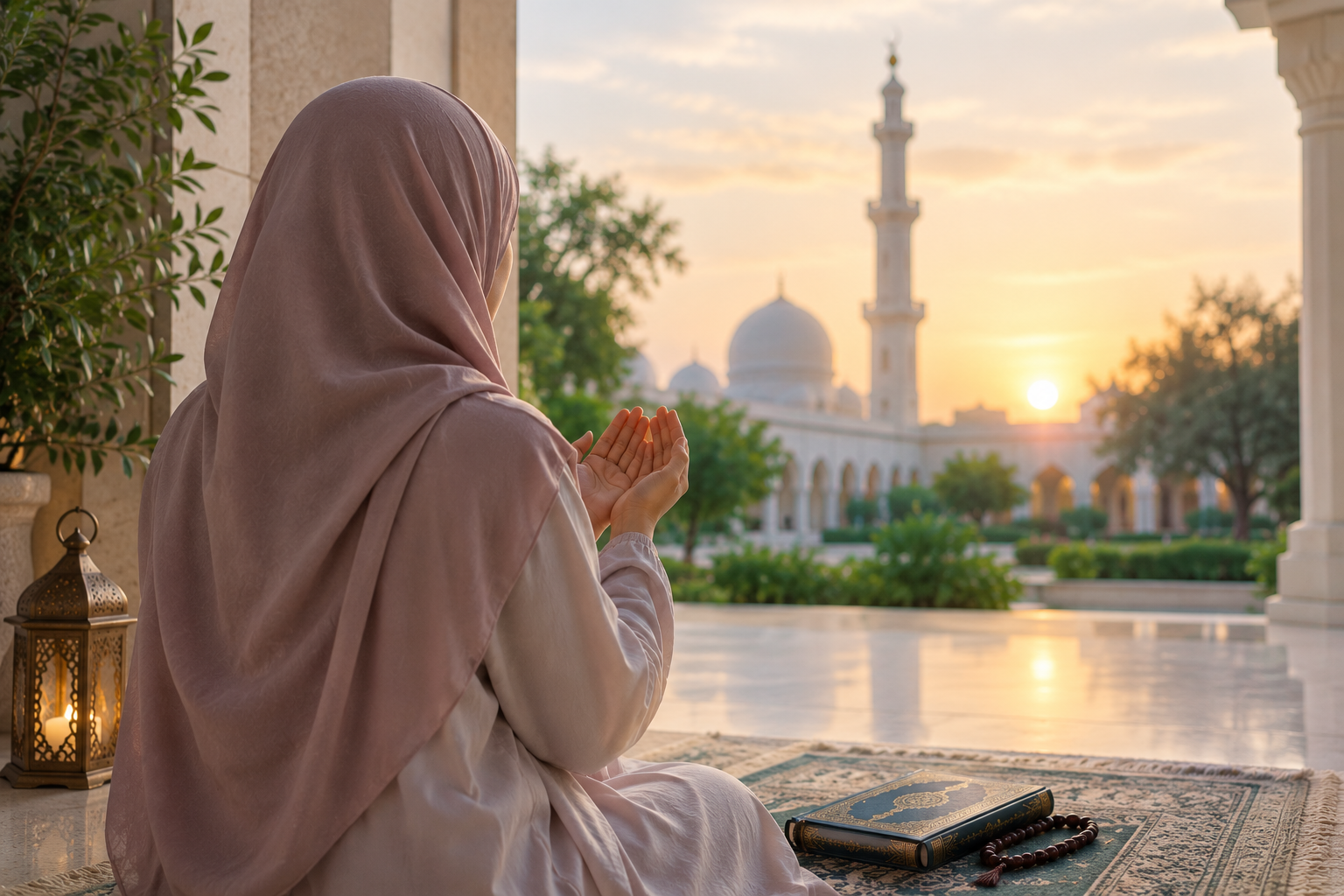
Introduction
If you’ve searched for “wazifa for marriage problems,” you’ve almost certainly landed on pages promising guaranteed results after reciting something 41 times, or 313 times, or instructions to recite verses over food items or water at specific hours under specific conditions.
And somewhere in you, something probably felt uncertain about all of it.
That instinct was correct. Most of what floods this keyword online is either invented ritual with no basis in the Quran or Sunnah, or outright sihr (magic) dressed in Islamic vocabulary to appear halal. It isn’t.
But here’s what’s true: the concept behind “wazifa” — consistent, structured remembrance of Allah for a specific need — is deeply Islamic. The problem isn’t the concept. It’s what the term has been corrupted into meaning online. This guide will give you what those sites don’t: an honest explanation of what wazifa actually is, what Islam actually prescribes for marriage problems, and authentic practices from the Quran and Sunnah that genuinely work — not because of a fixed number of repetitions, but because they connect you to Allah.
Quick answer
A wazifa in authentic Islamic practice is simply a regular, consistent practice of dhikr (remembrance) and dua — taken from the Quran and Sunnah and made a daily habit. For marriage problems, the authentic Islamic “wazifa” is a combination of: specific Quranic duas for marriage, consistent istighfar, salawat on the Prophet ﷺ, tahajjud prayer, and regular recitation of protective surahs. None of these require fixed ritual numbers, specific timings invented by unnamed “scholars,” or any practice resembling sihr. What they require is sincerity, consistency, and genuine turning to Allah — which is far more powerful than any ritual.
What Does "Wazifa" Actually Mean?
Before anything else, this word deserves an honest definition — because it’s being used to mean very different things in different places.
In classical Islamic scholarship, wazifa (from the Arabic wazafa — to assign or appoint) refers to a regular wird — a structured daily practice of dhikr, Quran recitation, or dua that a person assigns themselves or is given by a learned teacher. The great Sufi scholars used this term for their structured daily remembrance practices. There is nothing inherently wrong with the concept.
What has happened is that the word has been hijacked — primarily on the Indian subcontinent and across South Asian and Southeast Asian Muslim communities — to mean a specific ritualistic practice: recite this verse this many times, at this hour, over this object, for this many days, and your problem will be solved. Sometimes these “wazifas” involve things that border on or cross into sihr (magic or sorcery), which is one of the gravest sins in Islam.
The Prophet ﷺ said:
"Avoid the seven destructive sins." Among them he mentioned: sorcery."
(Sahih al-Bukhari 2766)
This is why the authentic Islamic position is: there is no fixed ritual prescription for marriage problems from the Quran or Sunnah. There are no verses to recite exactly 101 times. There is no specific hour or object required. What Islam does prescribe is consistent, sincere dua, dhikr, and worship — and these, done properly, are more powerful than any invented ritual.
The Islamic Perspective: Why Authentic Practice Works
Allah says:
"And your Lord says, 'Call upon Me; I will respond to you."
(Surah Ghafir, 40:60)
The response to our calls is Allah’s promise — not conditional on ritual structure, fixed repetitions, or specific timings invented by people. It is conditional on sincerity, permissibility of what is being asked, and consistent turning to Allah.
The Quran also describes the remembrance of Allah with a promise that applies directly to the anxiety and pain of marital difficulty:
"Verily, in the remembrance of Allah do hearts find rest."
(Surah Ar-Ra'd, 13:28)
Notice: hearts find rest in remembrance — not in a 40-day ritual sequence. This is the foundation of authentic wazifa. Regular, sincere dhikr brings peace to a troubled heart and creates the spiritual conditions within which marriage problems begin to ease.
Guidance from the Sunnah
The Prophet ﷺ was asked about the most beloved deeds to Allah. He said:
"The most beloved deeds to Allah are those done consistently, even if they are small."
(Sahih al-Bukhari 6464)
This single hadith defines authentic wazifa completely: consistency, even in small amounts, is what earns Allah’s love and response. A person who recites one authentic dua after every salah for the rest of their life is doing more than someone who completes a 40-day ritual and never returns to it.
The Prophet ﷺ also said:
"Dua is the weapon of the believer."
(Mustadrak al-Hakim — Hasan)
Not the ritual. Not the number. The dua itself — sincere, consistent, directed to Allah with a present heart — is the weapon. That is the authentic wazifa for marriage problems.
The Authentic Wazifa for Marriage Problems
Here is what Islam actually prescribes. These are not invented. Every practice below is drawn directly from the Quran or authenticated Sunnah.
Practice 1 — Daily Dua for Marriage After Every Salah
The simplest and most powerful consistent practice is making a specific dua for your marriage after each of the five daily prayers. The Prophet ﷺ regularly made dua after salah, and this time is specifically mentioned as one when dua is accepted.
The dua to establish as your daily practice:
"Rabbana hab lana min azwajina wa dhurriyyatina qurrata a'yunin, waj'alna lil-muttaqeena imama." "Our Lord, grant us from among our spouses and offspring comfort to our eyes, and make us leaders of the righteous."
(Surah Al-Furqan, 25:74)
Say this after every salah. Not 41 times. Once, with your full heart and attention. Then add in your own words whatever specific thing you need Allah’s help with in your marriage. Consistency in this — five times a day, every day — is the authentic wazifa.
Practice 2 — Istighfar as a Daily Foundation
The Prophet ﷺ made istighfar at least 70–100 times daily (Sahih al-Bukhari). One of the most important Quranic connections is between istighfar and the opening of blessings and ease:
"Ask forgiveness of your Lord. Indeed, He is ever a Perpetual Forgiver. He will send rain from the sky upon you in [continuing] showers, and give you increase in wealth and children and provide for you gardens and provide for you rivers."
(Surah Nuh, 71:10-12)
The scholars — most famously Hasan al-Basri — noted that istighfar is prescribed for every type of difficulty because it removes the spiritual barriers that block blessings. Make “Astaghfirullah al-‘Adheem” a consistent daily practice — a hundred times after Fajr if you can. This is the oldest and most powerful authentic “wazifa” for difficulty of any kind, including marital difficulty.
We explore exactly how istighfar transforms a marriage in detail — this is one of the most underestimated spiritual tools available to any Muslim couple.
Practice 3 — Salawat (Blessings on the Prophet ﷺ)
The Prophet ﷺ said:
"Whoever sends blessings upon me once, Allah will send blessings upon him tenfold, erase ten of his sins, and raise him ten degrees in status."
(Sunan an-Nasa'i 1297 — Sahih)
Sending salawat frequently — especially the full Durood Ibrahimi — is a practice that brings divine mercy and blessing into your life. It also draws the character of the Prophet ﷺ into your own — his gentleness, his patience, his mercy toward his wives. For a marriage in difficulty, this is both a spiritual practice and a character-building one.
Make it your practice to send salawat abundantly — after every prayer, in idle moments, in traffic, before sleeping. This is an authentic, simple, powerful daily wazifa that the Prophet ﷺ himself encouraged.
Practice 4 — Tahajjud for Your Marriage
The Prophet ﷺ said:
"Our Lord descends every night to the lowest heaven when the last third of the night remains, and He says: 'Who is calling upon Me so I may answer him? Who is asking of Me so I may give him? Who is seeking My forgiveness so I may forgive him?"
(Sahih al-Bukhari and Muslim)
If there is one practice that comes closest to what people are searching for when they type “wazifa for marriage problems” — a consistent, structured, spiritually powerful practice that directly addresses Allah for a specific need — it is tahajjud. Rise in the last third of the night, pray two rak’ahs minimum, then sit in sujood and pour your marriage before Allah by name. Do this consistently — even two or three times a week — and you have established the most powerful authentic wazifa available to a Muslim.
Practice 5 — Recitation of Protective Surahs in the Home
The Prophet ﷺ said:
"Do not turn your houses into graveyards. Indeed, Shaytan flees from the house in which Surah Al-Baqarah is recited."
(Sahih Muslim 780)
A home from which Shaytan flees is a home where the most active enemy of marriage cannot operate. Shaytan’s primary mission includes dividing spouses — the Prophet ﷺ described how he rewards his soldiers most for “causing separation between a husband and wife.” (Sahih Muslim 2813)
Reciting or playing Surah Al-Baqarah regularly in your home — even in audio form — is an authenticated Prophetic protection for your marriage. Add to this Ayat al-Kursi (2:255) after every salah, the three Quls (Al-Ikhlas, Al-Falaq, An-Nas) morning and evening, and you have a complete shield of authentic dhikr protecting your home.
Practice 6 — Dua at the Best Times
Beyond the daily practices above, these are the windows when dua is specifically accepted. Use them for your marriage:
- In sujood: “The closest a servant comes to his Lord is in sujood, so increase dua there.” (Muslim)
- Between adhan and iqamah: “Dua between the adhan and iqamah is not rejected.” (Abu Dawud — Sahih)
- Last hour of Friday: A blessed hour each Friday when dua is answered
- While fasting: “The dua of the fasting person is not rejected.” (Ibn Majah — Hasan)
What NOT to Do — Avoiding Harm in the Name of Wazifa
This section is important because some “wazifas” commonly found online can cause real harm — spiritually, and sometimes legally and socially.
Do not use wazifas involving:
- Physical rituals with food, water, or objects meant to be consumed by someone without their knowledge — this violates their rights and can constitute a form of manipulation or harm
- Fixed repetition numbers presented as a condition of efficacy — there is no Quranic or hadith basis for reciting anything 101 or 313 or 1000 times as a specific prescription
- Contact with “Amils” or “Molvis” who claim to perform wazifas on your behalf for payment — seeking the help of those who practice sihr is itself forbidden in Islam, and paying for “Islamic spiritual services” that promise guaranteed marriage results is almost always fraudulent
- Any practice that involves calling upon other than Allah — this falls directly into shirk
- Burning items, burying things, tying knots with intentions, or anything that resembles ruqyah done by others rather than on yourself — these practices require careful scholarly guidance and should not be taken from internet sites
The Prophet ﷺ was clear: “Whoever goes to a fortune-teller and asks him about something, his prayer will not be accepted for forty days.” (Sahih Muslim 2230) The same principle applies to those who seek supernatural “guaranteed” intervention through practitioners offering wazifa services.
The Complete Daily Authentic Wazifa — A Practical Structure
Here is a simple, structured daily practice — a genuine, authentic Islamic wazifa for marriage problems — that you can begin today:
After Fajr:
- 100x Astaghfirullah al-‘Adheem (istighfar)
- Recite Surah Al-Furqan 25:74 once with heart, then make dua for your marriage specifically
After each salah:
- Ayat al-Kursi (2:255) once
- 33x SubhanAllah, 33x Alhamdulillah, 34x Allahu Akbar
- A specific, sincere dua for your marriage in your own words
Morning and evening:
- Three Quls (Al-Ikhlas, Al-Falaq, An-Nas) three times each
- “Ya Muqallib al-quloob, thabbit qalbi ‘ala ta’atik wa aslih bayna wa bayna zawji” (O Turner of Hearts, keep my heart firm in Your obedience and rectify what is between me and my spouse)
Once or twice weekly:
- Tahajjud — even two rak’ahs — followed by sincere, specific dua for your marriage in sujood
Weekly:
- Recitation or audio play of Surah Al-Baqarah in the home
- Abundant salawat on Friday
This is a complete, consistent, authenticated Islamic practice for a marriage in difficulty. It requires no ritual numbers, no objects, no practitioner. It requires only you, your sincerity, and Allah.
What Should You Do Today?
- Begin your istighfar practice today — even 10 times after Fajr is a beginning
- Send abundant salawat on the Prophet ﷺ throughout your day
- Make intention to rise for tahajjud at least once this week
- Play or recite Surah Al-Baqarah in your home — even in audio, while going about your day
- Review our complete guide on dua for marriage problems for the specific Quranic supplications to build into your daily practice
- Start with one thing: after your next salah, make a specific, sincere dua for your marriage by name — this is the foundation
- If you've been struggling with how to address the problems themselves practically, our guide on how to talk to your spouse without starting a fight is the practical complement to these spiritual practices
Key Takeaways
Wazifa in authentic Islam means a consistent, regular practice of dhikr and dua — not a ritual with fixed numbers or special objects
The most powerful wazifa for marriage problems is a daily combination of: istighfar, Quranic dua (especially Surah Al-Furqan 25:74), salawat, tahajjud, and protective surahs in the home
The beloved deeds to Allah are consistent ones, even if small — this defines authentic wazifa
Avoid any practice involving fixed ritual numbers, practitioners for payment, or anything resembling sihr
Dua is the weapon of the believer — sincere, consistent, and directed to Allah with a present heart
Emotional Closing
If you came to this article looking for a guaranteed shortcut — a verse to recite a hundred times that will fix your marriage by next week — I know it might be disappointing to find there isn’t one. But I want to offer you something more honest, and more hopeful, than a shortcut: you have direct access to Allah, the Turner of Hearts, the Source of all love and mercy, without any middleman or ritual structure required.
The practices in this guide work — not because of mystical numbers, but because they are the practices of the Prophet ﷺ himself, and because they genuinely bring a heart closer to Allah. And a heart close to Allah is a heart that receives guidance, patience, wisdom, and peace — exactly what a struggling marriage needs from at least one of its two people.
Begin today. One salah. One sincere dua. One honest sujood. That is the real wazifa — and it reaches Allah directly.
A Dua to End With
Allahumma inni as'aluka min fadlik. Allahumma allif bayna quloobina, wa aslih dhata baynina, wahdina subula-s-salam, wa najjina mina-dh-dhulumaati ila-n-nur.
“O Allah, I ask You from Your bounty. O Allah, unite our hearts, rectify what is between us, guide us to the paths of peace, and bring us from darkness into light.”
Make this your daily anchor. Not once, not 101 times — but every day, with a present and sincere heart, for as long as your marriage needs it.
Frequently Asked Questions
What is a wazifa for marriage problems in Islam?
Authentically, a wazifa is a regular, consistent practice of dhikr and dua from the Quran and Sunnah. For marriage problems, the authentic wazifa combines: daily istighfar, Quranic duas (especially Al-Furqan 25:74), salawat on the Prophet ﷺ, tahajjud prayer, and recitation of protective surahs in the home.
Is wazifa halal in Islam?
The concept of wazifa — consistent, regular remembrance of Allah — is completely halal. What is not halal are the invented rituals often called “wazifa” online: fixed repetition numbers, practices involving objects or food, or anything resembling sihr (magic). The authentic practice is simply consistent dua and dhikr.
How many times should I recite a wazifa for marriage problems?
There is no prescribed number in authentic Islamic sources. Any site giving you “recite this 101 or 313 times” is inventing a ritual without Quranic or hadith basis. What matters is consistency and sincerity — making dua daily, regularly, with a present heart.
Which surah is best for marriage problems?
Several surahs are relevant: Surah Al-Furqan (verse 74 contains the most direct Quranic dua for spouses), Surah Ar-Rum (verse 21 establishes the divine foundation of marriage), and Surah Al-Baqarah (recited in the home for protection and to repel Shaytan).
Can I consult an Amil or Molvi for a wazifa?
Be very cautious. Legitimate Islamic scholars provide guidance on authentic dhikr and dua practices. Anyone who claims to perform wazifa “on your behalf” for payment, promises guaranteed results, or suggests practices involving objects or rituals is operating outside authentic Islamic practice.
Is there a difference between dua and wazifa?
Dua is any supplication to Allah. Wazifa, authentically, is a structured regular practice of dua and dhikr — making the same dua consistently as a daily habit. The difference is consistency and structure: a wazifa is a dua you commit to doing regularly rather than occasionally.
How long before I see results from an authentic wazifa?
The Prophet ﷺ said dua is answered but “one of you may be hasty and say ‘I supplicated but was not answered'” and then stops. Keep making dua consistently without placing a time limit. Allah responds in His perfect timing — sometimes immediately, sometimes gradually, always perfectly.
What if my marriage is in crisis — should I only make wazifa?
No. Spiritual practice and practical action work together. Alongside your daily dhikr and dua, communicate honestly with your spouse, seek wise counsel if needed, and address the actual issues in the marriage. See our guide on how to save a failing marriage in Islam for the complete approach.
On this page
Dua of the week
- "O Allah, I ask You for Your love, and the love of those who love You."
- Tirmidhi 3490