Introduction
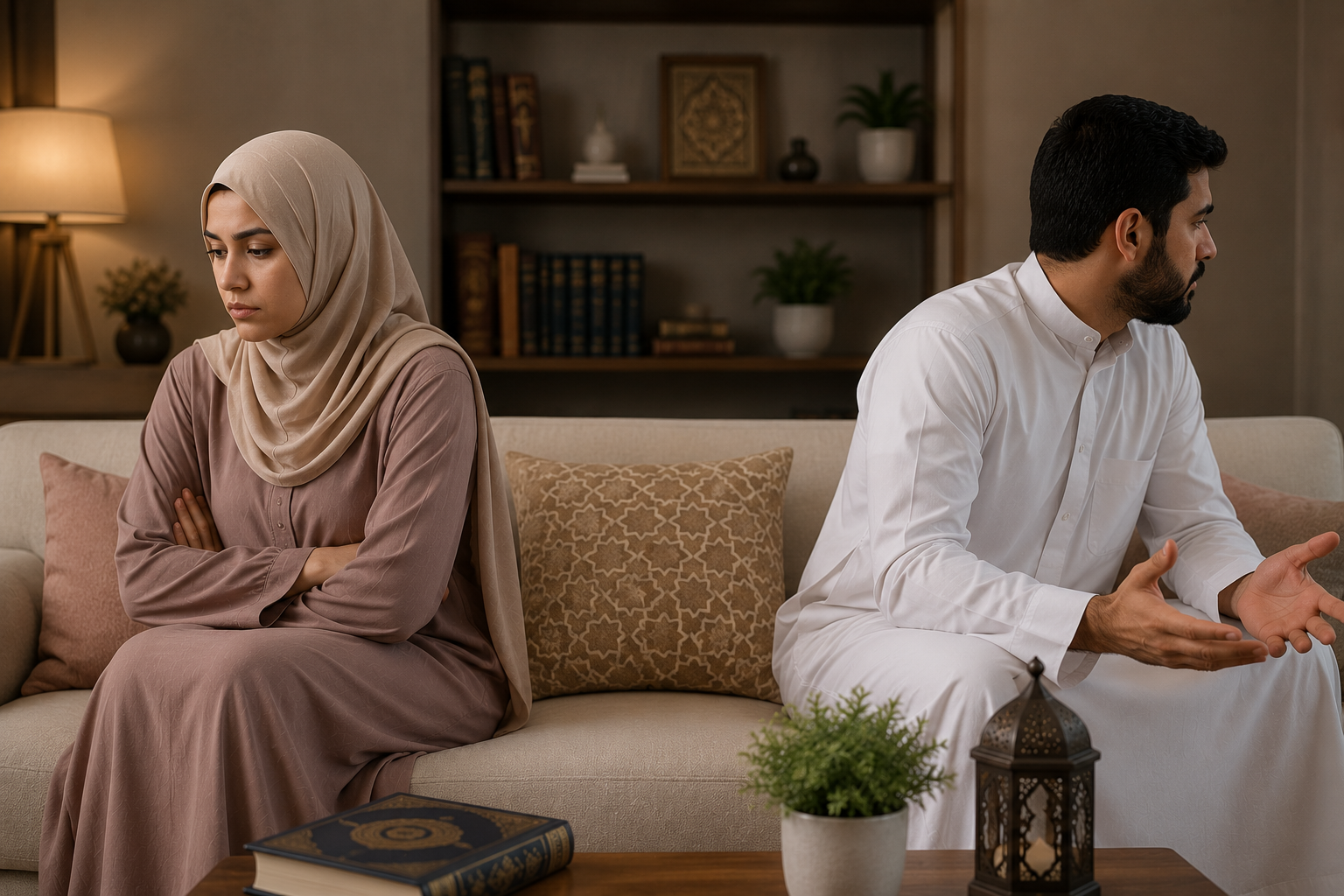
Maybe you’re a husband who’s been met with cold silence for days and you’re wondering whether your wife is allowed to treat you this way. Or maybe you’re a wife who’s so hurt or angry that turning away and shutting down feels like the only response left to you — and a quiet part of you wonders if that’s okay in Islam.
Either way, it’s a fair and honest question, and it deserves an honest answer rather than a slogan. Because the truth is, Islam neither demands that a wife be a doormat who suppresses every hurt, nor does it permit prolonged, punishing silence as a weapon. The answer lives in the nuance — and understanding that nuance can actually heal the very tension that led you to ask the question in the first place.
Let’s walk through what Islam genuinely says about a wife ignoring or giving her husband the silent treatment — with fairness to both spouses, and with the goal not of winning an argument, but of restoring the peace that Allah designed marriage to hold.
Quick answer
In Islam, a wife (like a husband) is allowed a brief, natural cooling-off period after a conflict — stepping back to calm down is human and permitted. However, deliberately ignoring her husband or giving him the silent treatment as a way to punish, control, or withhold his rights out of anger is not permitted, especially beyond three days. The Prophet ﷺ taught that it is not lawful for a Muslim to cut off another believer for more than three days — and a spouse holds an even greater right to kind treatment. That said, a wife withdrawing due to genuine hurt or as a natural reaction to being wronged is different from cold, calculated punishment; the root cause matters. The Islamic ideal is always to move toward communication and reconciliation rather than entrenchment in silence.
The Short Answer, and Why the Nuance Matters
If you want the simplest honest answer: a wife should not ignore her husband as a form of punishment or prolonged silent treatment, but a brief pause to regain composure after a conflict is not sinful and is often wise.
The reason the nuance matters so much is that “ignoring” can mean very different things:
- Taking a few hours or a day to cool down before discussing a heated issue → generally fine and often healthy
- Withdrawing because you’re deeply hurt and genuinely need space → understandable, though communication is still the goal
- Deliberately freezing your husband out to punish him, make him suffer, or control his behavior → this crosses into something Islam discourages
- Withholding his legitimate rights (kind speech, companionship) as a weapon → not permitted, especially when prolonged
So “can a wife ignore her husband?” isn’t a yes/no question. It depends entirely on why, how, and for how long. Let’s look at what Islam actually teaches.
What Islam Says About the Silent Treatment
The clearest guidance comes from an authentic hadith that applies to all Muslims — and therefore to spouses even more so, given the closeness of their bond. The Prophet ﷺ said:
"It is not permissible for a Muslim to forsake (stop speaking to) his brother for more than three days, both of them turning away from one another when they meet. The better of the two is the one who greets the other first."
(Sahih al-Bukhari and Muslim)
This establishes the framework. Turning away from a fellow believer out of anger has a firm limit of three days — and your spouse, the closest companion Allah gave you, holds an even greater claim on your kindness than any other believer. If cutting off a fellow Muslim beyond three days is impermissible, cutting off your own husband certainly is.
The hadith also gives the beautiful key to resolution: the better of the two is the one who greets first. Islam reframes reaching out first not as weakness or “losing,” but as spiritual excellence. We explore this teaching in depth in our guide on how long husband and wife can go without talking in Islam.
Alongside this, Islam commands mutual kindness between spouses. Allah says spouses were created to find tranquility, affection, and mercy in one another (Surah Ar-Rum, 30:21) — and prolonged, deliberate silence is the opposite of all three.
When a Brief Withdrawal Is Understandable
Islam is not a religion that demands the emotionally impossible. It recognizes that human beings get angry, get hurt, and sometimes need a moment to gather themselves. A wife is not sinning if, after a painful argument, she needs a little quiet time before she’s ready to talk calmly.
In fact, stepping back briefly can be the wiser choice — far better than responding in the heat of anger with words that wound. There’s wisdom in the Prophetic guidance to control anger, and sometimes a short pause is exactly what prevents a small conflict from becoming a damaging one.
The key differences that keep this within healthy, permissible bounds:
- It’s temporary — a genuine cooling-off, not an open-ended freeze
- The intention is to calm down, not to punish or make him suffer
- His basic rights aren’t weaponized — you’re taking space, not withholding kindness as leverage
- You’re moving toward resolution, not away from it
A wife who says, gently, “I’m really hurt right now and I need a little time before we talk about this” is handling conflict maturely — not giving the silent treatment. That’s honest communication about needing space, which is very different from cold, wordless punishment.
When Ignoring Him Becomes a Problem
The silent treatment becomes spiritually and relationally problematic when it shifts from cooling-off to weaponized withdrawal. This happens when:
- The silence stretches beyond three days out of persistent anger
- The intention is to punish, control, or make him “pay” rather than to reconcile
- It’s used repeatedly as a go-to tactic whenever there’s conflict
- It’s accompanied by withholding kindness, warmth, or his legitimate rights
- Communication has completely shut down with no effort to reopen it
At this point, silence is no longer a pause — it’s a form of emotional harm. And this contradicts the very purpose of marriage in Islam. The scholars are clear that using prolonged silence to punish, control, or emotionally isolate a spouse contradicts the mercy and kindness Islam builds marriage upon.
It’s worth being honest here: the silent treatment often feels justified in the moment. When we’re hurt, freezing the other person out can feel like the only power we have. But in practice, it rarely produces understanding — it usually produces more distance, more confusion, and more resentment on both sides. It punishes the marriage as much as the spouse.
But What If She's Ignoring Him Because She's Been Wronged?
This is a crucial point that one-sided articles often miss. Very often, a wife’s withdrawal isn’t cold manipulation at all — it’s a natural human response to being hurt, neglected, or wronged by her husband.
Scholars have wisely noted that frequently, the root of a wife’s withdrawal is the husband’s own behavior. As some contemporary scholars point out, a husband should look for the causes of his wife’s coldness rather than simply demanding she stop. If she’s pulling away because she feels unloved, disrespected, unheard, or neglected, then the real issue isn’t her silence — it’s the wound underneath it.
So if you’re a husband troubled by your wife ignoring you, the most useful question isn’t “is she allowed to do this?” It’s “why is she doing this, and what part might I have played?” Addressing the root cause with humility will do far more than insisting on your rights.
And if you’re a wife withdrawing because you’re genuinely hurting, know this: your pain is valid, and you’re not a bad wife for feeling it. But silence alone rarely gets your needs met, because your husband may not even understand what’s wrong. The more powerful path — though harder — is to eventually put the hurt into words he can actually respond to.
The Better Path: Communication Over Silence
Islam consistently points spouses toward communication and reconciliation rather than entrenchment. The Prophet ﷺ, even in moments of tension with his wives, never resorted to cruel or punishing silence — his way was engagement, listening, and gentle resolution.
So whether you’re the one withdrawing or the one being frozen out, the Islamic ideal is the same: move toward each other, not away. Here’s how:
If you're the wife who's been ignoring him:
- Ask yourself honestly whether you’re cooling down or punishing
- If you’re hurt, plan to express why in words rather than through silence
- Remember the reward in being the one who reaches out first
- Make dua for softening both your hearts before you approach
If you're the husband being ignored:
- Resist the urge to demand she “snap out of it” — look for the cause
- Reflect honestly on whether something you did contributed
- Approach her with warmth and genuine curiosity, not accusation
- Be willing to apologize sincerely if you’ve fallen short
For both:
- Aim for understanding, not victory
- Address the actual issue once emotions have cooled
- Our guide on how to talk to your spouse without starting a fight offers practical scripts for exactly these moments
What Should You Do Today?
- If there's silence in your marriage right now, honestly identify: is this cooling-off or punishment?
- Make dua asking Allah to soften both hearts and remove the coldness between you
- If you're the wife withdrawing from hurt, begin thinking about how to put the hurt into words
- If you're the husband, reflect on what might be underneath your wife's withdrawal
- Take one small, warm step toward reconnection — remembering the better one greets first
- Aim to address the real issue calmly once the initial emotion has passed
A Word of Hope
If your marriage has gone quiet and cold right now, take heart: silence is one of the most reversible problems a marriage faces. It’s rarely a sign that love is gone — much more often, it’s a sign of hurt that hasn’t yet found the right words.
The moment even one spouse chooses warmth over pride, communication over withdrawal, the ice usually begins to melt faster than either expected. And the Prophet ﷺ promised a special honor to exactly that person — the one who greets first, who reaches out first, who chooses the marriage over the ego.
Turn to Allah, who unites hearts and rectifies what is between spouses. Take the first gentle step. And trust that the coldness you’re feeling now is not the end of your story — it’s a moment you can move through, with His help.
A Dua to End With
"Allahumma allif bayna quloobina, wa aslih dhata baynina, wahdina subula-s-salam."
“O Allah, unite our hearts, rectify what is between us, and guide us to the paths of peace.”
Say this before you reach out to your spouse. Ask Allah to melt the silence between you and make the first words easy — for whichever of you chooses to be the better one who greets first.
Frequently Asked Questions
an a wife give her husband the silent treatment in Islam?
A brief cooling-off period after conflict is permitted and often wise. But deliberately ignoring her husband to punish or control him, especially beyond three days, is not permitted. The Prophet ﷺ prohibited Muslims from cutting each other off for more than three days, and spouses owe each other even greater kindness.
Is it haram for a wife to ignore her husband?
It depends on the intention and duration. Taking space to calm down is not haram. Using prolonged, deliberate silence to punish, control, or withhold kindness as a weapon does go against Islamic teachings on kind treatment between spouses.
How long can a wife ignore her husband in Islam?
The general limit derived from the hadith is three days — the Prophet ﷺ said it’s not permissible for a Muslim to forsake another believer beyond three days. A spouse’s claim to kindness is even greater, so prolonged silence beyond a brief cooling-off should be avoided.
What if a wife ignores her husband because he hurt her?
Her hurt is valid, and withdrawal from genuine pain is different from cold manipulation. However, silence rarely resolves the issue because the husband may not understand what’s wrong. The healthier path is to eventually express the hurt in words. Scholars also note husbands should look for the causes of a wife’s withdrawal rather than just demanding it stop.
Is the silent treatment considered emotional abuse in Islam?
When used as a prolonged, deliberate tool to punish, control, or isolate a spouse, silence becomes a form of emotional harm that contradicts Islam’s emphasis on mercy and kind treatment. A brief, honest cooling-off period is not abuse — the distinction lies in intention, duration, and whether it’s weaponized.
Who should reach out first after a period of silence?
The Prophet ﷺ said the better of the two is the one who greets the other first. Reaching out first is not weakness in Islam — it’s spiritual excellence. Whoever ends the silence with warmth earns the higher rank.
My wife ignores me often. What should I do as a husband?
Rather than only asking whether she’s allowed to, reflect on why she’s withdrawing — often it’s a response to feeling hurt or neglected. Approach her with warmth and genuine curiosity, be willing to apologize if you’ve fallen short, and if the pattern is entrenched, consider involving a trusted mediator.
On this page
Dua of the week
- "O Allah, I ask You for Your love, and the love of those who love You."
- Tirmidhi 3490