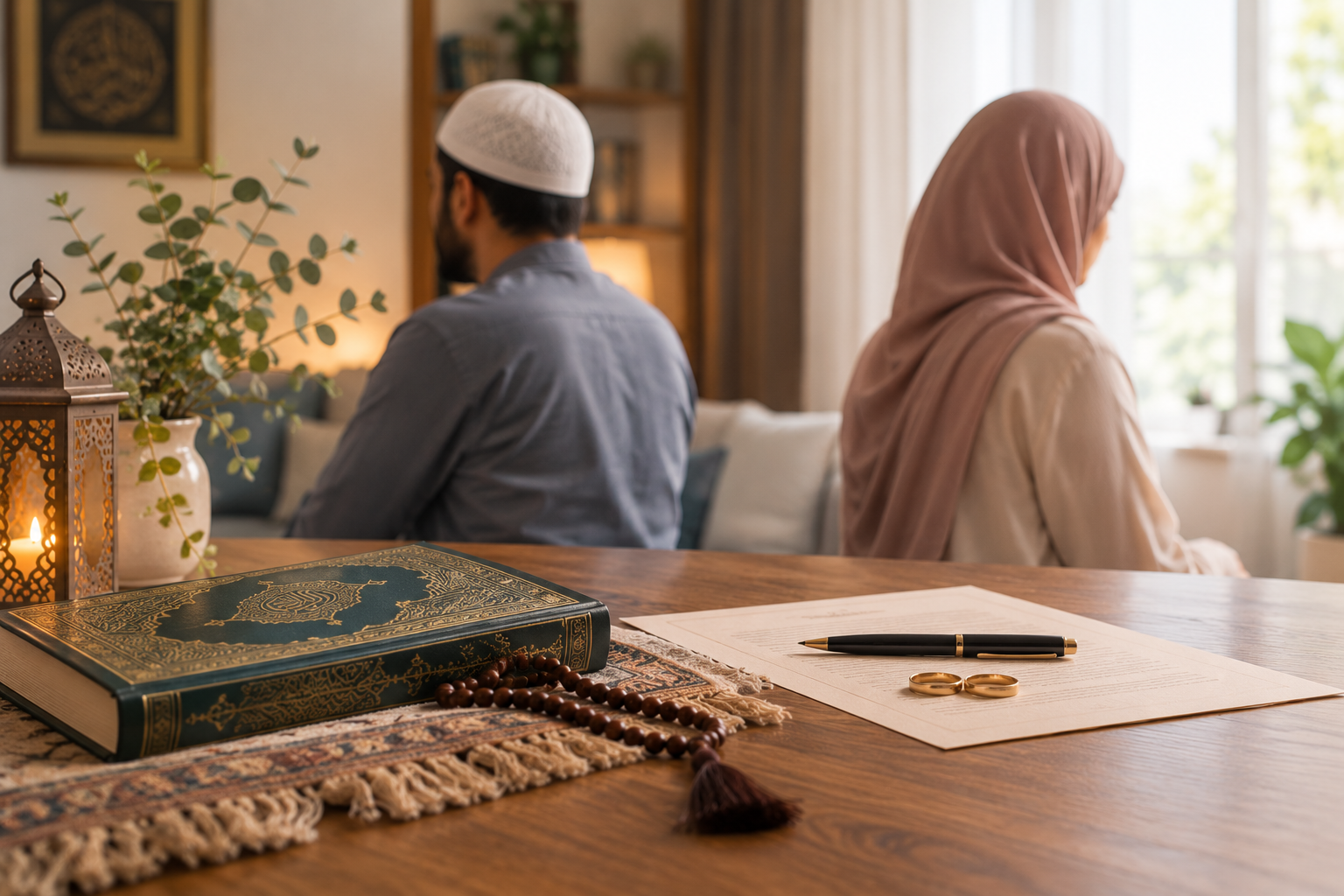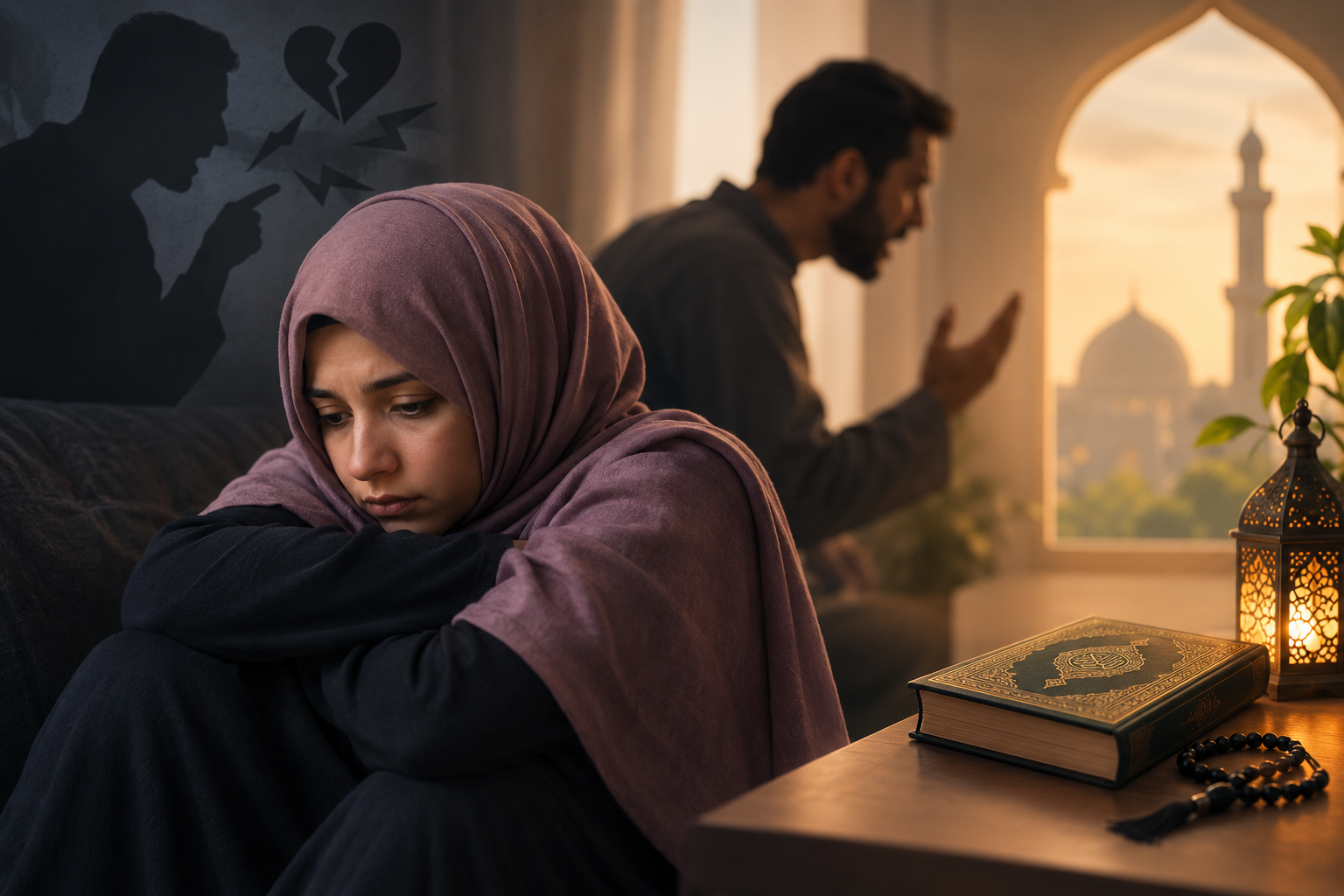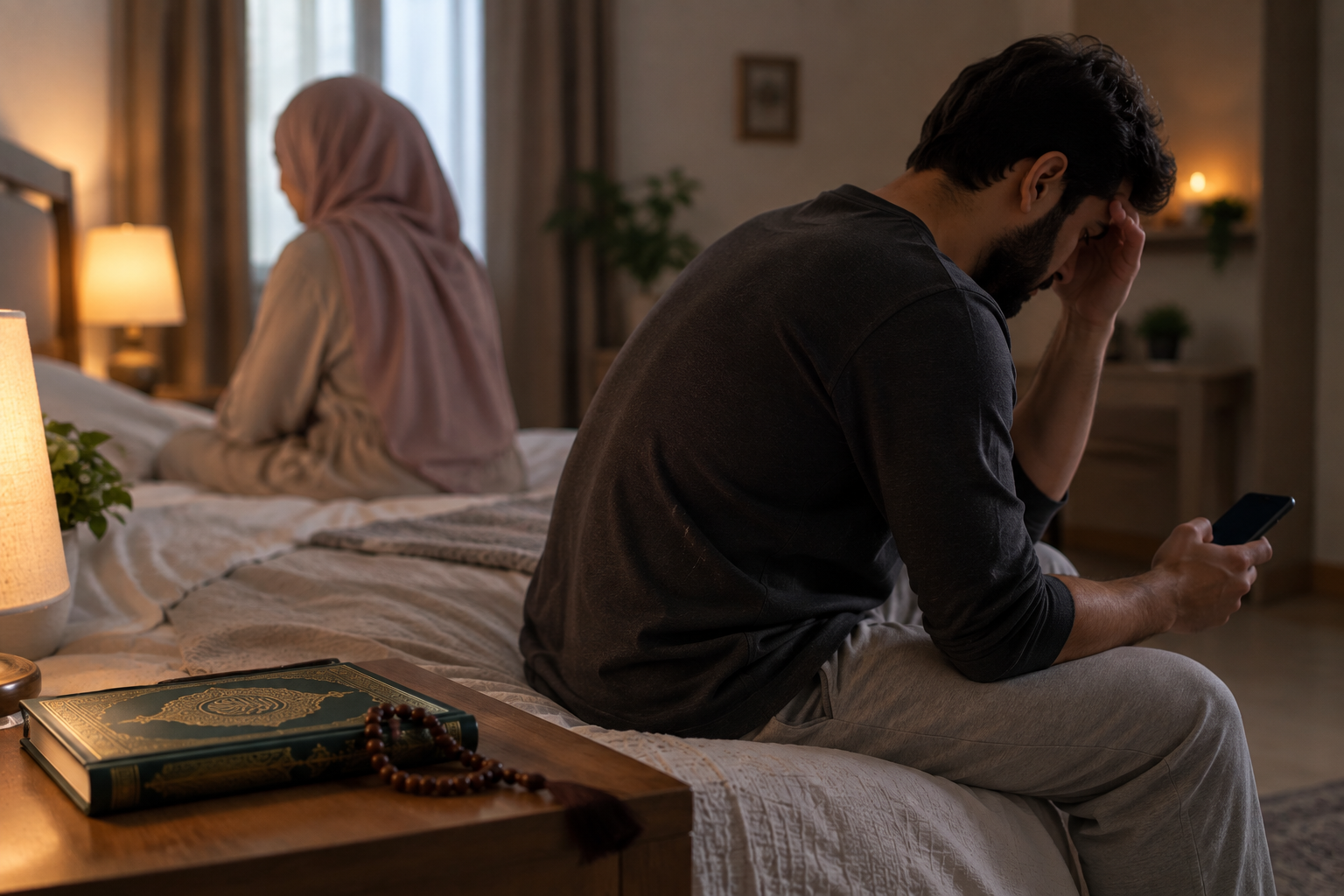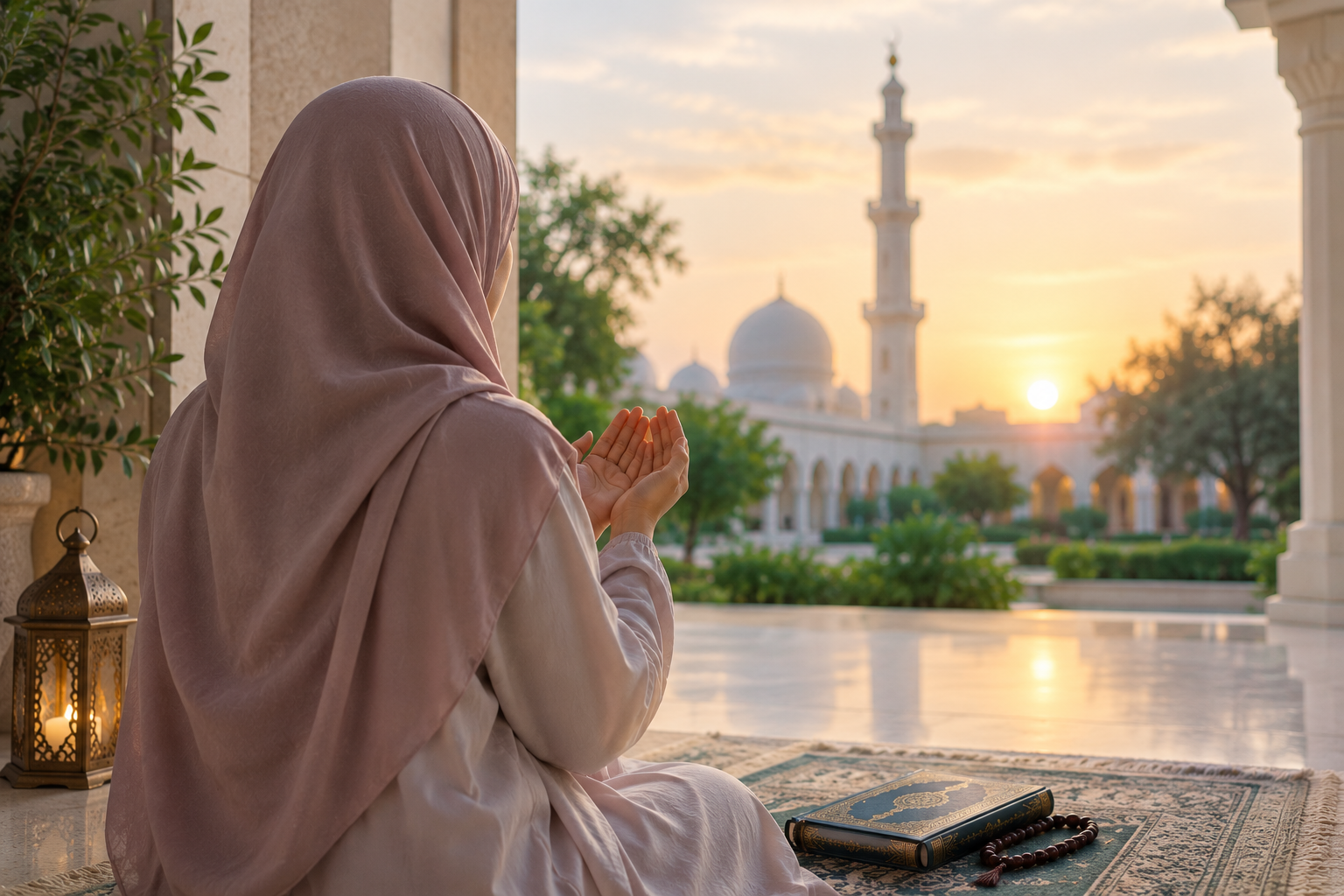
Introduction
If you’ve typed these words — “my husband makes me depressed” — into a search bar, I want you to know something before we go any further: reaching out, even to a search engine, took courage. It means a part of you still believes you deserve to feel better than you do right now. Hold onto that part. It’s telling you the truth.
Living with a heaviness that follows you from room to room, feeling smaller and sadder the longer you stay in your own home, quietly wondering if you’ll ever feel like yourself again — this is one of the loneliest experiences a wife can go through. And it’s made lonelier by the fear that maybe you’re not allowed to feel this way. Maybe a “good Muslim wife” would just be patient. Maybe this is your test and you’re failing it.
Let’s gently set that fear down. Because the truth is far more merciful than that — and far more honest. Islam does not ask you to disappear into your own sadness in the name of sabr. It sees you. It gives you rights. And it takes your wellbeing seriously. So let’s walk through this together — with honesty about your pain, clarity about what Islam actually teaches, and real steps toward feeling like yourself again.
Quick answer
If your husband is making you feel depressed, Islam does not require you to suffer in silence or blame yourself. Emotional neglect, constant criticism, and cruelty are not permitted in Islam — a husband is commanded to treat his wife with kindness and mercy. Your feelings are valid, and your mental health matters. The path forward includes: acknowledging your pain honestly, turning to Allah for strength and comfort, communicating clearly with your husband about the harm being caused, seeking support from trusted people and professionals, and — importantly — recognizing that if the situation involves ongoing abuse or refuses to improve, Islam gives you the right to seek help and, if necessary, to protect yourself. Patience (sabr) in Islam never means passively enduring harm.
A note before we continue: If you are having thoughts of harming yourself, please reach out right now to someone you trust or a mental health helpline in your country. Your life is sacred and precious to Allah, and immediate support is available. You do not have to carry this alone.
Your Feelings Are Valid — This Is Not Weakness
Let’s begin here, because everything else depends on it: feeling depressed because of how you’re being treated is not a sign of weak faith, ingratitude, or failure as a wife.
In many real cases, women in this situation carry a crushing double burden — the pain of the marriage itself, and the guilt of feeling that pain. They tell themselves things like: “Other women have it worse.” “Maybe I’m being ungrateful.” “A stronger believer wouldn’t feel this way.” “Will Allah punish me for not being a better wife?”
Please hear this clearly: none of that is true. Depression is not a moral failing. The Prophet ﷺ himself experienced profound grief and sadness — the year his beloved wife Khadijah and his uncle Abu Talib passed away is known in the Seerah as “the Year of Sorrow” (Aam al-Huzn). Sadness is a human experience that even the best of creation went through. Feeling it does not diminish your faith. What matters is that you don’t face it alone and without support.
Your emotions are real. Your pain is real. And acknowledging it honestly is the first step toward healing — not a betrayal of your deen.
What Islam Actually Says About a Husband's Treatment
Here is where so much confusion causes harm. Some believe that Islam requires a wife to endure any treatment quietly. This is a distortion of the religion — and it’s important to correct it clearly.
Allah commands husbands, in unmistakable terms:
"And live with them in kindness."
(Surah An-Nisa, 4:19)
This is not a suggestion. It is a command. A husband who consistently makes his wife feel worthless, who neglects her emotional needs, who criticizes and belittles her — is not “living with her in kindness.” He is falling short of a direct obligation Allah placed upon him.
The Prophet ﷺ said:
"The best of you are those who are best to their wives, and I am the best of you to my wives."
(Tirmidhi)
And in his farewell sermon, he reminded all Muslim men to treat their wives well, emphasizing that women are a trust from Allah. Emotional cruelty and neglect are a betrayal of that trust.
Consider what this means for you: the way you are being treated is not something Islam endorses or asks you to accept as your lot. If your husband’s behavior is causing you genuine emotional harm, he is the one falling short of his Islamic duty — not you. This isn’t about assigning blame to wound him; it’s about freeing you from the false belief that your suffering is religiously required. It is not.
We explore this further in our guide on emotional distance and what to do when your husband withdraws, and on what to do when a husband is disrespectful.
Understanding What Might Be Happening
To respond wisely, it helps to understand what may be driving the situation. Depression rooted in marriage usually stems from one or more of these:
- Emotional neglect — feeling unseen, unheard, and unimportant to the person who’s meant to cherish you
- Constant criticism — being made to feel that nothing you do is ever good enough
- Controlling behavior — having your freedom, choices, or connections to family and friends restricted
- Lack of affection or communication — living like strangers or roommates rather than partners
- Verbal or emotional abuse — belittling, insults, blame, or manipulation
- Isolation — being cut off from the support systems that once sustained you
It’s worth being honest with yourself about which of these are present, because the right response differs. General emotional distance and poor communication can often be worked on together. But patterns of abuse, control, and isolation are more serious — and require a different, safety-focused approach that we’ll come to.
Turning to Allah for Strength and Comfort
In the depths of this kind of pain, your relationship with Allah becomes both your refuge and your source of strength. Not as a way to bypass the problem — but as the foundation that holds you steady while you address it.
Pour your heart out to Him. Allah invites you to bring Him everything — your sadness, your exhaustion, your confusion. He says: “Call upon Me; I will respond to you.” (Surah Ghafir, 40:60) You don’t need perfect words. Your tears in sujood are their own language.
Find comfort in His nearness. When you feel most alone, remember: “And We are closer to him than his jugular vein.” (Surah Qaf, 50:16) Allah is nearer to you than the very pain in your chest.
Draw strength from His promises. “So, surely with hardship comes ease. Surely with hardship comes ease.” (Surah Ash-Sharh, 94:5-6) This state you’re in is not your permanent reality. Ease is coming, in some form, by Allah’s promise.
Let dhikr and istighfar steady you. Consistent remembrance of Allah brings a tranquility that logic alone cannot. Many women in painful seasons find that regular dhikr and istighfar become an anchor that keeps them from being swept away by despair.
This spiritual grounding isn’t a replacement for taking real action — it’s what gives you the strength and clarity to take it.
What You Can Do — Practical Steps
1. Name the Problem Honestly to Yourself
Before anything else, stop minimizing. Write down, privately, exactly how your husband’s behavior affects you. Naming it clearly protects you from the fog of self-doubt and gaslighting, and helps you see the situation as it truly is.
2. Communicate Clearly and Directly
If it is safe to do so, have an honest conversation with your husband. Choose a calm moment. Rather than accusations, name the impact:
Sometimes a husband genuinely doesn’t realize the depth of harm being caused, and honest communication opens a door. Sometimes it doesn’t — and his response will tell you a great deal about what you’re dealing with.
3. Reconnect With Your Support System
Depression and difficult marriages both thrive in isolation. Reconnect with the people who remind you of who you are — trusted family, genuine friends. If your husband has isolated you from them, recognize that isolation itself is a serious red flag, not a normal feature of marriage.
4. Seek Professional Help — for Yourself
This is crucial and often overlooked: you can and should seek help for your depression regardless of whether your husband changes. A qualified therapist or counselor — ideally one who understands your faith — can give you tools to manage your mental health, regain clarity, and make decisions from a place of strength rather than despair. Seeking therapy is not a betrayal of your marriage or your faith. It is caring for a trust (your own self) that Allah gave you.
5. Involve Wise, Trusted Mediators
Islam actually prescribes bringing in mediators when a marriage is in difficulty: “If you fear a breach between them, appoint an arbiter from his family and an arbiter from her family.” (Surah An-Nisa, 4:35) A respected imam, a wise family elder, or a Muslim marriage counselor can help address the situation with fairness.
When It's More Than a Difficult Marriage — Recognizing Abuse
We need to speak plainly about something, because getting this wrong causes real harm.
There is a difference between a marriage that is struggling and a marriage that is abusive. If your situation includes ongoing verbal abuse, controlling behavior, isolation from loved ones, threats, intimidation, or any physical harm — this is not a marriage that simply needs better communication. This is abuse, and Islam does not require you to endure it.
Let this be absolutely clear: sabr (patience) in Islam never means passively accepting abuse. Patience is an active, dignified strength — it does not mean staying silent while you are being harmed, nor does it mean sacrificing your safety or sanity. The scholars are clear that a woman has the right to protect herself, to seek separation, and to remove herself from harm.
Allah says a marriage should be held together “in kindness” or released “with kindness” (Surah Al-Baqarah, 2:229). Islam explicitly provides the path of separation precisely because it recognizes that some situations become harmful. Choosing to protect yourself is not a failure of faith — in a genuinely abusive situation, it can be the most faithful choice you make.
If you are experiencing abuse, please prioritize your safety: confide in someone you trust, contact a domestic violence helpline in your country, and seek guidance from a knowledgeable, compassionate scholar who takes your safety seriously. You deserve to be safe.
A Word on Hope
I don’t want to end this without hope — because there is real hope here, in more than one form.
For some marriages, this painful season becomes a turning point. When the harm is named honestly, when both spouses genuinely engage, when help is sought — marriages can heal, and the depression that grew in the darkness can lift as the relationship changes. Allah is Al-Wadood, the Most Loving, and He is fully capable of restoring what feels broken.
But hope is not only found in the marriage healing. Hope is also found in you healing — reclaiming your sense of self, your connection with Allah, your peace of mind — regardless of what your husband chooses to do. Your wellbeing is not entirely dependent on his behavior. You can begin to heal, to find support, to feel like yourself again, starting now.
Whatever path Allah opens for you, you are not abandoned. He sees every tear. He knows every silent night. And He has not forgotten you.
A Dua to End With
Allahumma inni a'udhu bika minal-hammi wal-hazan, wal-'ajzi wal-kasal...
“O Allah, I seek refuge in You from anxiety and grief, from helplessness and laziness…” (Sahih Bukhari)
The Prophet ﷺ taught this very dua for the heaviness of heart you may be feeling. Say it often. And add your own words: Ya Allah, lift this weight from my heart, guide me to what is best, protect me, and grant me peace.
You are seen. You are valued. And with Allah’s help, you will find your way to lighter days.
Frequently Asked Questions
Is it a sin to feel depressed in my marriage?
No. Depression is not a sin or a sign of weak faith. Even the Prophet ﷺ experienced deep grief. What matters is seeking support and not suffering in isolation. Allah is merciful and understands your pain.
Does Islam allow a husband to emotionally neglect his wife?
No. Islam commands husbands to treat their wives with kindness (Quran 4:19). Emotional neglect and cruelty violate a husband’s clear Islamic obligations. You are not required to accept this treatment as normal.
Should I just be patient (make sabr) and stay quiet?
Sabr in Islam is active, dignified strength — not passive endurance of harm. Being patient does not mean staying silent while being mistreated. You can and should address the harm, seek help, and protect yourself while maintaining trust in Allah.
Can I seek therapy for depression as a Muslim wife?
Absolutely. Caring for your mental health is caring for a trust Allah gave you. Seeking help from a qualified counselor — ideally one who respects your faith — is encouraged, not shameful. You can seek help for yourself regardless of whether your husband participates.
What if talking to my husband doesn't help?
If direct communication doesn’t work, Islam encourages involving trusted mediators (Quran 4:35) — a respected imam, wise family member, or Muslim counselor. If the situation involves abuse and does not improve, you have the right to seek separation to protect yourself.
Is it wrong to consider divorce if my marriage is destroying my mental health?
While divorce is a serious step and a last resort, Islam permits it precisely because some situations become genuinely harmful. Protecting your wellbeing and safety is a valid consideration. Seek guidance from a compassionate, knowledgeable scholar about your specific situation.
How do I stop blaming myself for my husband's behavior?
Remember that you are only responsible for your own actions, not for another adult’s choice to treat you poorly. His behavior is his responsibility before Allah. Working with a counselor and confiding in trusted people can help you release misplaced self-blame.
On this page
Dua of the week
- "O Allah, I ask You for Your love, and the love of those who love You."
- Tirmidhi 3490