Introduction
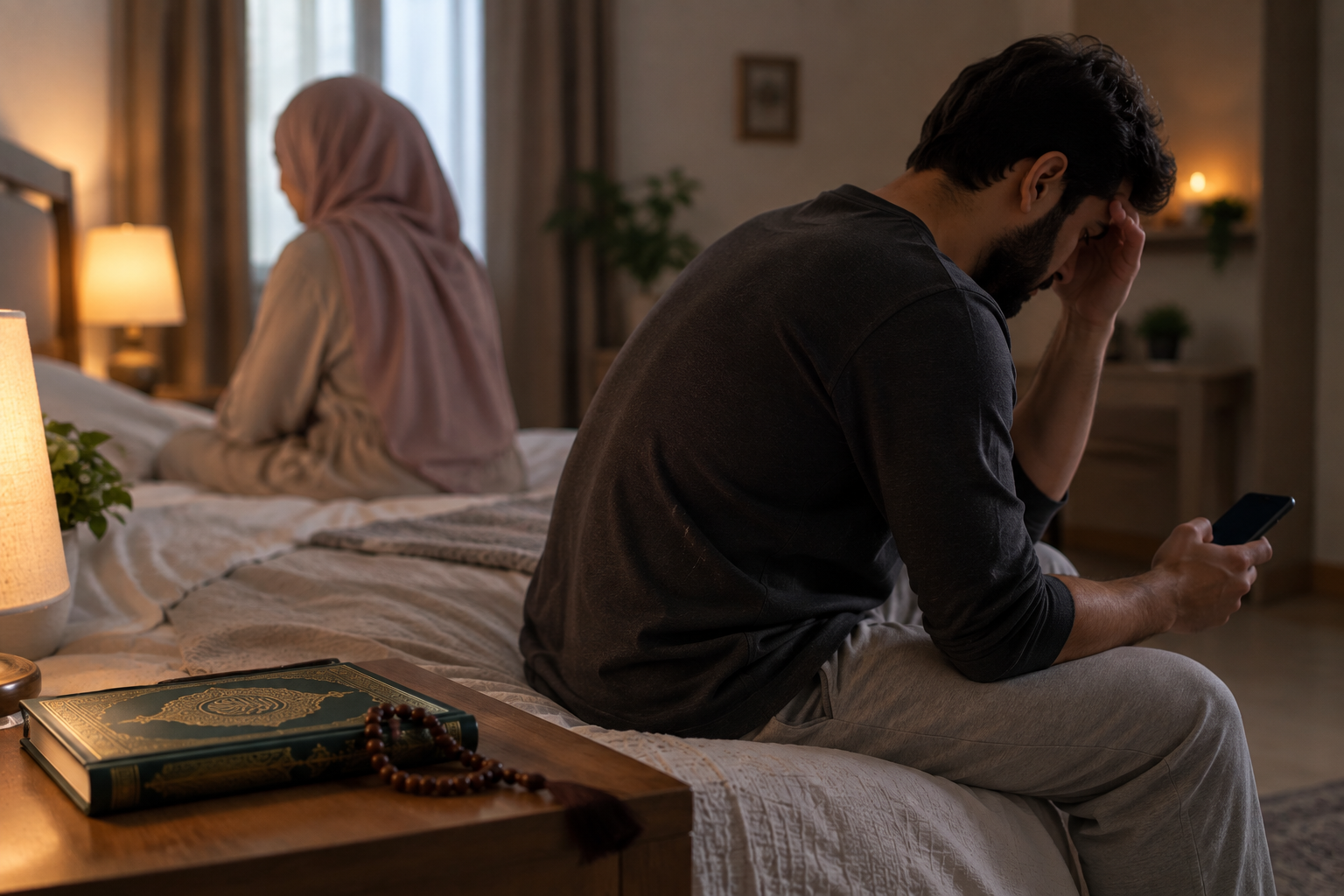
If you’ve discovered that your husband watches pornography, you already know the particular ache that comes with it. It’s not just betrayal — though it can feel like that. It’s the unsettling question of what this means about your marriage, about how he sees you, about whether you are enough. It’s the confusion of not knowing whether to confront him or stay quiet, whether to be angry or compassionate, whether Islam gives you recourse here or simply asks you to endure.
You deserve honest answers to all of these questions. Not harsh judgment of your husband and not dismissal of your pain — but honest Islamic guidance that takes both seriously.
This guide will give you the clear Islamic ruling on pornography, the real impact it has on marriages, the duas to make, and the practical steps Islam gives you to address this — with wisdom and without panic.
Quick answer
Pornography is haram in Islam — this is the clear, scholarly consensus based on the Quran’s command to lower the gaze (An-Nur 24:30) and the established prohibition on viewing the awrah (private parts) of others, whether in person or in images. A husband who watches pornography is committing a clear sin and is accountable to Allah for it. As his wife, you are not required to silently accept this behavior, and you have the right to address it clearly and honestly. Your response should combine: sincere dua for his guidance and return from this sin, wise and direct communication about how it affects you, seeking professional support if it has become an addiction, and knowing your rights if the behavior persists and damages the marriage. You are not overreacting. You are not asking for too much. And you are not alone in this situation.
Signs This May Be Happening
Many wives sense something is wrong before they have confirmation. If you’ve noticed:
- He is less interested in physical intimacy with you
- He is secretive about his phone or computer — clearing history, sudden screen-switching
- He seems emotionally distant or unreachable after time on screens
- He has become more critical of your appearance or compared you to others
- Your intimacy has changed in ways that make you uncomfortable
- You’ve seen it directly, accidentally or otherwise
If any of these ring true, your instincts deserve to be taken seriously — not dismissed as jealousy or paranoia.
The Islamic Ruling: Clear and Unambiguous
Watching pornographic movies, whether done individually or with one’s marriage partner, is definitely detestable to Islamic sense of ethics and morality, and, therefore, considered haram (forbidden) in Islam.
This is not a minority or conservative position — it is the mainstream scholarly consensus, grounded in two clear Islamic principles:
First: The command to lower the gaze
"Tell the believing men to lower their gaze and guard their private parts. That is purer for them. Indeed, Allah is Acquainted with what they do."
(Surah An-Nur, 24:30)
The Quran commands believers to lower their gaze from what is unlawful — and viewing sexually explicit content of other people is precisely what this verse prohibits.
Since we are not allowed to expose ourselves or look at the private parts of others, whether alive or in pictures, how can we be permitted to look at the sexual acts between two people?
Second: The prohibition on viewing the awrah of others
The Prophet ﷺ said:
"No man should look at the awrah of another man, and no woman should look at the awrah of another woman."
(Sahih Muslim)
Scholars have extended this ruling clearly to images and videos — the prohibition is on the viewing of private parts, not only the physical presence.
The Islamic ruling is clear. Your husband watching pornography is not a grey area. It is a sin he is accountable for before Allah.
What NOT to Assume
Even with a clear ruling, some assumptions can trap a wife in a response that doesn’t actually help:
- Don’t assume it means he doesn’t love you. Pornography addiction is a compulsive behavior pattern — many men caught in it feel deep shame and love for their wives simultaneously. His sin does not negate his love.
- Don’t assume it’s your fault. No presentation of yourself, no level of intimacy, no physical attribute of yours caused his choice to view pornography. This is his choice and his accountability.
- Don’t assume it’s harmless. Research consistently shows pornography rewires the brain’s reward systems, erodes marital intimacy, creates unrealistic expectations, and desensitizes men to their actual spouses. The harms are real, documented, and recognized in Islamic ethics as well.
- Don’t assume he can stop easily on his own. For many men, pornography has become a genuine addiction — meaning good intentions and willpower alone are often insufficient without structured support.
- Don’t assume you must immediately seek divorce. Islam gives a spectrum of responses — from patient communication to professional support to separation if necessary. This does not have to end your marriage, but it does need to be addressed.
The Islamic Perspective on Its Harm to Marriage
Islam’s prohibition of pornography isn’t arbitrary. It connects to a deep understanding of how marriage is meant to work. The Quran describes spouses as garments for each other—covering, protecting, and warming each other (Al-Baqarah 2:187). It would be very problematic if a husband or wife needed external sexual arousal from fake, unrealistic sources to make their time together enjoyable. True enjoyment can be fulfilled just by the husband and wife, and they can be so sexually captivated by each other that they need absolutely nothing else.
Pornography directly undermines this. It trains the brain to seek arousal from artificial, exploitative images rather than from the real, present, God-given spouse. Over time, it creates exactly what Islam warns against: a husband who is less present with his wife, less satisfied in halal intimacy, and slowly more distant from both her and from Allah.
There is also the matter of gheerah—the protective jealousy a husband is meant to have for his wife’s honor and dignity, and which a believing wife also has a right to expect. A man who approves of such a thing is lacking in gheerah (protective jealousy), which is what distinguishes a Muslim from others.
Guidance from the Sunnah: The Command to Lower the Gaze
The Prophet ﷺ was asked by Ali ibn Abi Talib about an accidental glance. He responded:
"The first glance is for you, but the second is against you."
(Sunan Abu Dawud — Hasan)
The first, accidental encounter with something haram does not incur sin. The deliberate second glance — the choice to continue viewing — is where accountability begins. Your husband’s repeated, deliberate viewing of pornography is precisely this: a continued, chosen second glance, multiplied.
The Prophet ﷺ also said:
"The eyes commit zina (adultery), and their zina is by looking."
(Sahih al-Bukhari 6243)
The concept of zina al-‘ayn — adultery of the eyes — is an authentic Islamic framework for understanding why pornography is so serious. It is not only a sin against Islamic ethics — it is categorized within the broader framework of the gravest marital violation. This is not exaggeration. It is the Prophetic framework.
Prophetic Example: How the Prophet ﷺ Responded to Sexual Wrongdoing
When the Prophet ﷺ encountered people struggling with sexual sins, his consistent approach was firm on the ruling while compassionate toward the person. He never shamed publicly what was brought to him privately. He prescribed repentance (tawbah), accountability, and return to Allah — not permanent condemnation.
This is the model for how you approach your husband, and how you hope he approaches himself: clear acknowledgment that this is wrong, sincere tawbah to Allah, practical steps to stop, and ongoing support to maintain that change.
Spiritual Remedies: What You Can Do Spiritually
While your husband’s repentance is ultimately his own, your spiritual response matters deeply — both for his sake and for yours.
Dua for his repentance and guidance:
"Allahumma-hdi zawji, wa-rdudhu ilayk, wa-j'alhu min al-tawwabeen al-mutatahhireen." "O Allah, guide my husband, return him to You, and make him among those who repent greatly and purify themselves."
The Quran describes Allah as Al-Tawwab — the One who accepts repentance repeatedly, endlessly. Make this dua for your husband with genuine hope, not just frustration.
Increase your own dhikr and istighfar: This situation will test your own heart — toward bitterness, despair, or resentment. Consistent istighfar and dhikr protects your heart from being consumed by what his sin is doing. Read our guide on how istighfar changes your marriage for the practical framework.
Tahajjud: Bring this specific pain before Allah in the last third of the night. Ask Him to remove this sin from your husband’s life, to protect your marriage from its harm, and to give you wisdom and strength in how you address it. Our guide on tahajjud for marriage problems shows you how to use this practice as an anchor.
Fill the home with dhikr and Quran: A home filled with the remembrance of Allah creates a spiritual environment in which Shaytaan — who drives pornography compulsion — has less access. Dhikr for peace at home gives you the full practical framework for this.
How to Talk to Him About It
This is one of the hardest conversations a wife can initiate. Choose your moment carefully — calm, private, when neither of you is stressed or reactive.
Key principles:
- Be honest about the impact, not just the ruling — he likely knows it’s haram already. What he may not fully understand is what it’s doing to you.
- Invite his honesty — ask how long this has been happening, whether he wants to stop, whether he’s tried before. This information shapes what help is needed.
- Name what you need — not just “stop watching” but practical accountability: parental controls, regular check-ins, professional support.
- Be clear about your limits — if this has been going on for years, if it’s affecting your intimacy, if he refuses to address it, be honest about what you can and cannot continue to live with.
What Should You Do Today?
- If you haven't spoken to him yet — decide today that you will. Not in anger, but in honesty and love. Write down what you want to say first.
- Make sincere dua for his repentance after your next salah — "Allahumma-hdi zawji wa-rdudhu ilayk"
- Identify one trusted person — a close friend, a counselor — who you can speak to for your own support. You should not carry this alone.
- Research Muslim-friendly counselors or addiction specialists in your area — for yourself, and as a suggestion to him.
- Increase your own dhikr and connection to Allah — not to earn his change, but to protect your own heart through this.
- Decide what your boundary is — if he refuses to acknowledge it, refuses to seek help, or continues unrepentantly, what will you do? Know your answer before you have the conversation.
Mistakes to Avoid
- Discovering it and staying completely silent, letting resentment build without addressing it
- Confronting him in the heat of anger with accusation and shame — which often causes defensiveness rather than repentance
- Accepting promises of change without any practical accountability structure
- Blaming yourself or changing yourself in response to his behavior
- Making this a permanent point of contempt in the marriage — if he genuinely repents and takes real steps, the goal is healing, not punishment
- Ignoring the impact on yourself — this affects your self-worth and your mental health, and you deserve support too
When to Seek Professional Help
Pornography, particularly when long-standing, functions as an addiction — with neurological patterns similar to substance dependence. Willpower alone is often insufficient. Professional help is appropriate when:
- He acknowledges the problem but has repeatedly failed to stop alone
- It has been going on for years
- It is affecting your intimacy, his mood, or his daily functioning
- He is watching increasingly extreme content
- He denies it is a problem despite clear evidence
Muslim-aware therapists and certified sex addiction therapists (CSATs) exist and can help. Seeking this help is not weakness — it is responsible stewardship of a marriage both of you want to save.
Your Rights in This Situation
You are not required to stay silent or accept this behavior indefinitely. Islam gives you:
The right to address it directly — you have the right to raise this as a serious marital issue, to ask for accountability and change, and to involve a trusted mediator (family elder, imam, counselor) if direct conversation fails.
The right to protect yourself — if his pornography use is affecting your intimacy, your self-worth, or your emotional safety in the marriage, your wellbeing matters and you have the right to protect it.
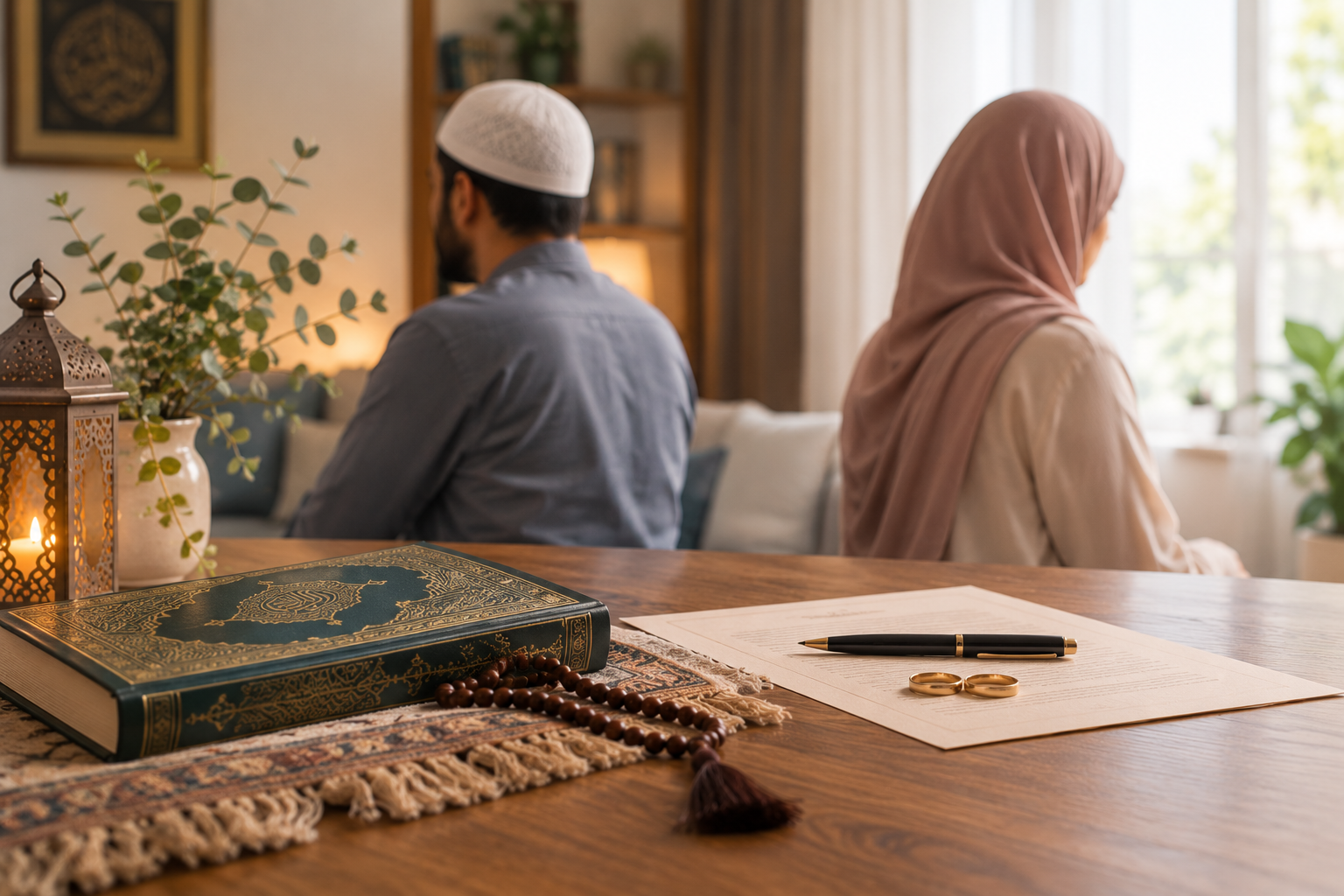
The right to seek separation — if he refuses to acknowledge the sin, refuses to seek help, and continues behavior that is seriously harming the marriage and your wellbeing, divorce is a legitimate Islamic option. As we explore in our guide on can Allah fix a broken marriage, Islam never requires you to sacrifice your wellbeing entirely for a marriage that refuses to change.
Key Takeaways
Pornography is haram in Islam — clear scholarly consensus based on An-Nur 24:30, the prohibition on viewing awrah, and the concept of zina al-‘ayn
Your pain is valid and your concern is Islamic, not prudish
His sin is his own accountability — it is not caused by you and cannot be fixed by changing yourself
Approach him with honesty and love, not shame — invite repentance rather than trigger defensiveness
Professional support is often necessary for genuine change — porn addiction is a real neurological pattern, not just a willpower failure
Know your rights: to address it, to seek help, to set boundaries, and to seek separation if change is refused
Emotional Closing
If you’re carrying this alone right now — the discovery still fresh, or the long-standing knowledge still raw — know that your pain is seen by Allah. The Prophet ﷺ described the eyes’ zina as a real sin precisely because it is a real betrayal — and you are right to feel it as one.
But you are also not without recourse, without hope, or without a way forward. Many marriages have survived this — when both spouses were willing to face it honestly, seek appropriate help, and rebuild on a foundation of tawbah and genuine commitment.
Allah is Al-Tawwab — the One who accepts repentance endlessly. He is Al-Wadood — the Most Loving. He did not design marriage to include this harm. And He is fully capable of removing it from your home when you and your husband turn to Him sincerely and take the steps He has made available.
You deserve a marriage where you are your husband’s only gaze, his only desire, his source of tranquility. That is the marriage Islam designed. Keep making dua for it. And take the steps within your power to protect it.
A Dua to End With
"Allahumma-hdi zawji wa-rdudhu ilayk, wa-j'alhu min al-tawwabeen al-mutatahhireen. Allahumma-hfadh baytana wa zawjana min kulli fitnah. Waj'alna mimman yastami'oona-l-qawla fa-yattabi'oona ahsanah."
“O Allah, guide my husband and return him to You. Make him among those who repent greatly and purify themselves. O Allah, protect our home and our marriage from every fitnah. And make us among those who hear the word and follow the best of it.”
Say this from a heart that is both grieved by what is happening and genuinely hopeful in Allah’s power to heal it. He hears both the grief and the hope. And He responds to both.
Frequently Asked Questions
Is watching pornography haram in Islam?
Yes — the clear scholarly consensus based on Surah An-Nur 24:30 (command to lower the gaze), the prohibition on viewing the awrah of others, and the Prophet’s ﷺ hadith on zina al-‘ayn (adultery of the eyes — Bukhari 6243). This applies to a husband watching alone, and to watching together with a wife.
What should I do if I find out my husband is watching pornography?
Don’t confront in anger. Give yourself time to process. Then have an honest, direct conversation — expressing the impact on you, inviting his honesty about how long and how serious, and naming what you need in terms of change and accountability.
Is pornography addiction real?
Yes. Research confirms that pornography activates the brain’s reward system in ways similar to substance addiction, creating compulsive patterns that willpower alone often cannot break. Professional support from a qualified therapist is often necessary for genuine, lasting change.
Does my husband's pornography use mean he doesn't find me attractive?
Not necessarily — pornography functions as a compulsive behavior separate from attraction to a real partner. Many men with pornography habits feel genuine attraction to and love for their wives. But this does not minimize the harm it causes to your self-worth and the marriage.
Can I seek divorce if my husband doesn't stop watching pornography?
If he refuses to acknowledge the sin, refuses to seek help, and continues behavior that seriously harms the marriage — separation is a legitimate Islamic option. Consult a knowledgeable, compassionate scholar about your specific situation.
Am I allowed to install parental controls or monitoring as part of accountability?
Yes — practical accountability measures (content filters, app restrictions, agreed-upon monitoring) are legitimate and healthy responses to pornography addiction in marriage. They should be agreed upon mutually as part of a recovery plan, not installed secretly as surveillance.
What dua can I make for my husband to stop watching pornography?
“Allahumma-hdi zawji wa-rdudhu ilayk, wa-j’alhu min al-tawwabeen al-mutatahhireen” — O Allah, guide my husband, return him to You, and make him among those who repent greatly and purify themselves.
On this page
Dua of the week
- "O Allah, I ask You for Your love, and the love of those who love You."
- Tirmidhi 3490