Introduction
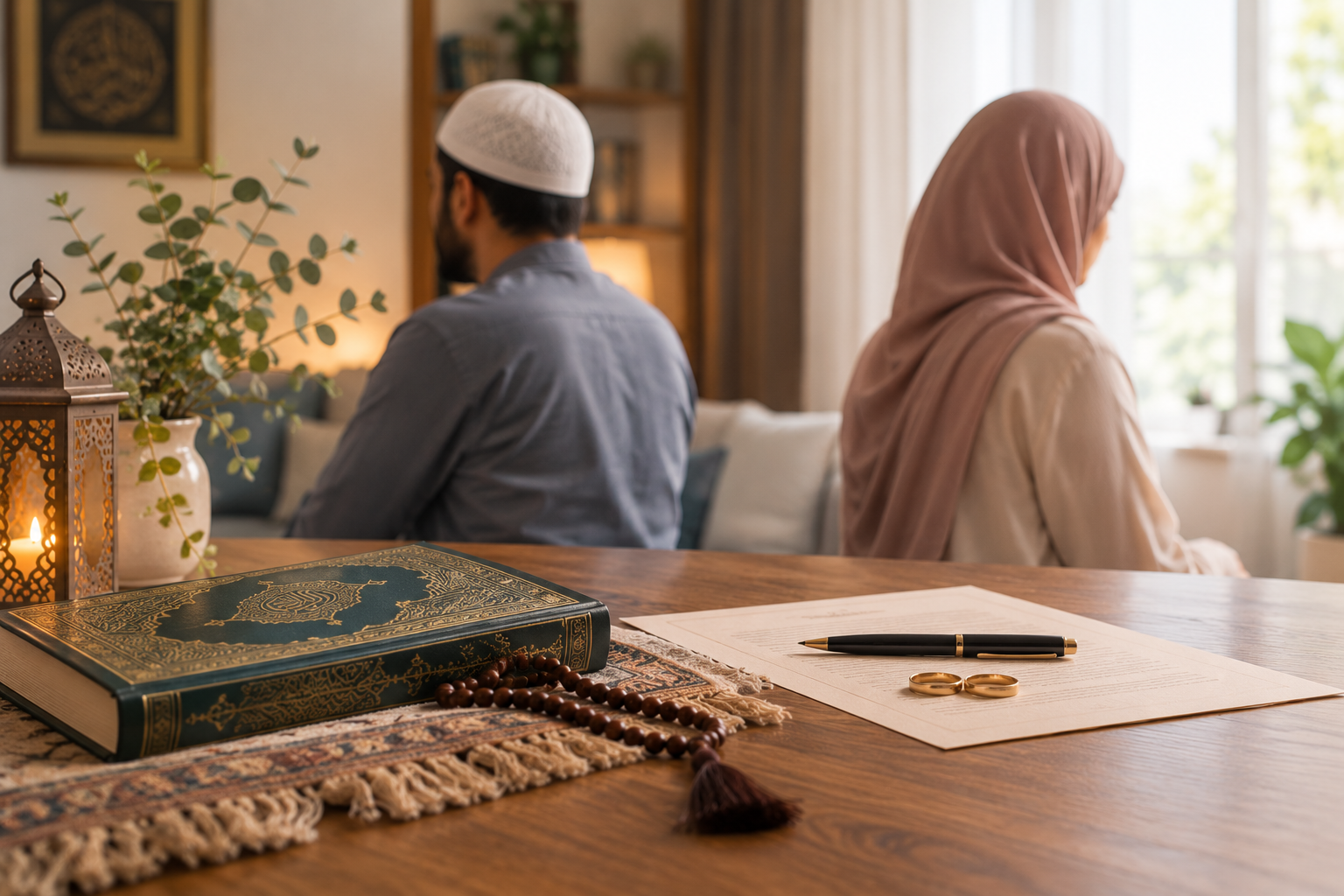
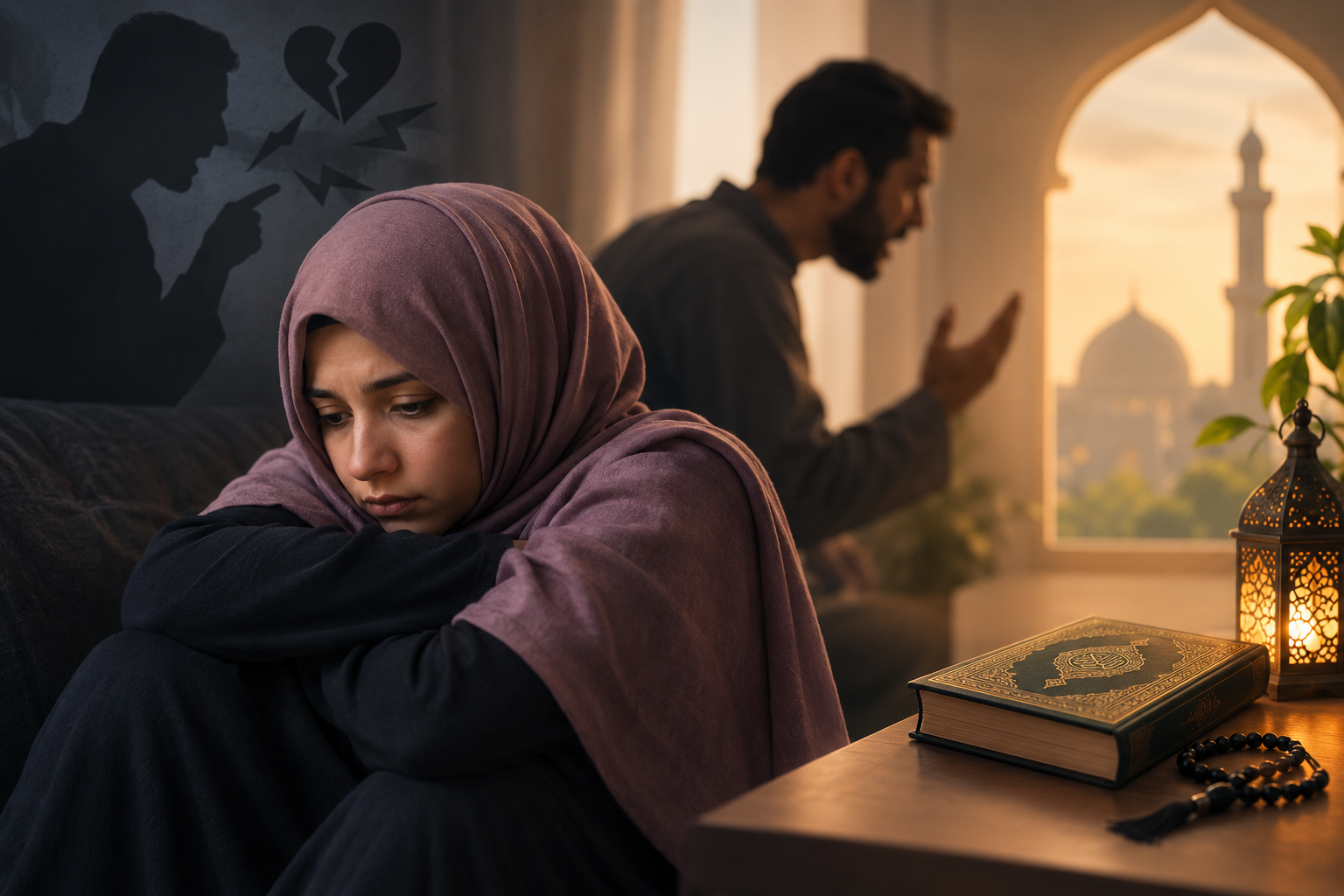
If you’re asking this question, something in your marriage has brought you to a place where staying feels unbearable and leaving feels terrifying. You’re probably exhausted — from trying, from hoping, from holding everything together while quietly wondering if this is the rest of your life.
And underneath the exhaustion is probably something else: guilt. The feeling that a good Muslim wife wouldn’t be asking this. That asking means you’ve failed. That Islam’s answer is simply “be patient” — full stop.
It isn’t. And you haven’t failed.
Islam has a clear, nuanced, and deeply merciful position on when staying in a marriage is required, when leaving is permitted, and when — in some cases — leaving may be the most faithful thing you can do. This guide will give you that honest framework, alongside the spiritual tools to help you find your way through one of the hardest decisions a person can face.
Quick answer
Islam permits — and in some cases supports — a wife leaving a marriage. Divorce is described as “the most hated of permissible things to Allah” (Abu Dawud 2178), which means it is permissible — just not taken lightly. A wife has the right to seek separation through khula if she can no longer remain in the marriage. Islam does not require you to stay in a marriage that is harming you, violating your rights, or making it impossible to fulfill your own obligations to Allah. However, separation is a serious step that should come after sincere effort, honest communication, and — where appropriate — mediation. The question is not “is leaving ever allowed?” It is: “have I done what I can, and is staying genuinely harmful?”
Signs That Leaving May Be the Right Choice
Not every difficult marriage is a marriage to leave. But some situations in Islam clearly justify — or even necessitate — separation:
- Persistent abuse — physical, emotional, verbal, or sexual. Islam never requires endurance of abuse.
- Neglect of basic rights — a husband who consistently fails to provide financial maintenance (nafaqah), physical intimacy, emotional presence, or basic kindness after sincere attempts to address it
- Preventing you from practicing Islam — a husband who stops you from praying, fasting, wearing hijab, or maintaining your obligations to Allah
- Addiction or behavior that endangers you or your children — and which persists without genuine effort at change
- A marriage with no reasonable hope of improvement — despite sincere dua, honest communication, and outside mediation
The Quran itself establishes that marriage has two valid outcomes — held honorably or released honorably:
"Retain them according to acceptable terms or release them according to acceptable terms."
(Surah Al-Baqarah, 2:231)
Staying and leaving are both presented as legitimate outcomes. Neither is a failure.
What NOT to Assume
- Don’t assume Islam always says “stay.” Islam values both the sanctity of marriage AND the dignity and wellbeing of both spouses. It does not ask you to sacrifice one entirely for the other.
- Don’t assume leaving means you failed as a Muslim wife. If you have made sincere effort, made dua, communicated honestly, and sought help — you have fulfilled your responsibility. The outcome is in Allah’s hands.
- Don’t assume staying is always the more pious choice. Sometimes staying in an abusive or deeply harmful marriage damages your faith, your mental health, and your children. Protecting these is also an Islamic obligation.
- Don’t assume you must have “enough” suffering to justify leaving. Your wellbeing matters before it reaches crisis point.
- Don’t assume this decision must be made immediately. Take time, seek counsel, and make istikhara.
The Islamic Perspective
The Quran does not glorify suffering within marriage. It consistently describes marriage in terms of mutual dignity:
"And live with them in kindness. For if you dislike them — perhaps you dislike a thing and Allah makes therein much good."
(Surah An-Nisa, 4:19)
This verse is directed at husbands — but it establishes the principle that underlies the whole Islamic framework: marriage is meant to be characterized by ma’ruf (kindness, goodness, honor). When it consistently isn’t — when harm has replaced ma’ruf — the framework permits a different outcome.
The Quran also addresses a wife’s right to initiate separation:
"If you fear a breach between them, appoint an arbiter from his people and an arbiter from her people. If they both desire reconciliation, Allah will cause it between them."
(Surah An-Nisa, 4:35)
And when reconciliation is not possible:
"But if they separate, Allah will enrich each of them from His abundance."
(Surah An-Nisa, 4:130)
Allah will enrich each of them from His abundance. Not punish. Not abandon. Enrich. This is the Quranic framing of a marriage that ends — not catastrophe, but a door Allah Himself promises to open.
Guidance from the Sunnah: The Prophet ﷺ Permitted Khula
The clearest Prophetic evidence that a wife can initiate separation comes from the famous case of Habibah bint Sahl (or Jameelah, as some narrations name her). She came to the Prophet ﷺ and said she did not fault her husband’s character or religion — but she could not remain in the marriage. She said she feared she would fall into kufr (disbelief) if she remained — meaning the marriage had become so harmful to her that she could not maintain her faith within it.
The Prophet ﷺ did not tell her to go back and be patient. He facilitated the separation. He said to her husband: “Accept the garden back and divorce her once.” (Sahih al-Bukhari 5273)
This is one of the most important hadiths about a wife’s right to leave a marriage — because she did not cite abuse or neglect. She cited that she could not remain in it and maintain her faith and wellbeing. And the Prophet ﷺ honored that.
What Is Khula?
Khula is the Islamic right of a wife to initiate separation by returning her mahr (dowry) to her husband. Key points:
- It requires no specific “grounds” beyond the wife genuinely being unable to remain in the marriage and fulfill her obligations
- It does not require the husband’s agreement in the presence of a qadi (Islamic judge) — though it is easier when agreed upon
- It results in one irrevocable separation (not counted as one of the three talaqs)
- The wife typically returns the mahr she received
The Prophet ﷺ established this as a wife’s right — it exists precisely so that a wife is never trapped in a marriage against her will.
The Question You're Really Asking
Most wives who search “should I leave my marriage in Islam” aren’t asking for a ruling. They already know leaving is permitted. What they’re really asking is:
- “Is what I’m experiencing bad enough to justify leaving?”
- “Will Allah be angry with me if I leave?”
- “Am I giving up too easily?”
- “What will happen to me and my children if I go?”
These are the real questions — and they deserve honest answers.
Is what you’re experiencing bad enough? If you are being harmed — physically, emotionally, spiritually — then yes. If your basic rights are being consistently denied. If your children are being harmed. These are clear.
Will Allah be angry? No. He permitted this door. He said He will enrich those who separate (An-Nisa 4:130). He does not open doors to punish people for walking through them.
Are you giving up too easily? Only you and Allah truly know the full picture of your effort. If you have sincerely tried — communicated, made dua, sought help — you have not given up too easily. You have done what was asked of you.
What will happen to you? Whatever Allah decrees — and He promised provision and enrichment, not abandonment.
Spiritual Remedies
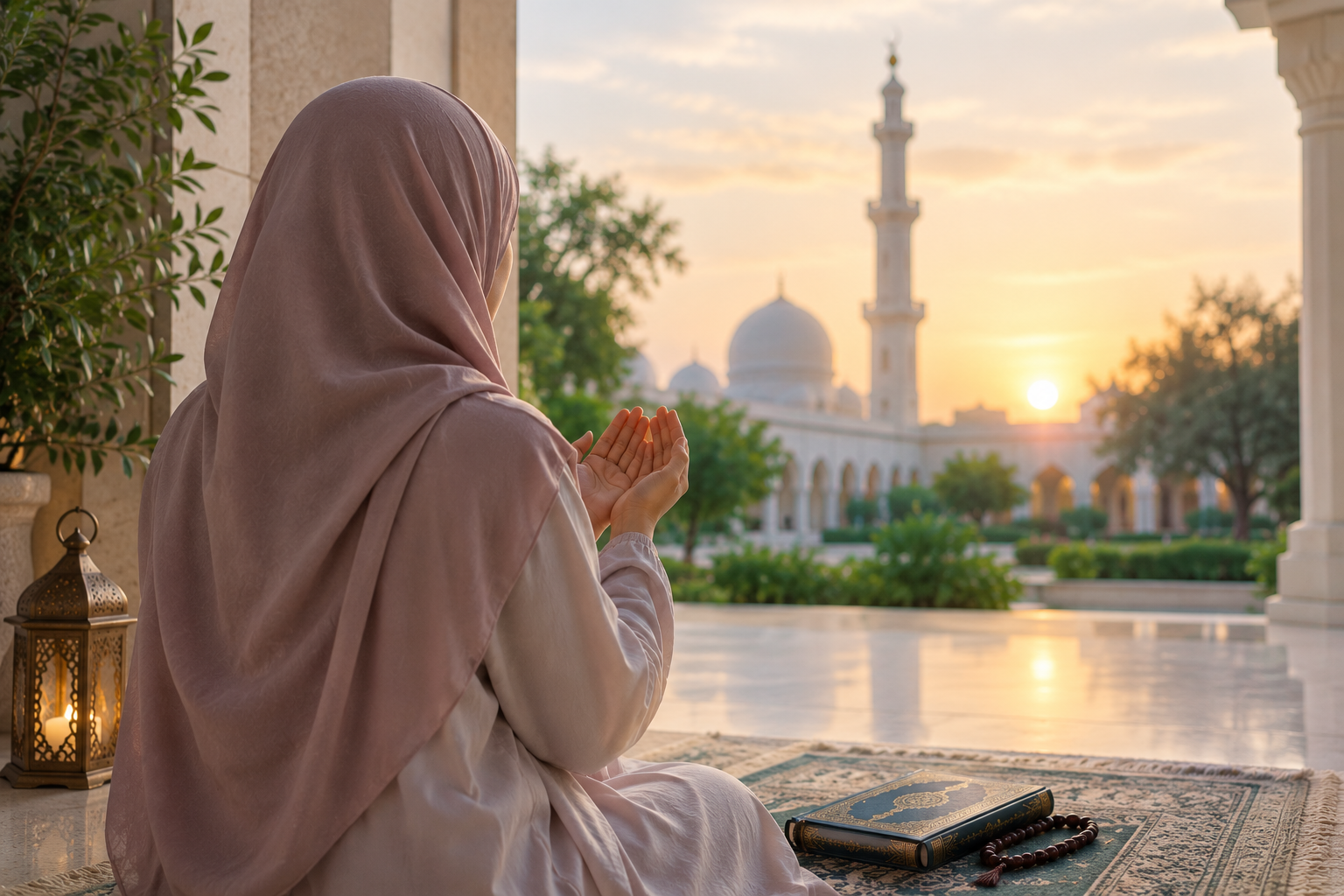
Istikhara — before any final decision:
The Prophet ﷺ said:
"If any one of you is deliberating about a matter, let him pray two rak'ahs of non-obligatory prayer, then say: 'Allahumma inni astakheeruka bi 'ilmika wa astaqdiruka bi qudratika...'"
(Sahih al-Bukhari 6382)
Istikhara is not about a dream or a feeling. It is about asking Allah to decree what is best and to facilitate it. Make istikhara consistently before this decision.
Dua for clarity and guidance:
"Allahumma arini-l-haqqa haqqan warzuqni ittiba'ahu, wa arini-l-batila batilan warzuqni ijtinabahu." "O Allah, show me the truth as truth and grant me the ability to follow it. Show me falsehood as falsehood and grant me the ability to avoid it."
Tahajjud for divine direction: There is no better place to bring this decision than the last third of the night. See our guide on tahajjud for marriage problems.
Dua for protection and provision:
"Hasbiyallahu la ilaha illa huwa, 'alayhi tawakkaltu wa huwa rabb ul-'arsh il-'adheem." "Allah is sufficient for me. There is no god but Him. Upon Him I rely, and He is the Lord of the Great Throne."
(Surah At-Tawbah, 9:129)
If the fear of leaving is fear of the unknown — what will I do, how will I manage — this dua anchors you in the reality that Allah is sufficient. Your provision, your protection, your future — all in His hands.
Sabr and Tawakkul: What They Actually Mean Here
Sabr in Islam is not permanent endurance of harm. The Prophet ﷺ himself left situations that were harmful. Khadijah (may Allah be pleased with her) had been married twice before the Prophet ﷺ — both marriages had ended. Islam does not stigmatize endings.
Sabr in this context means: making decisions with patience and wisdom rather than reactive panic. Giving sincerity time to work. Not leaving in an explosion of emotion before you have tried what can be tried.
It does not mean staying indefinitely in a situation that is harming you, your children, or your faith.
Tawakkul means taking every practical step within your wisdom — seeking counsel, making dua, exploring options, protecting yourself — and then genuinely releasing the outcome to Allah. Not the outcome you fear. Not the outcome you want. His outcome.
What Should You Do Today?
If you recognise emotional abuse in your marriage, here are steps you can take now:
- Make istikhara tonight — two rak'ahs, then the authentic dua — and commit to making it consistently until clarity comes
- Write down honestly, privately: what has been tried, what the pattern is, what staying and leaving would each mean for you and your children
- Consult a trusted, knowledgeable scholar or Muslim counselor — not for permission, but for wise perspective from someone who knows Islamic family law
- Identify your practical situation clearly — finances, housing, children — so that any decision is made from information, not fear of the unknown
- Do not make a final decision in a moment of crisis — let the clarity of istikhara, counsel, and calm guide you
- Make the dua for clarity (Allahumma arini-l-haqqa haqqan) after every salah
Mistakes to Avoid
- Making the decision in the peak of a crisis or argument — emotion produces panic, not wisdom
- Staying only because of what people will say — Allah’s decree matters more than social opinion
- Leaving without exploring mediation or outside help first — unless safety requires immediate action
- Delaying indefinitely when harm is clear — sometimes protecting yourself is the faithful act
- Asking everyone around you instead of centering the decision on istikhara and trustworthy counsel
When to Seek Immediate Help
If your marriage involves physical danger, threats, or ongoing abuse — do not wait for mediation or lengthy deliberation. Your safety comes first. Seek help from a trusted person, a domestic violence resource, or a shelter immediately. Allah does not require you to remain in danger.
Key Takeaways
Islam permits a wife to leave a marriage — through khula or talaq — and the Prophet ﷺ himself facilitated separations when a wife could not remain
The Quran describes both staying and leaving as valid outcomes — and promises enrichment (not punishment) to those who separate
Sabr does not mean permanent endurance of harm — it means patient wisdom in how you make a decision
Istikhara is the essential spiritual practice before this decision
You have rights, options, and Allah’s direct promise of provision — you are not choosing between your faith and your freedom
Emotional Closing
If you are sitting with this question tonight — exhausted, uncertain, afraid of both paths — please know that you are not outside Allah’s care because you’re considering leaving. You are in it. He sees the full weight of what you’ve been carrying. He knows every attempt you’ve made, every dua you’ve whispered, every moment you chose to try again.
He opened the door of khula. He told you He would enrich those who separate. He promised He is sufficient.
Whatever this decision ultimately is — and only you, your counsel, and istikhara can lead you to it — you are not alone in it. Allah walks with those who walk toward what is right, even when what is right is the harder, scarier path.
Make your istikhara. Seek your counsel. And trust that the One who knows all of what you don’t know will guide you to exactly what is best.
A Dua to End With
"Allahumma inni astakheeruka bi 'ilmika wa astaqdiruka bi qudratika wa as'aluka min fadlikal-'adheem. Fa-innaka taqdiru wa la aqdiru, wa ta'lamu wa la a'lamu, wa anta 'allam ul-ghuyoob. Allahumma in kunta ta'lamu anna hadhal-amra khayrun li fi deeni wa ma'ashi wa 'aqibati amri, faqdurhu li wa yassirhu li thumma barik li feeh. Wa in kunta ta'lamu anna hadhal-amra sharrun li fi deeni wa ma'ashi wa 'aqibati amri, fasrifhu 'anni wasrifni 'anhu, waqdur lil-khayra haythu kana thumma ardini bihi."
“O Allah, I seek Your guidance by Your knowledge, I seek Your assistance by Your power, and I ask You from Your great bounty. For You are capable and I am not, You know and I do not, and You are the Knower of the unseen. O Allah, if You know that this matter is good for me in my religion, my livelihood and my hereafter, then ordain it for me and make it easy for me, then bless it for me. And if You know it is bad for me in my religion, my livelihood and my hereafter, then turn it away from me and turn me away from it, and ordain for me the good wherever it may be, then make me pleased with it.”
This is the istikhara dua. Say it for this decision. Say it every night until clarity comes. And trust that the answer — whatever it is — will come from the One who knows what you cannot.
Frequently Asked Questions
Is it haram to leave my marriage in Islam?
No. Divorce (and khula for wives) is explicitly permitted in Islam. The Prophet ﷺ described it as “the most hated of permissible things” — meaning it is permissible but serious. Leaving a harmful marriage is not haram.
What is khula in Islam?
Khula is a wife’s right to initiate separation by returning her mahr to her husband. It does not require specific grounds — only that she genuinely cannot remain in the marriage. The Prophet ﷺ established and facilitated this right.
Will Allah be angry with me for leaving my marriage?
No. Allah opened the door of khula and said He will enrich those who separate (An-Nisa 4:130). Walking through a door Allah opened is not disobedience.
What if my husband won't agree to divorce?
: A wife can pursue khula through an Islamic scholar or court even without her husband’s agreement. His consent is preferred but not always required when her wellbeing is at stake.
How do I know if I've tried enough?
If you have communicated honestly, made sincere dua, and sought mediation or outside help — you have fulfilled your responsibility. The decision beyond that is between you, your counsel, and Allah.
What does Islam say about divorce and children?
Islam prioritizes the wellbeing of children — which sometimes means separating from a harmful environment is better for them than maintaining a destructive one. Custody and care arrangements should be made with the children’s best interests as the priority.
How do I make istikhara for this decision?
Pray two rak’ahs of voluntary prayer, then recite the full istikhara dua (included above). Make it consistently over several days or weeks. The guidance often comes through clarity of heart, ease of a path, or circumstances rather than a specific dream.
On this page
Dua of the week
- "O Allah, I ask You for Your love, and the love of those who love You."
- Tirmidhi 3490