Introduction
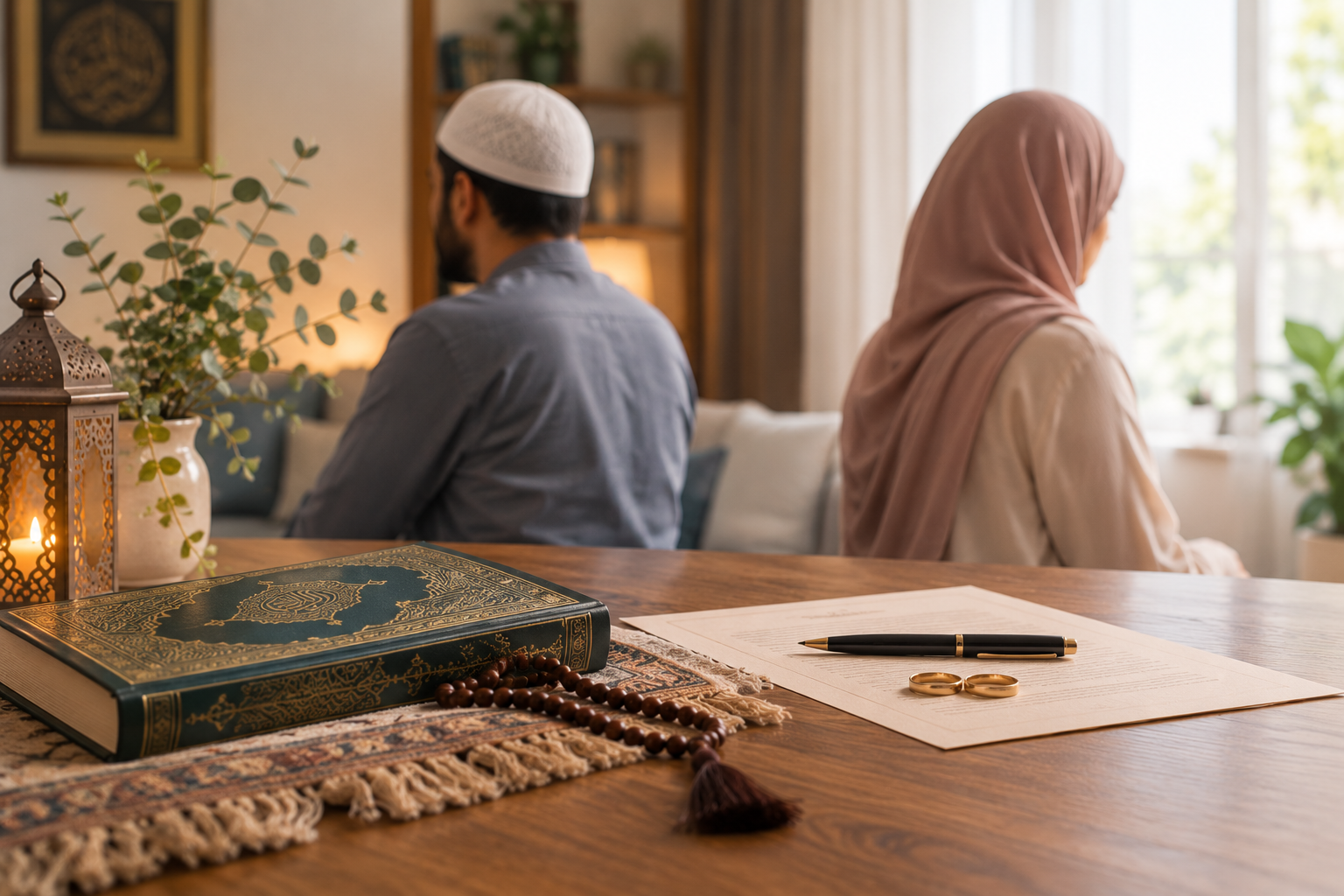
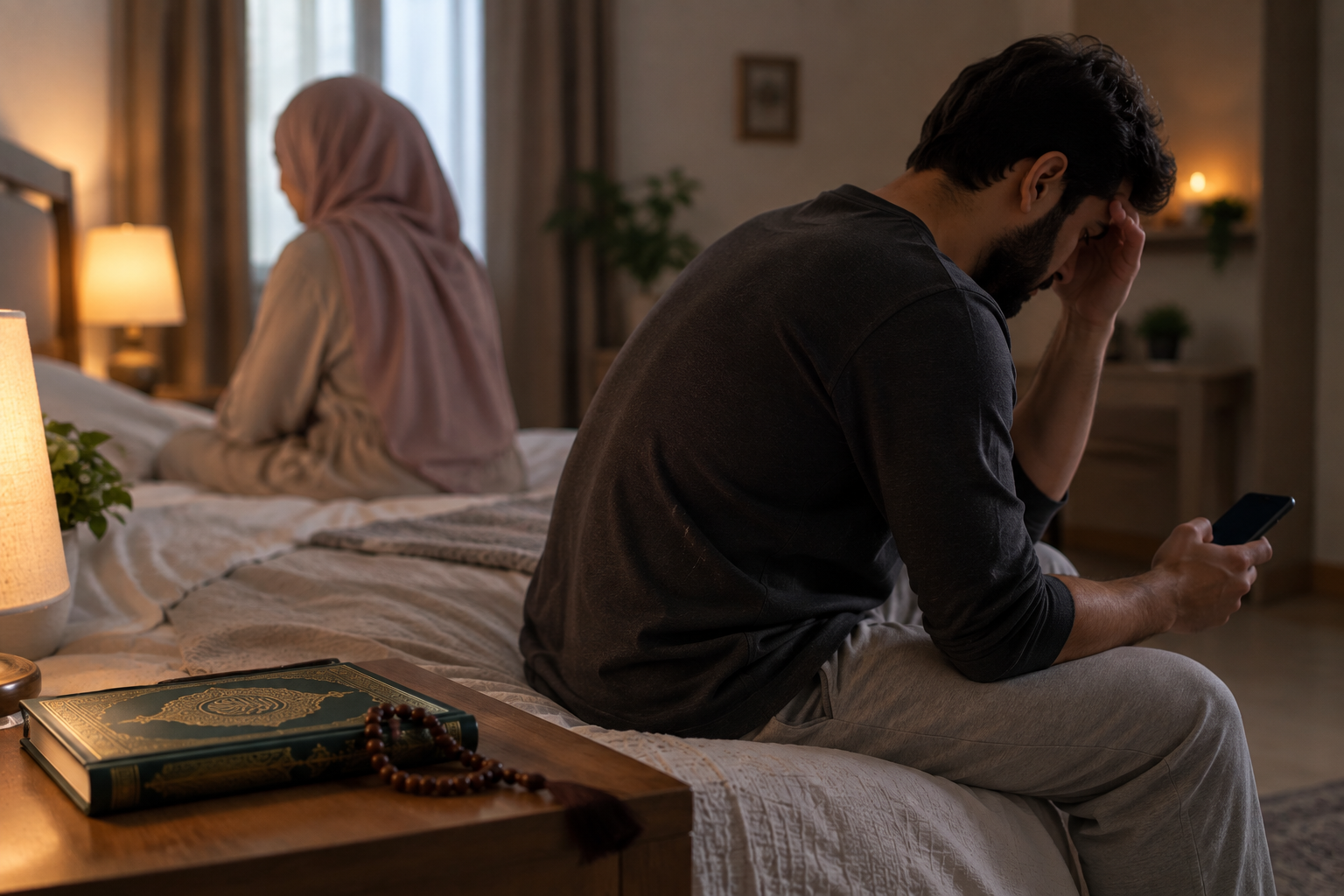
There’s a specific kind of loneliness that comes from being married and still feeling alone. You’re not single. You share a home, a name, a life on paper. And yet the person who’s supposed to be your closest companion feels perpetually just out of reach — always working, always tired, always somewhere else, even when he’s sitting in the same room.
If you’ve found yourself longing for your husband’s time and attention — not gifts, not money, just him — please know your longing is not silly, needy, or ungrateful. It’s one of the most natural human desires there is, and it points to something Islam actually recognizes and protects.
Yet many wives in this situation carry a quiet fear: maybe I’m asking for too much. Maybe a good wife would just be content with a roof over her head and food on the table. Let’s gently address that fear head-on — because the truth is, Islam gives you a real right to your husband’s companionship. And understanding that changes everything about how you approach this.
Quick answer
If your husband doesn’t spend time with you, know that quality time and companionship are your genuine rights in Islam — not luxuries you should feel guilty for wanting. A husband’s duties extend far beyond financial provision; the Prophet ﷺ taught that “your family has a right upon you,” and he personally modeled spending warm, attentive time with his wives. That said, the path forward is not demanding your rights harshly, but combining sincere dua, warm and non-accusatory communication, understanding what may be pulling him away, and making your time together something he’s drawn to rather than pressured into. If he persists in neglect despite sincere efforts, involving a trusted mediator is the next step.
Your Need for His Time Is Valid — and Islamically Recognized
Let’s begin by dismantling the guilt, because so many wives are burdened by it. In many real cases, women are made to feel — sometimes by their own husbands — that wanting quality time is “loving the dunya too much,” being ungrateful, or failing to be a patient wife. Some husbands even claim their only obligations are to provide a house, food, and clothing, and that companionship isn’t their wife’s right at all.
This is simply not what Islam teaches.
Yes, financial provision (nafaqah) is one of a husband’s duties. But it is not his only duty. Islam recognizes the human being as a whole — with emotional, spiritual, and relational needs, not just material ones. A wife is not merely a dependent to be fed and housed. She is a companion, a partner, a source of tranquility — and that relationship requires presence, not just provision.
The very purpose of marriage, as Allah describes it, is emotional:
"And among His signs is that He created for you spouses from among yourselves so that you may find tranquility in them, and He placed between you affection and mercy."
(Surah Ar-Rum, 30:21)
You cannot find tranquility, affection, and mercy in someone who is never present. These things require time together. So your desire for your husband’s companionship isn’t a weakness in your faith — it’s you seeking the very thing Allah designed marriage to provide.
What Islam Actually Says About a Husband's Time
Here is the evidence that many wives are never taught. A husband spending time with his wife is not a favor he does out of generosity — it is part of the good companionship Islam obligates upon him.
Allah commands, in general terms that cover far more than money:
"And live with them in kindness."
(Surah An-Nisa, 4:19)
Scholars explain that “living with them in kindness” (mu’asharah bil-ma’ruf) includes good companionship, pleasant treatment, and yes — spending time together. It is not fulfilled by financial support alone while emotionally abandoning one’s spouse.
Even more directly, there is the famous incident involving Salman al-Farisi and Abu Darda (may Allah be pleased with them). Abu Darda was so absorbed in worship and fasting that he was neglecting his wife. Salman said to him:
“Your Lord has a right over you, your soul has a right over you, and your family has a right over you; so give each one its due right.”
When this was mentioned to the Prophet ﷺ, he affirmed it, saying: “Salman has spoken the truth.” (Sahih al-Bukhari)
Reflect on how powerful this is. Abu Darda wasn’t neglecting his wife for something bad — he was doing so for extra worship and fasting, acts of devotion. And still, the Prophet ﷺ affirmed that his wife had a right to his time and presence that he was wrong to neglect. If a wife’s right to companionship outweighs even voluntary worship, how much more does it outweigh excessive work, endless scrolling, or time given entirely to friends?
The Prophet ﷺ himself, despite carrying the weight of an entire ummah, made real time for his wives — talking with them, laughing with them, even racing with Aisha (may Allah be pleased with her). His example makes it unmistakable: being present with your spouse is part of the Sunnah, not a distraction from religious life.
Why This Might Be Happening
Before deciding how to respond, it helps to understand what might be driving your husband’s absence. In practice, this usually comes down to one or more of these:
- Genuine work pressure — he may be caught in a demanding job, or believe that providing financially is how he expresses love
- A cultural misconception — some men are raised to believe that a husband’s role is purely to provide, and that emotional companionship isn’t expected of them
- Escaping into distraction — phone, gaming, TV, or friends can become an avoidance mechanism, sometimes to escape tension at home
- Emotional disconnection — if there’s been conflict or distance, he may be withdrawing rather than engaging
- Simply not realizing the impact — some husbands genuinely don’t grasp how deeply their absence is hurting their wife, because it’s never been communicated calmly
Notice that these call for very different responses. A husband buried in work out of a sincere sense of duty needs a different conversation than one who’s emotionally checked out. Identifying which applies to your situation helps you respond wisely rather than react.
If your husband’s distance feels more like emotional withdrawal than busyness, our guide on what to do when your husband becomes emotionally distant explores that pattern more deeply.
Turning to Allah First
Before the conversations and the strategies, begin where every difficulty in marriage is best begun — with Allah, the Turner of hearts.
Make dua for his heart and for your marriage. Ask Allah to soften your husband’s heart toward you, to open his eyes to your needs, and to place a genuine desire in him to be close to you. You cannot force his attention, but Allah can incline his heart. Many wives find that consistent dua for their husband’s heart to soften shifts things that no amount of asking or arguing ever could.
Make dua for yourself too. Ask Allah for patience, for the right words, for a heart that doesn’t harden into resentment while you wait. Ask Him to help you approach this from love rather than accumulated hurt.
Pray about the timing. Ask Allah to show you the right moment and the right way to raise this with your husband — because how and when you bring it up matters enormously.
This isn’t passive. Turning to Allah first is what steadies your heart so that when you do act, you act from a grounded, hopeful place rather than a desperate or angry one.
How to Talk to Him About It
This is where many wives unintentionally make things harder. When we’re hurting, our words often come out as accusations — and accusations make people defensive, not present. Consider the difference:
A note on that last one: it’s tempting, when you learn that companionship is your Islamic right, to bring the evidence to your husband as ammunition. Be careful here. As one wise observation puts it — even if he then gives you time reluctantly, out of obligation, what quality of time will that be? The goal isn’t to win an “evidence war.” It’s to help him want to be close to you. Lead with warmth; let the knowledge inform your confidence, not your accusations.
Make Your Time Together Something He's Drawn To
Here’s a practical truth that’s easy to miss when you’re hurt: people are drawn toward warmth and away from pressure. If every interaction becomes about the complaint — “you don’t spend time with me” — home can start to feel like a place of tension he unconsciously avoids, deepening the very problem you’re trying to solve.
This doesn’t mean suppressing your needs. It means being strategic about connection:
- Start small and pressure-free. Suggest something low-stakes and easy — a cup of tea together after the kids sleep, a short walk, sharing a meal with phones away. Don’t demand a grand evening out immediately.
- Make home a place of ease, not interrogation. When he does spend time with you, resist the urge to use it to air grievances. Let some of your time together simply be pleasant, so he associates being with you with feeling good.
- Express appreciation when he does show up. Positive reinforcement works far better than criticism. “I loved that, thank you” invites more; “finally, about time” shuts it down.
- Reconnect over shared things. Find something you both enjoy — even something small. Shared positive experiences rebuild the bond that makes him want your company.
This is not manipulation, and it’s not you doing all the work while he does none. It’s simply working with human nature rather than against it, while you also address the deeper issue directly.
What Should You Do Today?
- Make sincere dua asking Allah to soften your husband's heart and draw him closer to you
- Choose one calm, low-pressure moment this week to gently share how much you miss him — without accusation
- Suggest one small, specific, easy thing to do together (not a big demand)
- Notice and thank him for any effort he makes, however small
- Check your own heart: are you approaching him from love, or from accumulated resentment? Ask Allah to soften your side too
- Write down what you think is really driving his absence — so you respond to the real cause
When to Seek Further Help
If you’ve sincerely tried — dua, warm communication, patience, making home a place of ease — and your husband continues to neglect you entirely, dismisses your feelings, or insists that companionship simply isn’t your right, then it’s appropriate to involve others.
Islam itself endorses bringing in trusted mediators when a marriage is stuck: a respected family elder, a knowledgeable and compassionate imam, or a Muslim marriage counselor. Sometimes a husband will hear from a respected third party what he couldn’t hear from his wife.
And if the neglect is part of a broader pattern — emotional coldness, contempt, or refusal to fulfill your basic rights despite every sincere effort — this becomes a more serious matter that a qualified counselor or scholar should help you navigate. Persistent, deliberate neglect of a spouse’s rights is something Islam takes seriously, and you are entitled to seek help.
A Word of Hope and Balance
If you’re feeling that ache of being married yet lonely right now, hold onto this: emotional distance is one of the most reversible problems a marriage faces. It is rarely about love being gone, and much more often about habits, misunderstandings, and unmet needs that were never clearly addressed.
Marriages reconnect all the time — sometimes remarkably quickly — once the distance is named with warmth, the real cause is understood, and both hearts turn back toward each other with Allah’s help. The very fact that you long for closeness with your husband, rather than having given up entirely, is itself a sign of the love still alive in you. That’s something to build on.
Turn to Allah, who placed affection and mercy between you in the first place. He is fully capable of restoring closeness to a marriage that has grown distant. Take the first gentle step, and trust Him with the rest.
A Dua to End With
Allahumma allif bayna quloobina, waj'al baynana mawaddatan wa rahmah.
“O Allah, unite our hearts, and place between us love and mercy.”
Say this from your heart, picturing your marriage as you long for it to be. Ask Allah to turn your husband’s heart toward you and to fill the distance between you with the closeness He designed marriage to hold. He hears you, and no heart is beyond His reach.
Frequently Asked Questions
Is spending time with your wife a right in Islam?
Yes. A wife’s right to companionship and quality time is established in Islam, not optional. The Prophet ﷺ affirmed that “your family has a right upon you” (Bukhari), and Allah commands husbands to “live with them in kindness” (4:19), which includes good companionship, not just financial provision.
Is a husband only obligated to provide financially in Islam?
No. Financial provision (nafaqah) is one duty, but it is not the only one. A husband is also obligated to treat his wife with kindness and good companionship, which includes emotional presence and spending time together. Providing money does not cancel the right to companionship.
Am I being ungrateful for wanting my husband's time?
Not at all. Wanting your husband’s companionship is a natural, valid desire that Islam recognizes — it’s the very tranquility, affection, and mercy that marriage is meant to provide (Quran 30:21). Being grateful for what he provides and wanting his time are not contradictory.
How do I ask my husband to spend more time with me without pushing him away?
Lead with warmth rather than accusation. Express that you miss him and value his company, suggest small and low-pressure activities, and appreciate any effort he makes. Avoid using it as a complaint or using Islamic evidence as a weapon — the goal is to make him want to be close, not to guilt him into it.
What if my husband says companionship isn't my right, only food and shelter?
This is a misconception. Islamic teachings and the Prophet’s ﷺ own example make clear that good companionship is part of a husband’s obligations. Consider gently sharing what Islam actually teaches at a calm moment, and if he remains dismissive, involving a knowledgeable, respected mediator may help.
My husband is always working. Is that a valid excuse in Islam?
Providing is honorable, but Islam teaches balance — the hadith of Salman and Abu Darda shows that even worship doesn’t justify neglecting a spouse’s rights. Scholars have noted a husband should seek work that still allows him to fulfill his family’s rights to his time, not pursue endless income at the cost of his marriage.
What can I do if nothing changes despite my efforts?
If sincere dua, warm communication, and patience don’t help, involve a trusted mediator — a respected family member, imam, or Muslim counselor. If the neglect is part of a larger pattern of harm, seek guidance from a compassionate scholar or professional about your situation and your rights.