Introduction
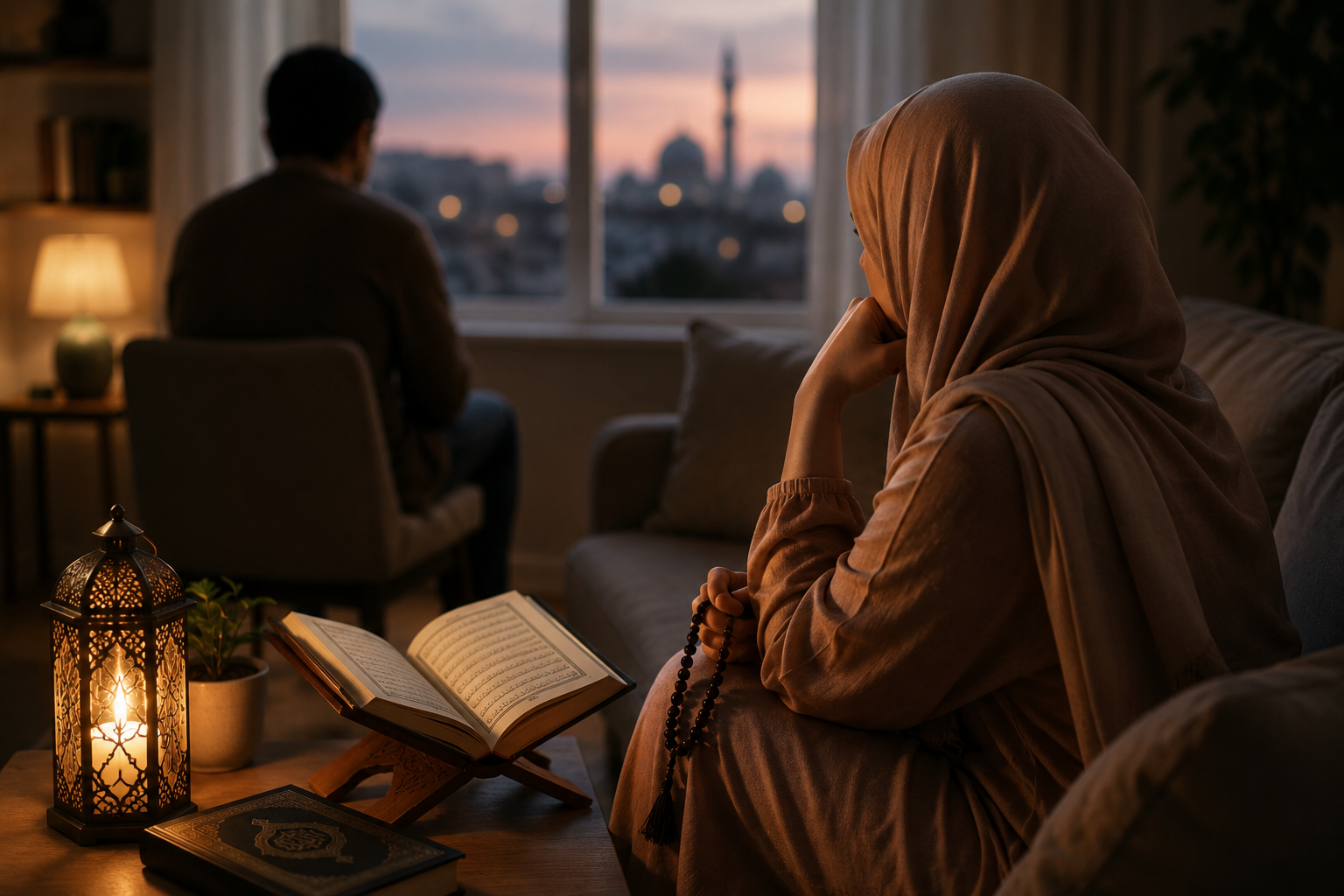
If you’re reading this with a pain in your chest because the person who once couldn’t go an hour without checking on you hasn’t said a word in days, my heart is with you. Few things are as deeply disorienting as feeling shut out by the person who’s meant to be your comfort, your safe place, your most trusted companion.
As overwhelming as it feels right now, this silence from your husband — whether it’s been two days or two months — is not a reflection of your worth or a verdict on your marriage. It’s a sign, not a destination. And like any deeply painful moment, it’s a moment to turn to Allah before anything else.
Quick answer
When your husband has stopped talking to you, understand that the silent treatment is a form of emotional neglect — and that you have a right to communication and companionship in your marriage. Focus on speaking to Allah first, making dua for your husband’s heart to soften, and embodying the best of prophetic character yourself. Approach your husband with clarity and good faith. But if the silence stretches on and veers into emotional abuse, know when to seek outside support.
Signs Your Husband May Be Shutting You Out
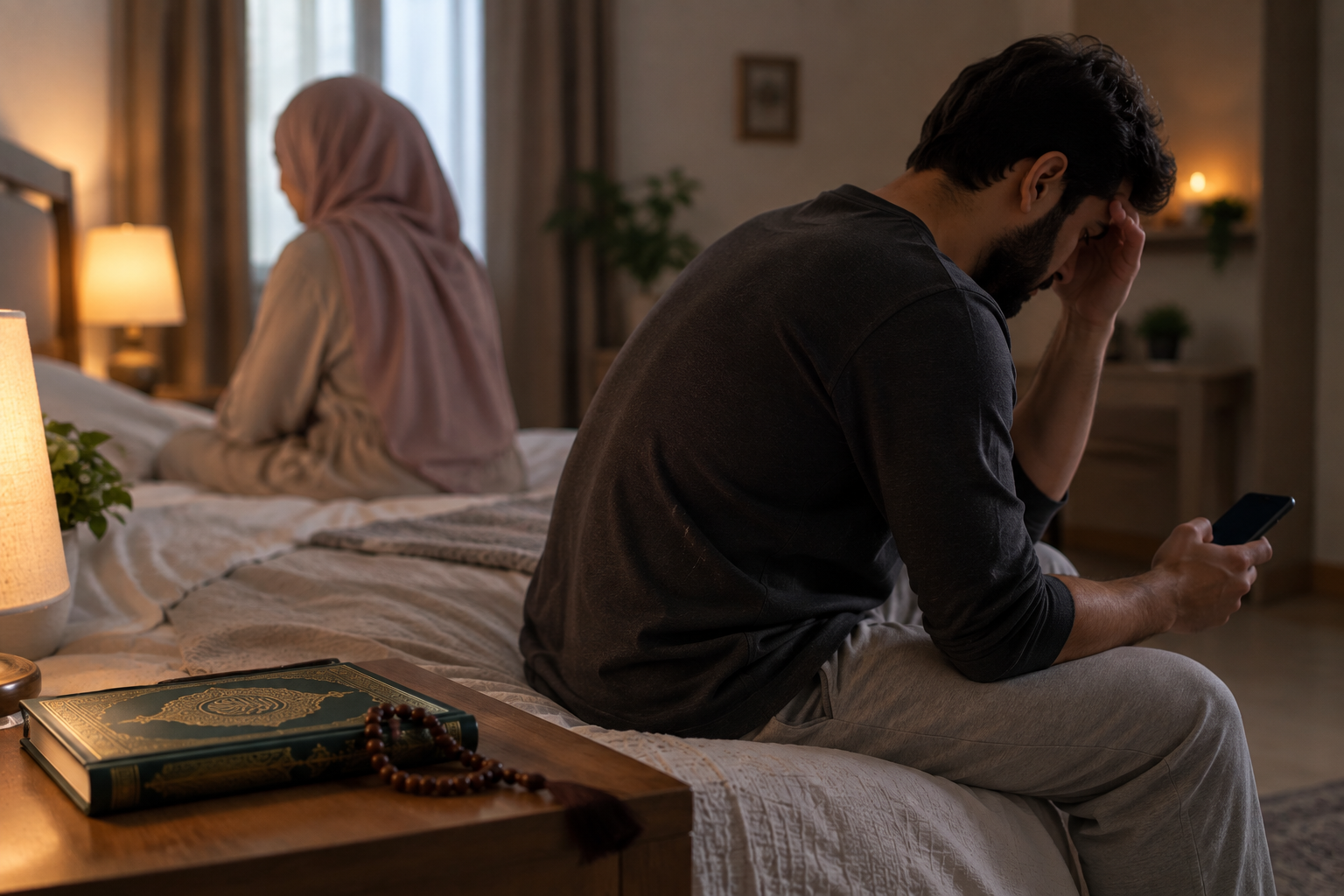
Sometimes silence is obvious — an argument ends with a slammed door and stony quiet for a week. But sometimes it creeps up slowly, and you find yourself wondering if you’re imagining it. Take notice if:
- Your husband goes hours or days without initiating a conversation
- He responds to questions with one-word answers or grunts
- He walks away or leaves the room when you try to talk
- He refuses to discuss important matters or decisions
- He avoids eye contact and nonverbal connection
- He rebuffs your attempts at physical affection
- You feel like you’re living with a roommate, not a spouse
Why This Might Be Happening
When warmth suddenly disappears from a marriage, our minds often rush to fill in the story with our deepest fears: he’s fallen out of love, he wants to leave, he’s found someone else. And while those scenarios do exist, they are rarely the full truth. Far more often, a husband “goes quiet” because:
- He’s wrestling with something he doesn’t know how to express
- There are unspoken resentments or fears he hasn’t brought up
- He’s under intense stress and withdrawing inward
- He doesn’t know how to discuss emotions constructively
- He saw silent treatment modeled growing up and is repeating it unconsciously
This doesn’t excuse the behavior. But understanding the “why” behind it can help you respond from a place of wisdom rather than panic.
What NOT to Assume
- Don't assume your husband's silence means he doesn't love you
- Don't assume he's trying to punish or manipulate you
- Don't assume he wants a divorce if he hasn't said that directly
- Don't assume he's getting his needs met elsewhere
- Don't assume this is your fault or that you need to be a different kind of wife to "earn" basic communication
The Islamic Perspective
Allah describes marriage as a source of tranquility, affection, and mercy between spouses:
"And among His signs is that He created for you spouses from among yourselves so that you may find tranquility in them, and He placed between you affection and mercy."
(Ar-Rum 30:21)
Tranquility and mercy aren’t luxuries in a marriage — they’re core parts of what marriage is meant to provide. And they’re impossible without open, good-faith communication.
The Quran also instructs spouses to engage with each other on a foundation of goodness:
"...And live with them in kindness."
(An-Nisa 4:19)
And in the famous hadith narrated by Abu Hurairah (ra), the Prophet ﷺ said:
Guidance from the Sunnah
If you study the Seerah, you’ll find that even when the Prophet ﷺ faced frustration or conflict in his marriages, he never resorted to silence or coldness.
After the incident of ifk (slander), when our mother Aisha (ra) was accused of impropriety and the Prophet ﷺ himself was deeply pained by the rumors, he didn’t shut her out to punish her. He spoke to her directly, seeking the truth and giving her the chance to speak.
And in the famous story of Umar ibn Al-Khattab (ra) overhearing the Prophet ﷺ “arguing” late at night with his wives who were seeking more provision than he could give — what’s notable is that even in a tense moment, he was engaging with them, hearing them out, reasoning with them.
This is our model — that even in moments of disappointment, our spouses have a right to be heard and acknowledged, not punished with silence.
Self-Reflection Questions
While you can’t control your husband’s choices, you can examine your own heart and actions. Ask yourself honestly:
- Have I been speaking to my husband with gentleness and kindness lately?
- Is there an unresolved hurt or conflict I’ve been avoiding?
- Have I been too busy or distracted to really listen when he does try to talk?
- Am I holding onto resentment or score-keeping from past arguments?
The goal isn’t to blame yourself, but to take responsibility for your half of the marriage’s emotional climate.
Spiritual Remedies
Before you work on your marriage, work on your connection with Allah. Turn to Him for comfort, guidance, and the softening of your own heart:
Dua
Ask Allah to open your husband’s heart, to guide him to the best of character, to fill him with mercy and kindness. Make dua for yourself to have sabr, to speak with wisdom, to embody the character of the Prophet ﷺ. Dua is the weapon of the believer — use it.
Tahajjud
The last third of the night is when dua is most readily accepted. Even if you can only manage a few minutes, pour your heart out to Allah in sujood.
Istighfar
Seek forgiveness constantly, both for your husband and yourself. It protects from hardening of the heart.
Dhikr
Fill your days and your tongue with the remembrance of Allah. It will bring you peace and plant seeds of light in your home.
Sabr and Tawakkul
Sabr in this context doesn’t mean silently suffering mistreatment forever. It means trusting Allah’s timing, doing what’s in your power to improve the situation, and not making decisions from a place of despair or anger. It means embodying grace and steadfastness for the sake of Allah, even when your spouse is falling short.
Tawakkul means making dua, consulting wise people, and giving your best to the marriage — while knowing that only Allah can change hearts. You are responsible for your efforts, not for your husband’s response.
How to Talk to Him
When you’re ready to approach your husband, remember:
What Should You Do Today?
- Pray two rak’ahs and make heartfelt dua for your marriage
- Write a letter to your husband sharing how his distance makes you feel — but wait a day before deciding whether to give it to him
- Commit to responding to any small overture of his with warmth and enthusiasm, even if you’re hurt
- Find one small way to show him love without expectation
- Identify one wise person you can confide in for ongoing support
- Plan a fun activity together, even if you start small — a walk, a cup of coffee, a trip to the masjid
Mistakes to Avoid
- Retaliating with your own silent treatment
- Complaining about your husband to everyone except your husband
- Using access to the kids or physical intimacy as leverage
- Trying to “win” arguments instead of aiming for mutual understanding
- Letting resentment build until you explode
When to Seek Additional Help
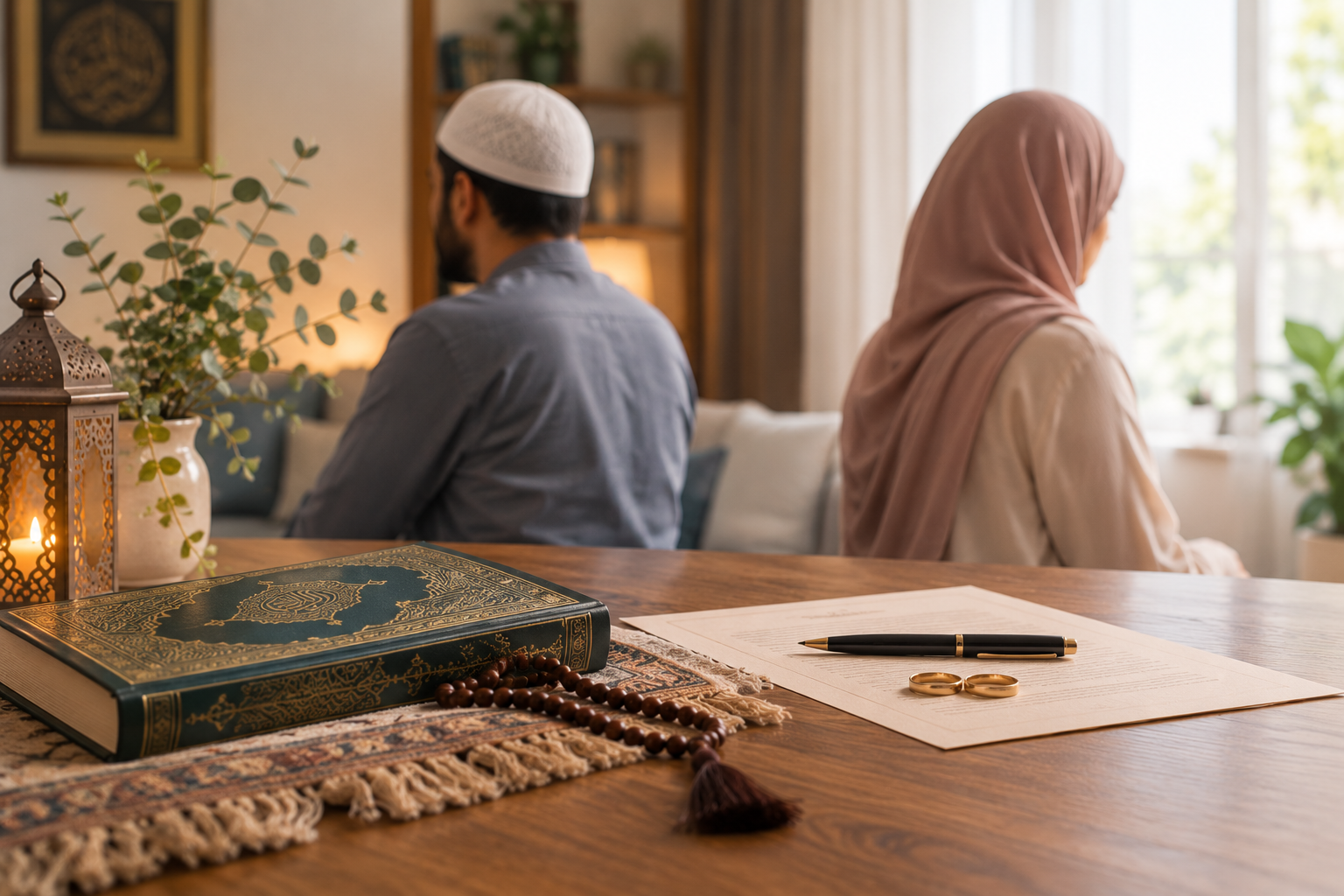
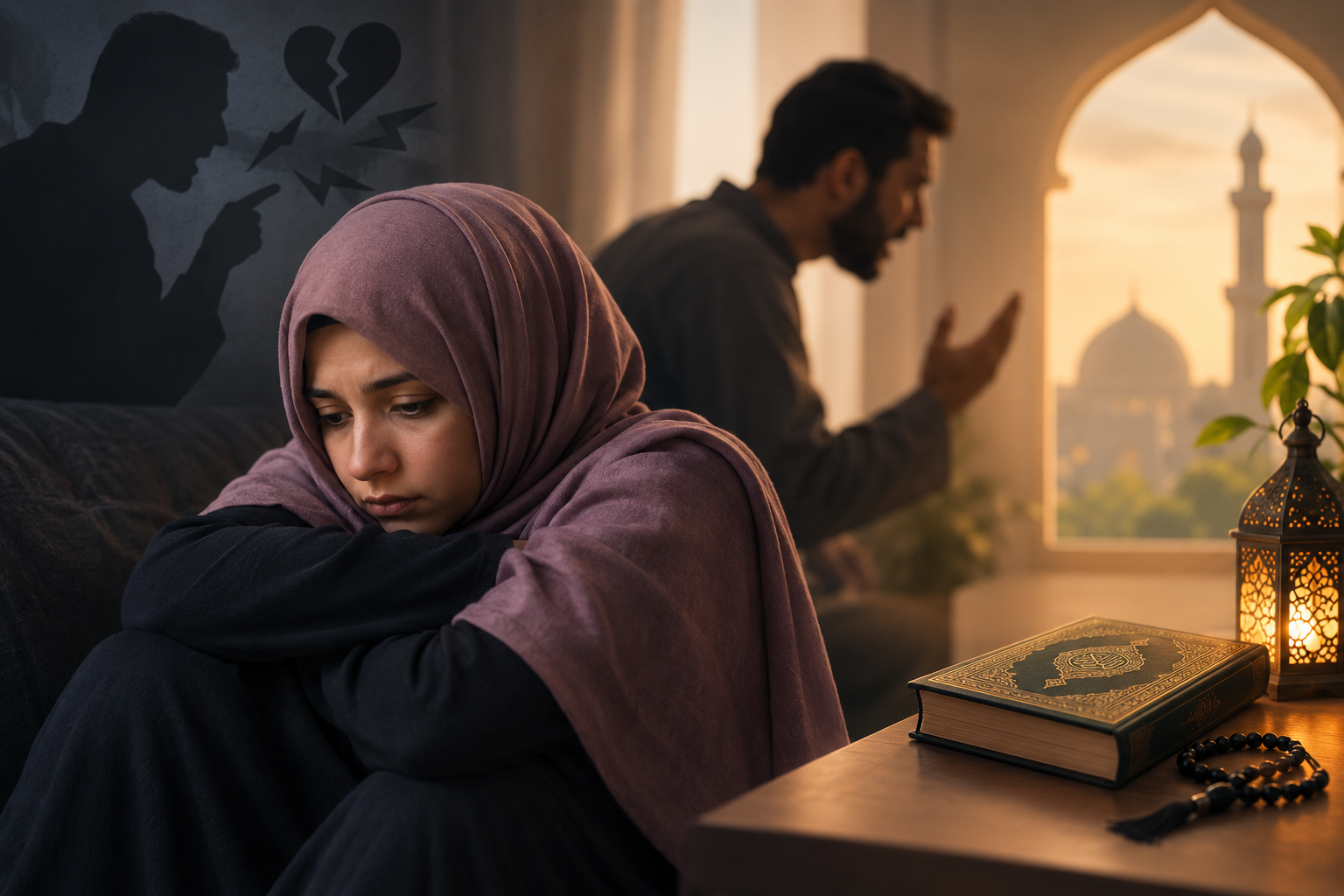
If your husband’s distance starts to veer into neglect of your basic needs, if he refuses to engage at all even after repeated attempts, or if the coldness and rejection become a defining feature of the marriage — it may be time to involve a wise, respected third party or a professional counselor.
Sometimes an outside perspective is the mirror we need to recognize destructive patterns. It’s not a betrayal to seek help when you’ve tried your best on your own. It’s a sign of your commitment to the marriage.
Key Takeaways
The silent treatment is a form of emotional neglect, not a petty annoyance
Your spouse’s distance is not a reflection of your worth
Turn to Allah before you try to fix it on your own
Approach your husband with clarity, good faith, and the best of character
Know your rights, but pursue them with wisdom
If the situation veers into abuse, don’t hesitate to seek outside support
Emotional Closing
My dear sister, if you’re in the thick of this trial right now, feeling unseen and unheard in your own home, please hold onto this: your value is not defined by your husband’s moods. You are a precious soul entrusted to him, but never at his mercy.
Allah sees every tear, knows every pang of loneliness, and is closer to you than your jugular vein. Turn to Him, again and again. Do what you can to water the seeds of love and communication in your marriage, yes. But when you’ve done your part, leave your husband’s heart to the One who created it.
You are not alone. You are not forgotten. And you have every right to feel safe, loved, and acknowledged within the bond of marriage. If you hold fast to Allah and to your own dignity, He will never leave you unaided. Have faith in that promise.
A Dua to End With
Allahumma minka hadhihi-l-qulub, fa-allif baynahaa kamaa tu-allifu baynal-quloob. Allahumma ablighnaa bihaa khayra ma yuoujadu fi-l-quloob, wa-srif 'annaa bi-fadlika sharra ma yuujadu fi-l-quloob.
Frequently Asked Questions
Why has my husband stopped talking to me?
There could be many reasons — stress, unspoken resentment, poor communication skills, etc. The key is to seek understanding before assuming the worst.
Is the silent treatment haram in Islam?
The silent treatment is a form of emotional neglect and goes against the Quranic injunction to live with one’s spouse in kindness and mercy. While not technically “haram,” it violates core marital principles.
How do I communicate with an uncommunicative husband?
Approach him with clarity, kindness, and a genuine desire to understand. Use “I feel” statements, avoid accusations, and aim for connection, not confrontation.
What does Islam say about emotional neglect in marriage?
Islam strongly disapproves of any form of spousal mistreatment, including emotional neglect. A husband is obligated to engage with his wife with good character and kindness.
When a husband stops talking, what are my rights?
You have the right to open communication and emotional connection in your marriage. If counseling and good faith efforts don’t improve things, you can escalate the matter through official channels.
What dua can I make for better communication with my husband?
Ask Allah to soften your husband’s heart, to guide him to the best of character, and to bless your marriage with love and tranquility. And make constant dua for your own heart to stay soft and steadfast.
How long should I stay patient with a silent husband?
True sabr doesn’t have a fixed timeline. The key is to keep making effort without enabling mistreatment. If weeks turn into months with no improvement despite your attempts, it’s wise to seek outside counsel.
Is it islamically permissible to leave the house if my husband won't talk to me?
If you’re leaving temporarily to clear your head or get support, this is permissible. But moving out as a tactic or retaliation goes against the Quranic directive to stay together honorably or separate with kindness.
What Quran verses discuss communication between spouses?
Surah Baqarah 2:228 enjoins spouses to relate to one another with kindness and mercy. Surah Nisa 4:19 commands husbands to live with their wives in goodness and not harm them.
How did the Prophet ﷺ handle communication problems between spouses?
He set the example of engaging directly and patiently, even when upset. He didn’t use the silent treatment or emotional manipulation, even when there was intense conflict.