Introduction
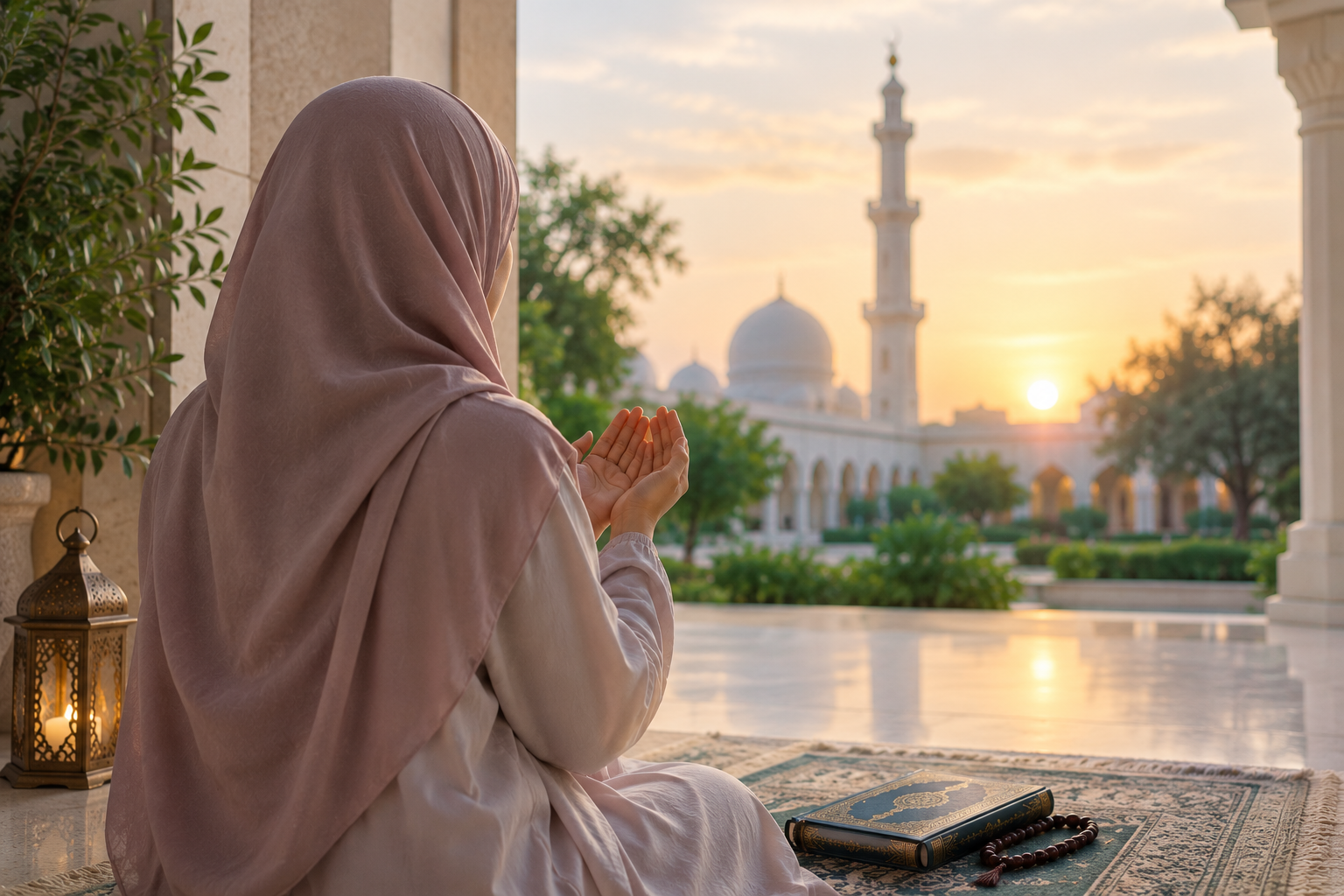
There is a quality of stillness that some homes have — a warmth that settles over you the moment you walk in, a sense that something invisible is present that makes the air feel different. You’ve probably felt it in someone else’s home at some point: a quietness that isn’t just an absence of noise, but an actual presence of something gentle and good.
In Islam, this quality has a name: sakinah — the tranquility that Allah sends down upon places and people where He is remembered. And it is not a rare gift given only to especially righteous families. It is available to every Muslim home — through consistent, sincere dhikr.
When a marriage is under strain, when tension hangs in the air between husband and wife, when the home feels like a place to escape from rather than return to — one of the most powerful and underused remedies is the deliberate, consistent establishment of dhikr in that space. Not as a magic formula. But as a real, authenticated spiritual reality that the Prophet ﷺ described with extraordinary specificity.
This guide is your practical framework for building that reality in your home.
Quick answer
Dhikr (the remembrance of Allah) transforms the atmosphere of a home by inviting angels, drawing down mercy (rahmah), and sending sakinah (tranquility) — all confirmed in Sahih Muslim 2700. The most powerful dhikr for peace at home includes: reciting Surah Al-Baqarah regularly (Shaytaan flees — Sahih Muslim 780), morning and evening adhkar (Hisnul Muslim), Ayat al-Kursi after every salah and at bedtime (Bukhari 5010), the three Quls morning and evening, SubhanAllah/Alhamdulillah/Allahu Akbar after each prayer, and the dua for entering the home (Abu Dawud). None of this requires extraordinary effort — it requires consistency and sincere intention. A home where dhikr is alive becomes a home where peace has a foundation to grow on.
The Hadith That Changes Everything About Your Home
Before the specific practices, let this hadith settle deeply into you:
Abu Hurairah (may Allah be pleased with him) reported that the Messenger of Allah ﷺ said:
"No people gather to remember Allah Almighty but that the angels surround them, cover them with mercy, send tranquility upon them, and Allah mentions them to those with Him."
(Sahih Muslim 2700)
Read what happens when people remember Allah together:
Angels surround them. Not metaphorically — actual angels, drawn to the remembrance of Allah, surrounding the space where it happens.
Mercy covers them. Rahmah — the same mercy and compassion that Allah placed between spouses (Surah Ar-Rum 30:21) — descends upon a place where dhikr is established.
Tranquility is sent upon them. Sakinah — the very word used for the peace a home is meant to provide — is actively sent by Allah upon those who remember Him.
Allah mentions them to those with Him. The Creator of the heavens and earth mentions your household to His angels. You are not forgotten or overlooked. You are spoken of in the highest company.
Now imagine that atmosphere in your home — consistently, daily. That is what dhikr builds. Not in one session, but over time, as a daily reality.
Why Dhikr Changes a Marriage
Most people understand dhikr as a personal spiritual practice. Fewer realize how profoundly it affects the relational atmosphere between two people.
The Quran establishes the direct connection:
"Verily, in the remembrance of Allah do hearts find rest."
(Surah Ar-Ra'd, 13:28)
Hearts find rest — plural. When both spouses make dhikr, or when the home is filled with its atmosphere, both hearts are being worked upon simultaneously. The irritability that built up from a difficult day. The resentment that’s been sitting quietly. The hardness that forms around unexpressed pain. Consistent dhikr softens what daily life hardens.
The Prophet ﷺ also described the contrast starkly:
"The example of one who remembers his Lord and one who does not is like that of the living and the dead."
(Sahih al-Bukhari 6407)
A home without dhikr is a spiritually dead home. And a spiritually dead home has no foundation for the love and mercy that marriage requires. Dhikr is what keeps the spiritual life of a home alive — and a spiritually alive home is one where love, patience, and mercy have the conditions they need to grow.
The Islamic Perspective: What the Quran Commands
Allah does not merely encourage dhikr — He commands it with emphasis:
"O you who have believed, remember Allah with much remembrance and exalt Him morning and evening."
(Surah Al-Ahzab, 33:41-42)
Much remembrance — dhikran katheeran. Not occasional. Not when you feel like it. Much. Consistent. Woven into the fabric of the day from morning to evening. This is the Quranic standard for a home that operates under Allah’s attention and mercy.
The Prophet ﷺ was even more specific about what happens to a home where this standard is upheld versus one where it isn’t:
"Do not turn your houses into graveyards. Indeed, Shaytaan flees from the house in which Surah Al-Baqarah is recited."
(Sahih Muslim 780)
A house without Allah’s remembrance is, by Prophetic description, a graveyard — lifeless, spiritually cold, and vacant of divine presence. Shaytaan, who as we explored in our guide on how Shaytaan destroys marriages, works specifically to divide spouses — finds it genuinely difficult to operate in a home filled with dhikr.
Guidance from the Sunnah: The Prophet ﷺ and Dhikr at Home
The Prophet ﷺ didn’t just teach dhikr in the masjid. He established it as a home practice — something that belonged to the private, intimate space of family life.
He prayed voluntary prayers at home, not only in the masjid. He said:
"Pray some of your prayers in your homes, and do not make them like graves."
(Sahih al-Bukhari 432)
He recited Surah Al-Baqarah and Surah Al-Imran at night. He recited Ayat al-Kursi before sleeping. He said the basmala before every action. He greeted his family with salam upon entering. He made dua with his wives.
His home was not a space where spirituality was left at the door. It was a space where faith was practiced most intimately, most consistently, and most personally. This is the Prophetic model for a home filled with dhikr — not performance for others, but sincere private practice between the family and Allah.
The Complete Dhikr Practice for Peace at Home
Foundation 1: Surah Al-Baqarah — Weekly Protection
"Shaytaan flees from the house in which Surah Al-Baqarah is recited."
(Sahih Muslim 780)
Recite or play Surah Al-Baqarah in your home at least once a week — Friday is ideal. You don’t need to sit and recite it actively every time; it can play in audio form while you go about your household. The Prophetic promise is attached to its presence in the home, and this single practice establishes a baseline of spiritual protection that nothing else replicates.
Also include Ayat al-Kursi (2:255) — the greatest verse of the Quran — as a specific daily practice:
- After every salah (Hisnul Muslim)
- Before sleeping: “Whoever recites Ayat al-Kursi when he goes to bed, Allah will appoint a guardian over him and no Shaytaan will come near him until morning.” (Sahih al-Bukhari 5010)
Foundation 2: Morning Adhkar — Sealing the Day in Allah's Protection
The morning adhkar from Hisnul Muslim are among the most powerful practices for establishing peace before the day’s tensions begin. Key ones for the home:
The three Quls — three times each:
"Qul huwa Allahu ahad... Qul a'udhu bi-rabbil falaq... Qul a'udhu bi-rabbin-nas..." "The Prophet ﷺ said whoever recites them three times in the morning and evening, they will suffice him against everything."
(Sunan Abu Dawud — Sahih)
Sayyid al-Istighfar:
"Allahumma anta rabbi la ilaha illa anta, khalaqtani wa ana 'abduka..." Whoever says this in the morning with certainty and dies that day will be from the people of Paradise.
(Sahih al-Bukhari 6306)
The comprehensive morning protection:
"Bismillahil-ladhi la yadurru ma'a-smihi shay'un fil-ardi wa la fis-sama'i, wa huwa-s-sami'ul 'aleem." "In the name of Allah, with whose name nothing on earth or in heaven can cause harm. He is the All-Hearing, the All-Knowing." The Prophet ﷺ said whoever says this three times in the morning will not be afflicted by any sudden affliction until evening.
(Sunan Abu Dawud — Sahih)
Foundation 3: Evening Adhkar — Closing the Day in Peace
The evening adhkar mirror the morning ones and close the day in the same spiritual protection. Key additions:
Before sleeping:
"Allahumma bismika amutu wa ahya." "O Allah, in Your name I die and I live."
(Sahih al-Bukhari — before sleep)
The three Quls — three times (same as morning)
Ayat al-Kursi (before sleep — Bukhari 5010)
Establishing both morning and evening adhkar in your home means that every day begins and ends in Allah’s remembrance — creating a spiritual bracket around the hours in between.
Foundation 4: After Every Salah — The Daily Tasbihat
"SubhanAllah" (33 times), "Alhamdulillah" (33 times), "Allahu Akbar" (34 times)
The Prophet ﷺ said: “Whoever says SubhanAllah 33 times, Alhamdulillah 33 times, and Allahu Akbar 34 times after every prayer — these are 99 times. And he adds: ‘La ilaha illallah, wahdahu la sharika lah, lahul mulku wa lahul hamdu wa huwa ‘ala kulli shay’in qadeer’ — his sins will be forgiven even if they are like the foam of the sea.” (Sahih Muslim 597)
This practice takes less than two minutes per salah. Over five prayers, it creates ten minutes of daily structured dhikr that cleanses the spiritual atmosphere of the day and the home.
Foundation 5: The Sunnah of Entering the Home
The Prophet ﷺ taught a specific practice for entering the home that directly relates to peace:
"Allahumma inni as'aluka khayral mawlaji wa khayral makhraj, bismillahi walajna, wa bismillahi kharajna, wa 'alallahi rabbina tawakkalna." "O Allah, I ask You for a good entering and a good exiting. In the name of Allah we enter, in the name of Allah we exit, and upon our Lord we rely."
(Sunan Abu Dawud 5096)
The Prophet ﷺ said that when a person enters his home and mentions Allah’s name upon entering and upon eating, Shaytaan says: “There is no spending the night and no supper for you here.” (Sahih Muslim 2018)
That Shaytaan is expelled from the home’s entry — before the day’s tensions have a chance to settle in — is the direct result of this simple sunnah.
Foundation 6: Salawat on the Prophet ﷺ Throughout the Day
"Whoever sends blessings upon me once, Allah will send blessings upon him tenfold."
(Sahih Muslim 408)
Making salawat on the Prophet ﷺ frequently — in idle moments, in the kitchen, during commutes — fills the day and the home with divine blessings. And a home covered in divine blessings is one where the emotional temperature stays warmer, calmer, and more merciful.
The full Durood Ibrahimi (taught in Hisnul Muslim) is the most complete form — say it at minimum during salah, and add shorter salawat throughout the day.
Foundation 7: Shared Dhikr as a Couple
The hadith from Sahih Muslim 2700 specifically mentions people who gather to remember Allah. When both spouses make dhikr together — even briefly, even occasionally — something powerful happens: the angles surround them as a unit, mercy covers them together, and sakinah descends upon their shared space.
Simple ways to make dhikr together:
- Making dua together before sleeping
- Reciting the three Quls together as a bedtime habit
- Playing Surah Al-Baqarah together on Friday evenings
- Saying “Bismillah” together before beginning a meal
- Making a short dua together when entering the home
These acts require almost no time. But over months and years, they build a shared spiritual life that becomes the foundation of a marriage — not just a cohabitation.
The Spiritual Atmosphere of Your Home: What You're Building
When you establish consistent dhikr in your home, you are not performing rituals. You are building a spiritual atmosphere — a quality of presence in the home that gradually, measurably changes everything that happens within it.
Arguments that would have escalated find something to absorb into. Tensions that would have hardened meet a softness already present in the air. Resentments that would have calcified into distance are dissolved by the mercy that dhikr has been inviting.
This is not exaggeration. The Prophet ﷺ described it as angels present, mercy descending, and sakinah being sent. When the home is spiritually alive — when it is a place where Allah is remembered, where the adhkar are maintained, where the morning and evening are bracketed in His name — the marriage within it operates with a different set of conditions.
For the complete understanding of how mawaddah and rahmah — love and mercy — operate in a marriage, and how dhikr supports them, that guide offers the theological foundation for everything we’ve discussed here.
What Should You Do Today?
- Recite or play Surah Al-Baqarah in your home today — even in audio form as you go about your day
- Commit to Ayat al-Kursi after every salah, starting with your next prayer
- Say the entering-home dua the next time you walk through your door — and make it a permanent habit
- Before you sleep tonight, recite the three Quls three times and Ayat al-Kursi
- Set one intention to make morning adhkar tomorrow — even just the three Quls and Sayyid al-Istighfar to begin
- If you have a spouse at home, suggest one small shared practice — a dua together before sleeping, or the basmala together before a meal
Key Takeaways
Dhikr in the home invites angels, draws down mercy, and sends sakinah — this is authenticated in Sahih Muslim 2700, not a vague spiritual claim
Surah Al-Baqarah drives Shaytaan from the home; this single practice is the most powerful baseline protection
The morning and evening adhkar bracket every day in Allah’s remembrance and protection
Ayat al-Kursi after every salah and before sleeping provides round-the-clock spiritual coverage
Shared dhikr as a couple — even in small ways — builds a spiritual atmosphere that transforms the marriage within it
Consistency matters more than perfection — small, daily, sincere practices outperform occasional grand ones
Emotional Closing
If your home has been a place of tension — where the air feels heavy and every conversation holds the possibility of another argument — know that this is not permanent and it is not simply about communication techniques or compromise strategies. Some of what needs healing in a home goes deeper than words can reach.
That’s where dhikr reaches.
The Prophet ﷺ promised that when people remember Allah together, the angels come. Not eventually. Not conditionally. They come. And with them comes the mercy and tranquility that no human effort alone can manufacture.
Begin today. One surah. One ayah. One dhikr said sincerely upon entering your home. And trust that what you are building — one small act of remembrance at a time — is a home that Allah attends to.
A Dua to End With
"Allahumma a'inni 'ala dhikrika wa shukrika wa husni 'ibadatik."
“O Allah, help me remember You, be grateful to You, and worship You in the best manner.” (Sunan Abu Dawud — Sahih)
This dua — taught by the Prophet ﷺ to Mu’adh ibn Jabal — asks Allah Himself to help you maintain dhikr. Because even the ability to remember Allah is a gift from Him. Ask Him for it, in your home, for yourself and your spouse.
Frequently Asked Questions
What dhikr brings peace to the home?
Surah Al-Baqarah (Shaytaan flees — Muslim 780), Ayat al-Kursi after salah and before sleeping (Bukhari 5010), the morning and evening adhkar (three Quls, Sayyid al-Istighfar, morning protection duas), the entering-home dua (Abu Dawud 5096), and the post-salah tasbihat (SubhanAllah 33, Alhamdulillah 33, Allahu Akbar 34).
How does dhikr bring peace between husband and wife?
The Quran says “in the remembrance of Allah do hearts find rest” (Ar-Ra’d 13:28). Dhikr softens hearts, invites mercy into the home, and repels Shaytaan who works specifically to divide spouses. A home filled with consistent dhikr operates with a different spiritual atmosphere — one where love and mercy have better conditions to grow.
What does the Prophet ﷺ say about dhikr at home?
He said not to make houses like graveyards (spiritually dead) — Sahih al-Bukhari. He established Surah Al-Baqarah as the protection that drives Shaytaan from the home — Sahih Muslim 780. He prayed voluntary prayers at home, not only the masjid. He described those who remember Allah together as being surrounded by angels and covered in mercy — Sahih Muslim 2700.
Is it enough to play Surah Al-Baqarah as audio in the home?
The Prophetic promise is attached to it being recited in the home — scholars have said that audio playback fulfills this, though active recitation carries additional reward. Playing it in audio form while going about your day is a valid and practical way to establish this Sunnah.
Can dhikr help fix a troubled marriage?
Dhikr is not a replacement for honest communication or practical effort — but it creates the spiritual conditions within which those efforts land differently. A home filled with consistent dhikr invites Allah’s mercy and sakinah — and a marriage bathed in those qualities heals more readily than one operating in spiritual emptiness.
What is the best time for dhikr at home?
Morning (after Fajr), evening (after Asr or Maghrib), after each salah, and before sleeping. These four windows create a comprehensive daily framework. The morning and evening are specifically commanded in the Quran (Ahzab 33:41-42).
What dhikr should I say when entering my home?
“Allahumma inni as’aluka khayral mawlaji wa khayral makhraj, bismillahi walajna, wa bismillahi kharajna, wa ‘alallahi rabbina tawakkalna.” (Abu Dawud 5096) — asking for a good entering and exiting, and invoking Allah’s name at the threshold.
On this page
Dua of the week
- "O Allah, I ask You for Your love, and the love of those who love You."
- Tirmidhi 3490