Introduction
There’s a particular kind of nervousness that comes with being newly married. Not fear exactly — more like standing at the edge of something enormous and sacred, wanting so badly to get it right, and not entirely sure where to start.
Maybe your nikah just happened and the reality is starting to settle in: this is real, this is permanent, and now the actual building begins. Maybe you’re a few weeks or months in, and you’re realizing marriage is both more ordinary and more demanding than you expected. Or maybe you’re engaged, trying to prepare your heart before the big day arrives.
Wherever you are in this — we want you to know something first: not knowing everything is normal. Even the most prepared couples learn marriage by living it, not by reading about it beforehand. This isn’t a test you can fail on day one. It’s a relationship you build, brick by brick, with Allah’s guidance as your foundation.
This guide walks you through what actually matters in these early days — the contract, the first night, the money conversations nobody wants to have, and how to bring both families together without losing your footing as a couple. Let’s begin.
Quick answer
A strong Islamic marriage foundation rests on four pillars: understanding the nikah contract and the rights it establishes for both spouses, approaching intimacy with the gentleness and du’as the Prophet ﷺ taught, building open financial communication from day one, and integrating both families without letting outside voices override your marriage. None of this needs to be perfect immediately — Islam gives you a framework, not a performance standard. What matters most in year one is sincerity, patience with each other, and consistent effort to grow together.
What NOT to Assume Going Into Marriage
Before we walk through the practical pieces, let’s clear away some common misconceptions that cause unnecessary stress for newlyweds.
“If it was truly a blessed marriage, it should feel easy from day one.”
Even the Prophet ﷺ and his wives had adjustment periods, disagreements, and moments of learning each other. Ease comes with time and effort — it is rarely instant.
“Real intimacy should come naturally without any nervousness.”
Nervousness on the wedding night is completely normal, even expected. The Sunnah itself anticipates this — which is why the Prophet ﷺ taught specific du’as and encouraged gentleness rather than assuming perfection.
“We shouldn’t need to talk about money — it’ll sort itself out.”
This is one of the most common regrets newlyweds share. Financial clarity from the start prevents resentment later.
“Our families will just naturally blend without any friction.”
Two families merging takes intentionality. Assuming it will happen on its own often leads to avoidable conflict.
“If we truly love each other, we won’t need to actively work on this marriage.”
Love is the foundation, not the finished house. Even mawaddah and rahmah — the love and mercy Allah describes in Surah Ar-Rum — are described as things Allah places between spouses, which couples then nurture and protect.
Understanding the Marriage Contract (Nikah): What You're Actually Agreeing To
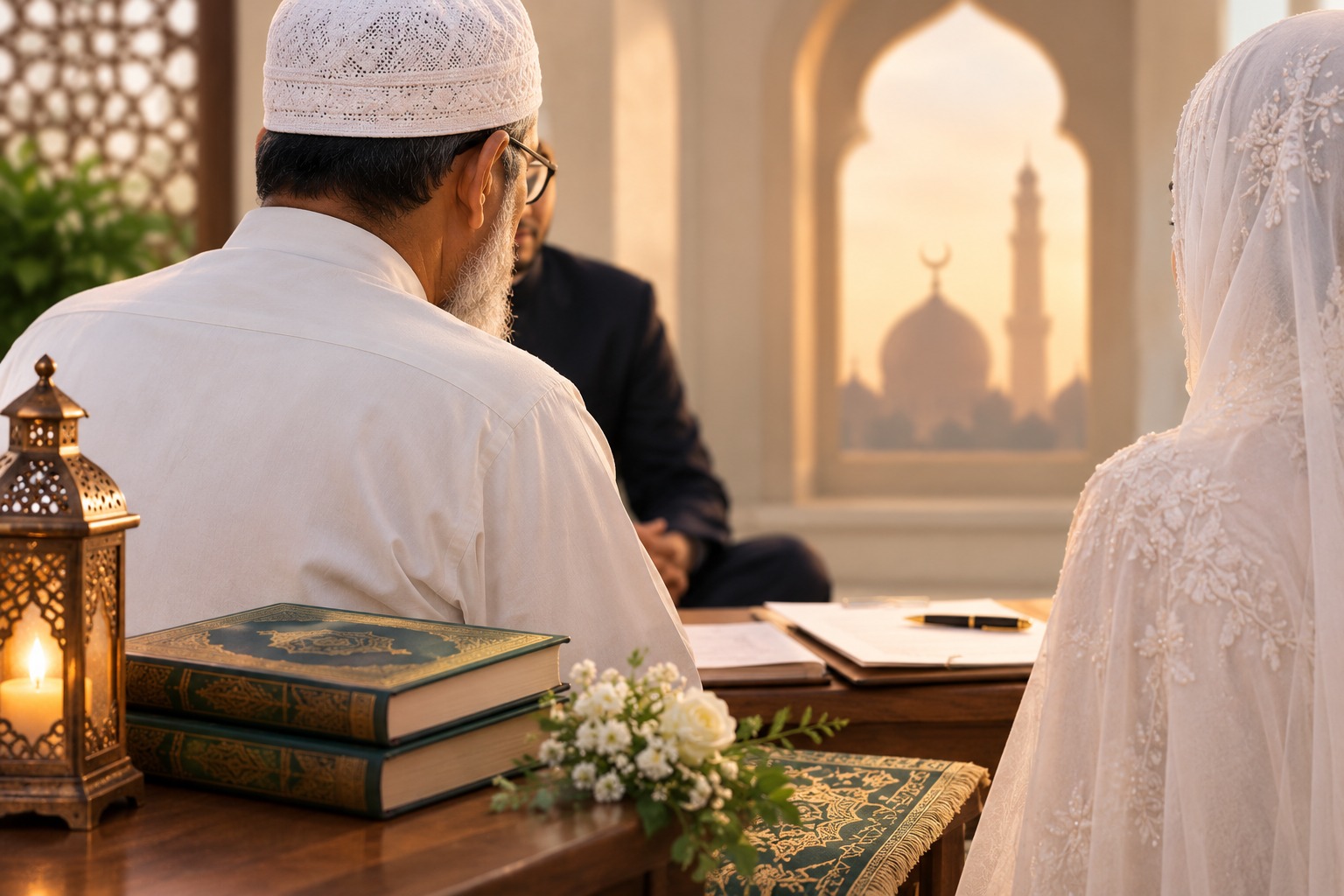
The nikah is not just a ceremony — it’s a legal and spiritual contract with real rights and obligations for both spouses. Understanding it deeply will serve you for the rest of your marriage.
The Mahr (Dowry)
"And give the women [upon marriage] their [bridal] gifts graciously."
The mahr is the wife’s exclusive right — a gift from the husband to her, not to her family, and not a “bride price” in the transactional sense some cultures mistakenly attach to it. It belongs entirely to her. She can spend it, save it, or gift it as she wishes. If the mahr hasn’t been fully discussed or documented in your case, it’s not too late to clarify it now.
The Rights Established by the Contract
Every valid nikah establishes:
- The husband’s obligation to provide nafaqah (maintenance) — food, housing, clothing
- The wife’s right to keep her own wealth, earnings, and property entirely separate and protected
- Both spouses’ right to kind, honourable treatment (ma’ruf)
- Both spouses’ right to intimacy and companionship
- The wife’s right to retain her own name and identity — Islam never required her to take her husband’s family name
The Walima (Wedding Feast)
The Prophet ﷺ told Abdur-Rahman ibn Awf after his marriage:
"Hold a walima, even if it's with one sheep."
The walima isn’t about extravagance — it’s about publicly announcing and celebrating the union, which Islam actively encourages rather than treating marriage as something to keep quiet.
If you haven’t already, it’s worth revisiting the promises Islam asks spouses to make to each other before marriage — many of these apply just as much in the early months as they did on your wedding day.
The First Night: Guidance from the Sunnah
This is one of the most tender, private moments of marriage — and Islam does not leave it undiscussed or unguided. The Prophet ﷺ gave specific, gentle instruction for this moment.
The du’a for the wedding night:
"O Allah, I ask You for the goodness of her and the goodness upon which You have created her, and I seek refuge in You from the evil of her and from the evil upon which You have created her."
The husband traditionally places his hand gently on his wife’s forehead while saying this — an act of care and blessing before anything else.
Before intimacy:
"If any of you, when intending to have intercourse with his wife, says: 'Bismillah, Allahumma jannibna-sh-shaytan wa jannibi-sh-shaytan ma razaqtana' — Satan will never be able to harm the child born from that union."
What matters most on this night
There is no religious requirement to consummate the marriage the very first night. Islam gives couples full freedom to proceed when both are ready — physically and emotionally. If nervousness, exhaustion from the wedding day, or simple unfamiliarity means you want to wait, that is entirely permissible. Gentleness, patience, and mutual comfort matter far more than any timeline.
The Prophet ﷺ modeled deep tenderness with his wives — playful, warm, and unhurried. His example of romance and affection within marriage is worth reading closely as you begin this part of your life together — it reframes intimacy as an act of worship and connection, not a performance.
If you’re navigating questions about what is and isn’t permissible in intimacy, this guide on what’s haram in intimacy after marriage offers clear, respectful guidance.
Building Communication From Day One
Marriage is, at its core, two people learning an entirely new language together — how the other person expresses love, handles stress, processes conflict, and needs to be heard.
What to establish early:
- A rhythm for checking in. Even ten minutes at the end of each day, asking “How are you, really?” builds a habit that carries you through harder seasons.
- How each of you handles disagreement. Some people need space to think before discussing; others want to resolve things immediately. Learn this about each other now, before a real conflict tests it.
- What “I need help” sounds like from each of you. Many spouses don’t ask directly — they hint, or go quiet, or get short-tempered. Learning to name needs directly saves years of misunderstanding.
Practical scripts for early communication:
Financial Setup: The Conversation Every Couple Needs
Money is one of the most common sources of early-marriage tension — almost entirely because couples avoid discussing it clearly at the start.
What to clarify together:
- Whose income covers what. Islamically, the husband is obligated to provide nafaqah. If the wife works, her income is entirely hers — she is under no obligation to contribute to household expenses unless she chooses to.
- Joint vs. separate accounts. There is no single “Islamic” answer here — couples structure this differently. What matters is transparency and mutual agreement, not secrecy on either side.
- A basic shared understanding of debts, obligations, and financial goals. Bring this into the open early rather than discovering it later.
- Saving intentions — for a home, for children, for hajj, for emergencies. Aligning on these early prevents resentment down the line.
"Let the man of means spend according to his means, and the man whose resources are restricted, let him spend according to what Allah has given him."
This verse establishes both the obligation and its proportionality — provision should match what a husband actually has, discussed honestly rather than assumed silently.
Introducing and Integrating Both Families
This is often the quietest source of early-marriage stress — and one of the most manageable, if addressed with intention early.
What tends to work well:
- Establishing, together, how much time and involvement each family will have — before either family has strong expectations set
- Presenting a united front on decisions, discussed privately between spouses first
- Making clear, early, that your marriage is its own household — not an extension of either family’s authority
"And We have enjoined upon man goodness to his parents. But if they endeavor to make you associate with Me that of which you have no knowledge, do not obey them."
This verse establishes something important for newlyweds specifically: honouring parents is a lifelong Islamic obligation, but it does not override the independence and privacy Allah intended for your marriage.
Introducing families with warmth, clarity, and healthy boundaries from month one prevents far more painful conversations years into the marriage.
A Prophetic Example: Learning Each Other With Patience
When the Prophet ﷺ married Aisha (رضي الله عنها), their relationship grew through small, human moments — playfulness, patience, and genuine curiosity about each other. She narrated: “I raced with the Prophet ﷺ and I beat him in the race. Later, after I had put on some weight, we raced again and he won. He said, ‘This is for that.'” (Sunan Abu Dawud, no. 2578 — Hasan)
This small narration says something significant: their marriage had room for lightness, play, and ordinary human connection — not just solemn religious duty. Marriage in Islam was never meant to be purely transactional or heavy. It was meant to include joy.
Self-Reflection Questions for the Newlywed Couple
Sit with these individually, then discuss together if it feels right:
- What does feeling loved actually look like for me — words, actions, time, or touch?
- What am I most nervous about in this marriage, and have I voiced it?
- What did I learn about marriage from my parents that I want to keep — or intentionally do differently?
- How do I want to handle the first real disagreement we have?
- What does a successful first year look like to me — not perfect, but successful?
Spiritual Remedies for the First Year
Du’a together, regularly — Not just individually, but as a couple. This builds a shared spiritual life from the very beginning. Explore specific du’as for a happy marriage here.
Dhikr in the home — Establishing small, consistent habits — saying Bismillah before meals together, reciting a short surah before sleep — builds barakah into the rhythm of your household from day one. Dhikr for peace at home offers practical ways to weave this in.
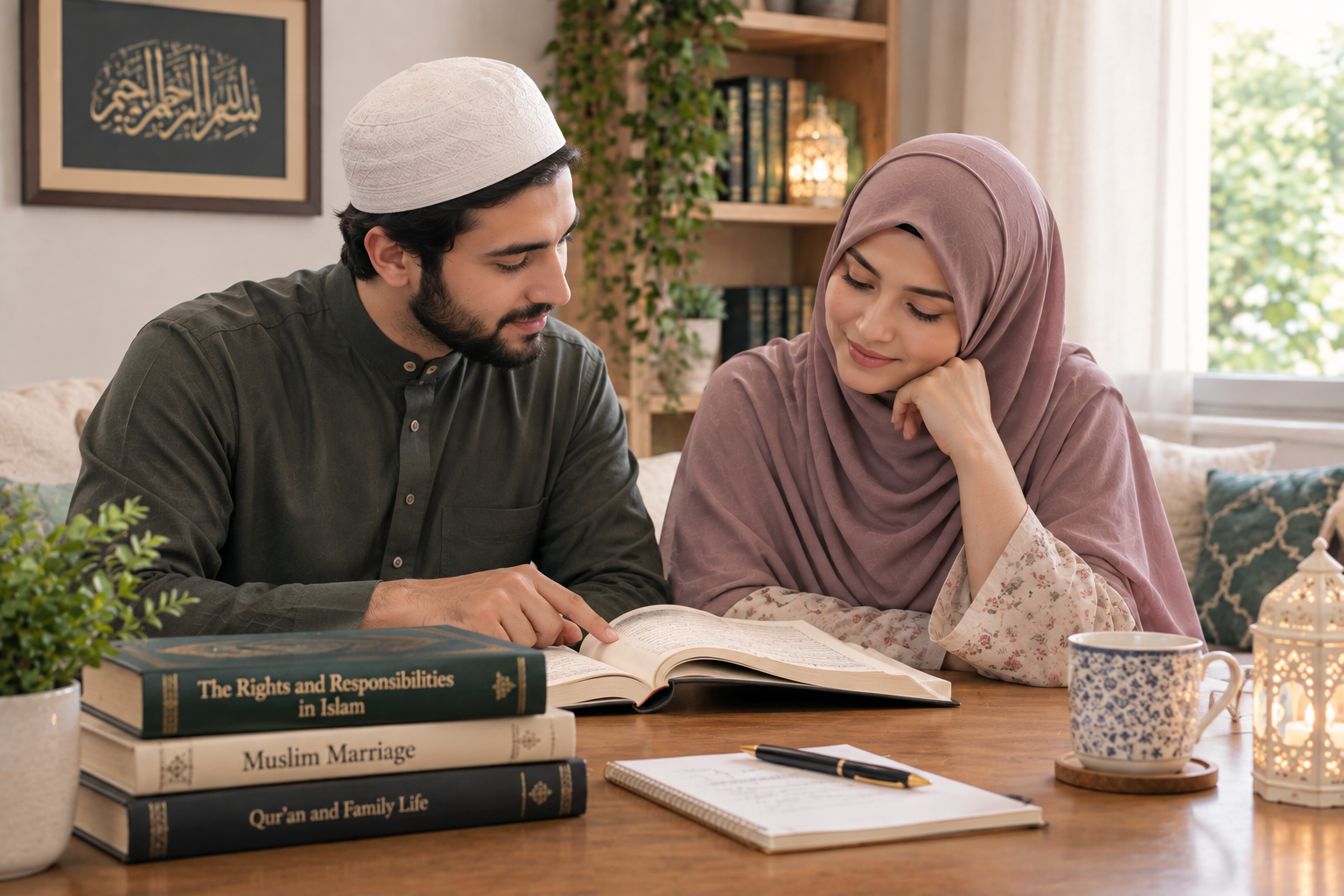
Reading Qur’an together — Even ten minutes, even just listening to one verse and reflecting on it together, builds spiritual intimacy alongside emotional intimacy.
Istighfar when you fall short — You will disappoint each other sometimes, even with the best intentions. Returning to Allah together, asking forgiveness, and starting fresh is part of a healthy marriage rhythm.
Sabr and Tawakkul: The Framework for the Adjustment Period
Marriage requires both sabr (patience) and tawakkul (trust in Allah) — especially in year one, when everything is new.
Sabr means giving each other grace as you learn one another — not expecting instant compatibility or flawless communication.
Tawakkul means trusting that Allah brought you together for a reason, and leaning on Him — through du’a, through consultation, through sincere effort — rather than panicking at every normal bump in the road.
Understanding tawakkul in marriage can help reframe early challenges not as red flags, but as the ordinary texture of two people becoming one household.
What Should You Do Today?
- Have an open conversation about finances if you haven't already — income, savings goals, and how expenses will be handled
- Discuss expectations around both families — how much involvement, how decisions will be made, how disagreements with in-laws will be handled
- Establish a daily check-in habit, even five minutes, to ask how the other is really doing
- Make du'a together at least once this week — for barakah, for guidance, for patience with each other
- Talk about what "support" looks like for each of you specifically — don't assume you already know
- Protect your own earnings. Open your own account if you don't have one. Your money is yours.
- Give yourselves grace — you are allowed to still be learning each other
- Know your options. Understanding khul', faskh, or other recourse gives you clarity — not necessarily a path you'll take, but knowledge of what's available.
Mistakes to Avoid in the First Year
- Comparing your marriage to others’ — every couple’s adjustment period looks different
- Avoiding hard conversations about money or family hoping they’ll resolve on their own
- Expecting your spouse to read your mind instead of communicating directly
- Letting either family’s opinions override decisions that belong to you as a couple
- Neglecting your own deen while focused on building the marriage — your relationship with Allah should grow alongside your relationship with your spouse
- Assuming disagreement means something is wrong — normal friction is part of learning each other, not a sign of failure
When to Seek Additional Help
Consider speaking with a trusted Islamic counsellor, mentor couple, or scholar if:
- Early disagreements feel unusually intense or are becoming patterns rather than isolated moments
- Either of you feels unheard or dismissed regularly
- Family involvement is creating serious tension you can’t resolve together
- Either spouse is struggling emotionally with the transition into married life
- You want proactive guidance rather than waiting for problems to develop
Seeking guidance early — even just a conversation with a knowledgeable mentor couple — is a sign of wisdom, not weakness.
Key Takeaways
The nikah contract establishes real, specific rights for both spouses — understanding them protects your marriage
The first night should be approached with gentleness, du’a, and no pressure around timing
Financial transparency from day one prevents years of resentment
Family integration works best with early, clear, loving boundaries
Marriage includes room for playfulness and joy — not just solemn duty
Sabr and tawakkul are the framework for navigating a completely new season of life
You don’t need to have everything figured out immediately — sincerity and consistent effort matter most
Emotional Closing
You’re standing at the beginning of something Allah described as one of His greatest signs — two souls finding sakinah in each other. That’s not a small thing. It’s not supposed to feel small, even when it feels uncertain.
Whatever nervousness you’re carrying right now, whatever questions you haven’t asked yet, whatever adjustment period you’re still moving through — know that this is exactly what building a marriage looks like. Not perfection from day one. Patient, sincere, ongoing effort, held together by love for each other and love for Allah.
Marriage is described as half of one’s deen — not because it’s easy, but because it’s one of the most powerful paths to nearness with Allah that exists. You’re on that path now. Walk it gently, together.
A Dua to End With
Rabbana hab lana min azwajina wa dhurriyyatina qurrata a'yunin, waj'alna lil-muttaqeena imama. "Our Lord, grant us from among our spouses and offspring comfort to our eyes, and make us an example for the righteous."
Say this together, often — on your wedding night, in your first year, and every year after. Ask Allah to make this marriage a source of comfort, barakah, and closeness to Him for both of you.
Frequently Asked Questions
What are the basic Islamic requirements for a valid marriage contract?
A valid nikah requires mutual consent of both spouses, a mahr (dowry) for the wife, two witnesses, and a declaration of offer and acceptance. Cultural customs beyond this (elaborate ceremonies, specific clothing) are not religious requirements.
Is it required to consummate the marriage on the wedding night?
No. Islam does not require consummation on the first night. Couples are free to proceed when both are ready, physically and emotionally comfortable.
Who is responsible for household expenses in Islam?
The husband is obligated to provide nafaqah (maintenance) — food, housing, clothing, and necessities. A working wife’s income belongs entirely to her; she is not obligated to contribute to household expenses unless she chooses to.
What is the mahr and who does it belong to?
The mahr is a mandatory gift from the husband to the wife at marriage. It belongs entirely and exclusively to her — not to her family, and not shared with the husband.
How should newlyweds handle disagreements with in-laws?
Establish boundaries and expectations early, present decisions as a united couple, and remember that honouring parents does not override the independence Islam gives to your own household.
What dua should be recited on the wedding night?
The Prophet ﷺ taught: “Allahumma inni as’aluka khayraha wa khayra ma jabaltaha alayh, wa a’udhu bika min sharriha wa sharri ma jabaltaha alayh” — a supplication asking Allah for the wife’s goodness and seeking refuge from harm. (Sunan Abu Dawud, no. 2160)
Is a walima (wedding feast) required in Islam?
It is a strongly recommended Sunnah, not a strict obligation. The Prophet ﷺ encouraged even a modest walima to publicly announce the marriage.
Is it disrespectful to ask my husband for money?
No. Asking for your Islamic right to maintenance is not disrespect — it is clear communication about a basic need.
How can newlyweds build a strong spiritual foundation together?
Through regular du’a together, small daily dhikr habits, reading Qur’an as a couple, and returning to istighfar together when either spouse falls short.