Introduction
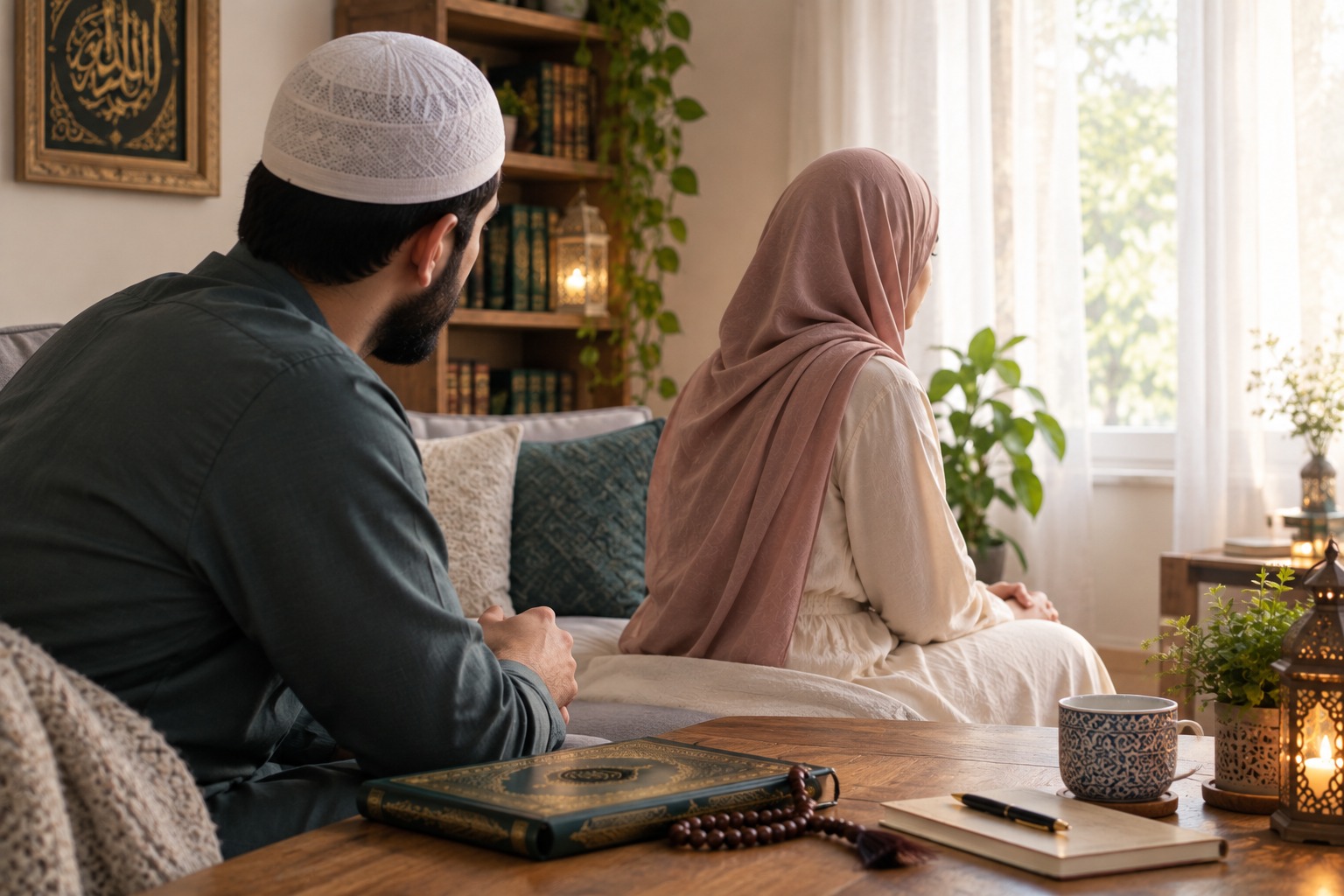
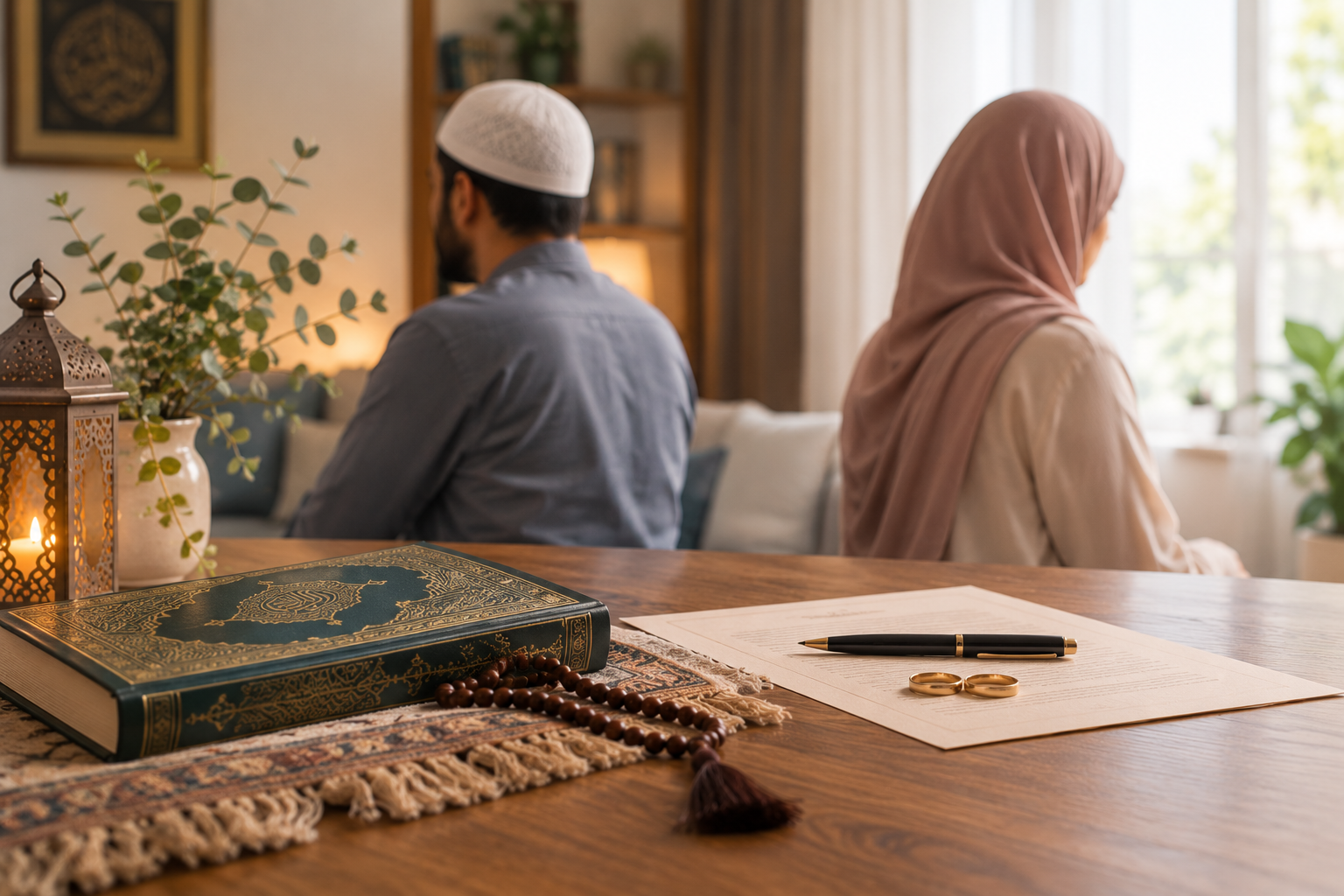
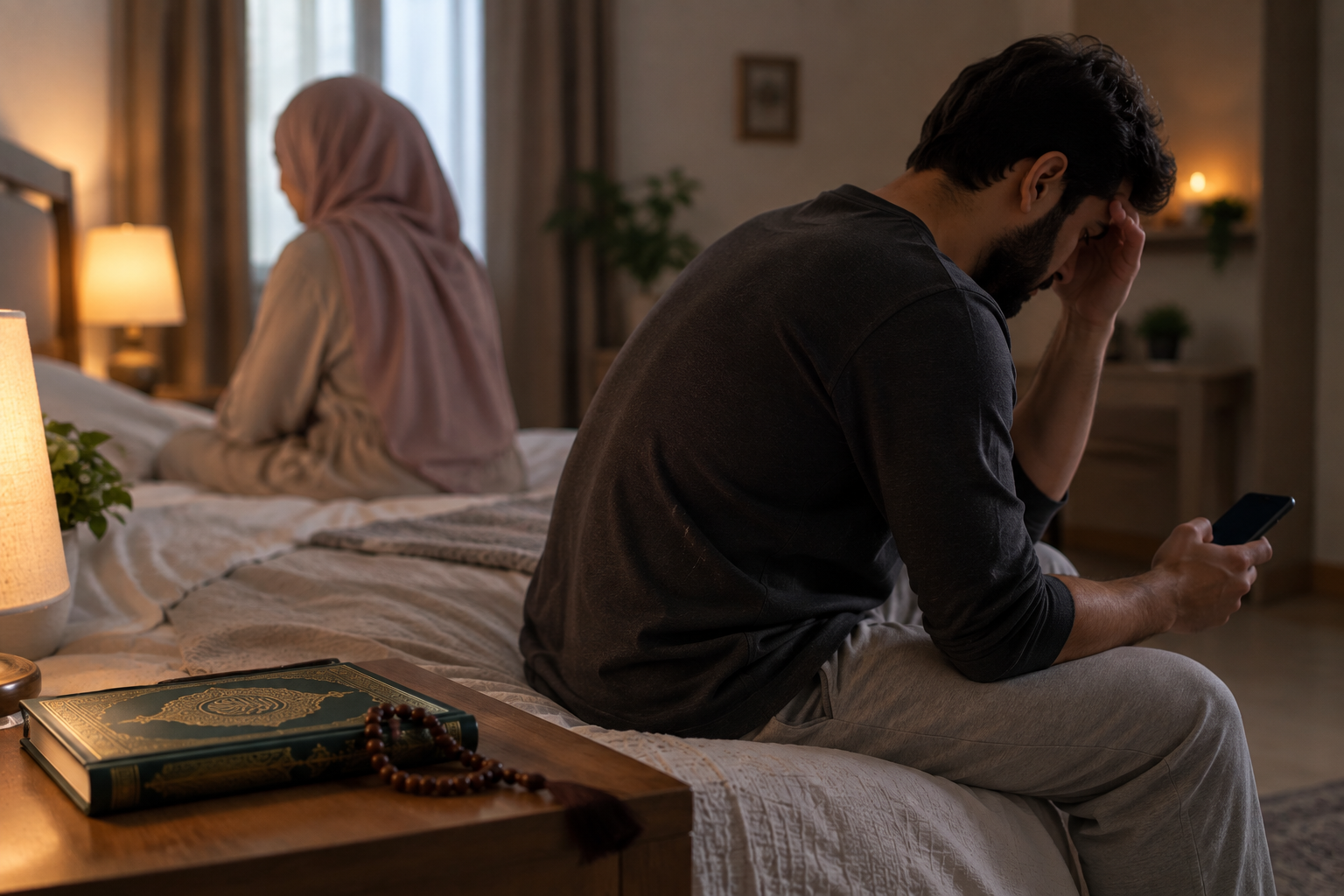
If you’re asking this question, something in your marriage has brought you to a place where staying feels unbearable and leaving feels terrifying. You’re probably exhausted — from trying, from hoping, from holding everything together while quietly wondering if this is the rest of your life.
And underneath the exhaustion is probably something else: guilt. The feeling that a good Muslim wife wouldn’t be asking this. That asking means you’ve failed. That Islam’s answer is simply “be patient” — full stop.
It isn’t. And you haven’t failed.
Islam has a clear, nuanced, and deeply merciful position on when staying in a marriage is required, when leaving is permitted, and when — in some cases — leaving may be the most faithful thing you can do. This guide will give you that honest framework, alongside the spiritual tools to help you find your way through one of the hardest decisions a person can face.
Quick answer
Your wife’s hijab is her personal religious obligation — not yours to enforce. As a husband, you are not her guardian over her choices, nor are you accountable for her sins. Your role is to create the conditions in your home where goodness is easy, not to compel obedience. Islam asks you to advise with kindness, to model deen, and to never force. The Qur’an is clear: there is no compulsion in religion (Surah Al-Baqarah 2:256). Your responsibility is encouragement, patience, and sincere du’a — not control.
First: Understand What the Quran Actually Says About Your Role
There is a verse many husbands are told in this context that requires very careful handling:
"Men are the protectors and maintainers (qawwamun) of women, by what Allah has given one over the other and what they spend from their wealth."
Surah An-Nisa (4:34)
Qiwamah is frequently misused to mean “a husband has authority over his wife’s religious practice.” This is not what the scholars of tafsir understood. Qiwamah refers to financial provision, physical protection, and responsible leadership of the household — not spiritual policing of his wife’s personal obligations to Allah.
The Qur’an also says, clearly and without caveat:
"There is no compulsion in religion."
Surah Al-Baqarah (2:256)
This verse is not suspended inside marriage. Your wife’s iman, her practice, and her relationship with Allah are between her and her Creator. You are her husband — not her Lord.
And then there is the verse about your own role when you disagree:
"And live with them in kindness (ma'ruf)."
Surah An-Nisa (4:19)
Living with her in kindness while she is not yet where you’d want her to be religiously is not compromise — it is Islam. It is the prophetic model.
Guidance from the Sunnah: How the Prophet ﷺ Led His Household
The Prophet ﷺ never coerced any member of his household into practice. His approach was consistent: embody what is good, speak what is true with gentleness, and leave the outcome with Allah.
He said:
"Make things easy and do not make them difficult. Give good news and do not drive people away."
(Sahih al-Bukhari, no. 69 — Sahih)
This was his general principle of da’wah — and da’wah to your own wife is still da’wah. The same rule applies. Pressure, criticism, and repeated confrontation do not open hearts. In real situations, they tend to harden them.
He also said:
"The best of you are those who are best to their wives."
(Sunan Ibn Majah, no. 1977 — Sahih)
Note: this hadith has no attached condition — “best to their wives when she practices correctly.” There is no such qualification. You are called to be the best to her now, in the state she is in.
The Prophet ﷺ also said: “None of you truly believes until he loves for his brother what he loves for himself.” Extend this to your wife. You want her to experience the beauty and protection of hijab. That desire, when it comes from genuine love and not ego or social pressure, is righteous. The way you express that desire is what will determine whether it ever reaches her heart.
Why She May Not Be Wearing Hijab — What NOT to Assume
Before you can respond wisely, you need to understand what’s actually happening. And the most common mistake husbands make is assuming they already know.
What she may actually be going through:
- She believes in hijab theologically but doesn’t feel spiritually ready — and she knows her own heart better than you do
- She had a painful experience with hijab in the past (workplace, family pressure, bullying) that created complex associations
- She grew up in a cultural environment where it wasn’t practised and is working through that internally
- She is experiencing a dip in her overall iman and hijab feels like one part of a larger struggle
- She feels that if she wears hijab without it coming from her heart, it would be hollow — and she has integrity about that
- She is afraid — of your family’s judgment, of social scrutiny, of how her life might change
What NOT to assume:
That she doesn’t care about deen
That she’s doing it to defy you
That her iman is weak or her taqwa is absent
That other women who wear hijab are automatically “better” than her
That pressure from you is what’s holding her back — it may in fact be making the journey harder
A woman who feels controlled rarely moves toward the thing the controller wants. She moves away from it.
The Prophetic Story Worth Sitting With
When we think of hearts that seemed unlikely to change — and then did — we think of Umar ibn al-Khattab (رضي الله عنه). He was once one of the fiercest opponents of Islam. He wanted to kill the Prophet ﷺ. And yet Allah turned his heart completely, in a moment, through a verse of the Qur’an.
The Prophet ﷺ had made du’a: “O Allah, strengthen Islam through whichever of the two Umars is more beloved to You.” And Allah answered.
The lesson for you: the changing of hearts is Allah’s domain, not yours. Your du’a for your wife’s guidance is not a small thing. It is reaching the One who controls every heart. Trust that.
Self-Reflection Questions for the Husband Reading This
These are worth sitting with honestly before you take any action:
- Is my desire for her to wear hijab coming from genuine care for her akhira — or from how it reflects on me socially?
- Have I made my home a place where she wants to grow closer to Allah — or one where deen feels like an obligation imposed on her?
- Do I hold myself to the same standard of religious growth I’m expecting of her?
- Have I ever told her what I love about her, independent of her level of practice?
- When she imagines coming to me about something she’s struggling with in her deen — does she feel safe to do that?
This last one matters most. Many wives don’t share their genuine internal journey with their husbands because they expect to be lectured, not listened to.
Spiritual Remedies: What You Can Do Spiritually
Your spiritual role here is underestimated. You have access to tools your words never will.
Du’a for her guidance — The Prophet Ibraheem (عليه السلام) made du’a for his father’s guidance for years. Du’a for someone’s hidayah is one of the most sincere expressions of love. Ask Allah specifically: O Allah, soften her heart to Your command and make it beloved to her.
Your own ibadah — When a husband increases his taqwa, there is often a genuine, documented effect on the household atmosphere. This isn’t mysticism — it’s that sincerity and spiritual presence are felt. Be someone whose deen she is drawn toward, not pushed away from.
Istighfar for yourself — Ask forgiveness for moments you may have made deen feel heavy for her rather than beautiful. This is not self-blame; it’s spiritual hygiene that opens doors. You can read more about how istighfar changes your marriage here.
Tahajjud — Stand in the last third of the night and mention her by name. Ask Allah for what you cannot engineer yourself. Tahajjud for marriage problems is one of the most underused resources a husband has.
If the fear of leaving is fear of the unknown — what will I do, how will I manage — this dua anchors you in the reality that Allah is sufficient. Your provision, your protection, your future — all in His hands.
What Should You Do Today?
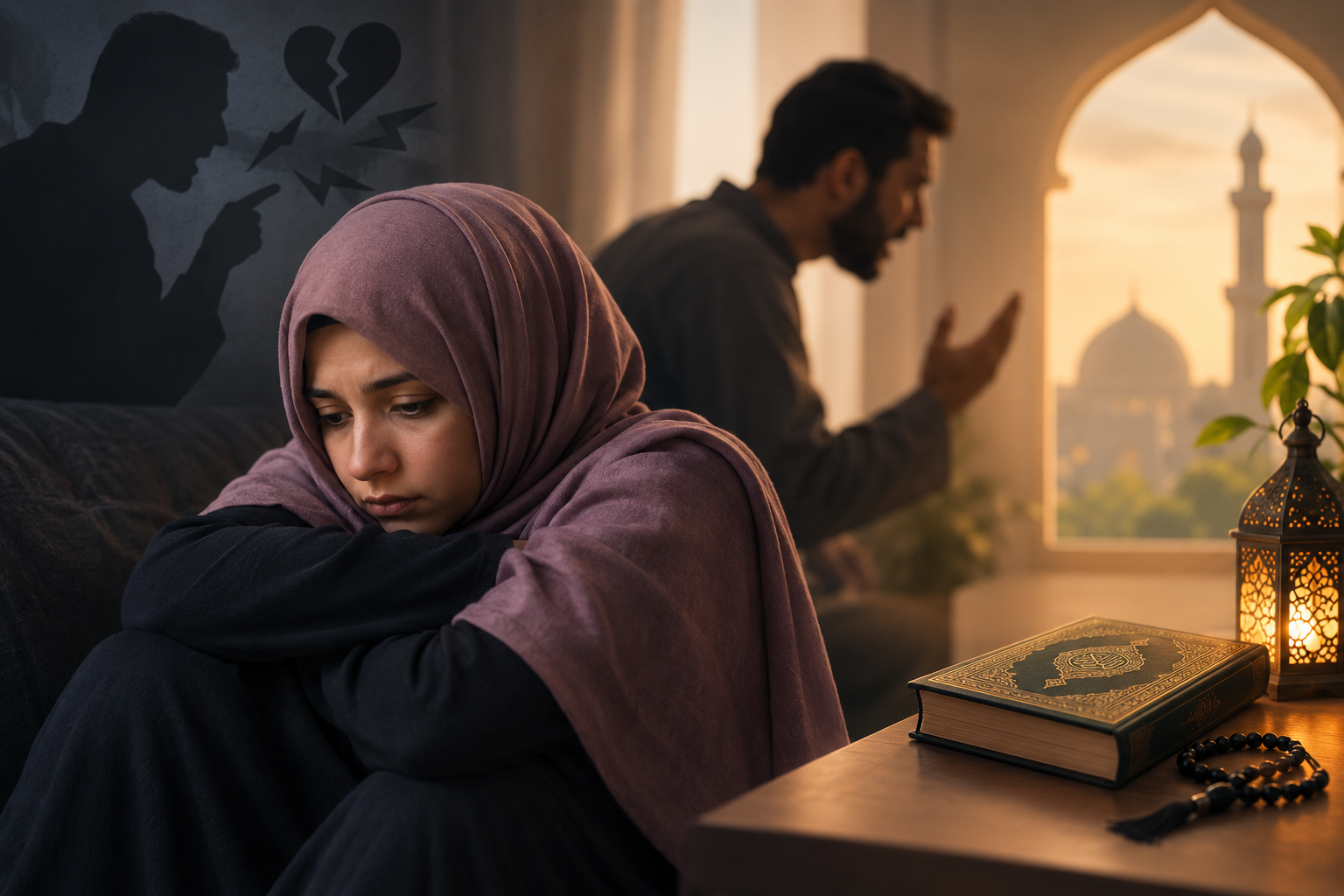
If you recognise emotional abuse in your marriage, here are steps you can take now:
- Stop framing this as a problem she needs to fix. Reframe it as a journey you want to support her through.
- Have one honest, gentle conversation — not a lecture, not a debate. Tell her you love her and that you want to understand where she's at. Then actually listen.
- Celebrate what she does practise. If she prays, fasts, reads Qur'an, gives charity — these are real. Acknowledging them costs you nothing and means everything.
- Make your home feel Islamic, not heavy. Play Qur'an. Keep your own salah. Talk about akhira naturally, not as a warning system.
- Make du'a for her every single day. Not as a transactional request but as an act of love.
- Do not weaponise hijab against her in arguments, in front of family, or as a measure of her worth to you.
- Ask yourself what she needs to feel safe enough to grow. Then provide that.
How to Talk to Her
Mistakes to Avoid
- Making hijab the measure of her worth as a wife. It is not. Her character, her kindness, her loyalty — these are her deen in action every day.
- Involving your family in this matter. External pressure rarely opens hearts. It usually creates resistance and resentment.
- Using religious guilt as a substitute for relationship. If she doesn’t feel loved and respected by you, a theological argument about hijab won’t move her — it will push her away from both you and deen.
- Giving ultimatums. This is not a prophetic approach. It damages trust and closes the very door you’re trying to open.
- Confusing your discomfort with her sin. Her choices and their consequences are between her and Allah. Your feelings about them are valid — but keep them in their right place.
- Ignoring your own areas of religious growth while focusing on hers. Accountability begins at home — with yourself.
Are You Accountable for Her Not Wearing Hijab?
This is a question many husbands carry quietly. The clear scholarly position is: no. Each soul carries its own burden (Surah Al-An’am, 6:164). You are not recorded against her sin, provided you have fulfilled your duty — which is to encourage goodness, model deen, and not facilitate or celebrate what is wrong.
What you are accountable for is how you treated her. Whether you were kind. Whether you made the path to deen feel beautiful or burdensome. Whether your home was a place of mercy — which is the very purpose of marriage, as Allah describes it in mawaddah and rahmah.
When to Seek Additional Help
Seek guidance from a knowledgeable scholar or Islamic counsellor if:
- This issue is creating serious, ongoing conflict in your marriage
- You feel resentment building toward her that is affecting your relationship
- She has expressed that she doesn’t believe in hijab theologically (this is a different conversation that needs careful, qualified guidance)
- Either of you is feeling spiritually isolated and unable to talk about deen together
A third party who is wise and trusted can help open conversations that have become stuck.
Key Takeaways
Your wife’s hijab is her personal obligation to Allah — your role is encouragement, never compulsion
“No compulsion in religion” applies inside marriage as much as outside it
Pressure and repeated confrontation tend to push people away from practice, not toward it
Your du’a for her hidayah is one of the most powerful things you can do — don’t underestimate it
Make your home a place where deen feels like a mercy, not a burden
You are accountable for how you treated her — not for her individual choices
The prophetic model is consistent: gentleness, example, and leaving outcomes with Allah
Emotional Closing
It takes a certain kind of love to want goodness for someone at the level of their akhira — not just their comfort in this dunya. That desire in you is real, and it’s worth honouring. But love that comes with pressure isn’t felt as love. It’s felt as a demand.
The most powerful thing you can do for your wife’s journey is to become a husband whose presence makes her want to be closer to Allah. Not because you insisted. Because she watched you, and she saw something worth moving toward.
Make your home a place of sakinah. Make your character a proof of what deen does to a person. And then leave the rest — with complete, trusting, peaceful surrender — in the hands of Al-Hadi, the One who guides.
He guided you. He can guide her too.
A Dua to End With
Allahumma-hdini wa saddidni. Allahumma inni as'aluka al-huda wat-tuqa wal-'afafa wal-ghina. "O Allah, guide me and keep me on the straight path. O Allah, I ask You for guidance, piety, chastity, and sufficiency."
(Sahih Muslim, no. 2721)
Say this for yourself. Then say it for her. Say it at tahajjud. Say it when the frustration rises and you don’t know what to do next. Al-Hadi is listening — and He loves to guide.
Frequently Asked Questions
Is it haram for a wife to not wear hijab?
Hijab is an obligation in Islam for Muslim women according to the majority scholarly position. Whether she wears it or not is a matter between her and Allah. Your role as her husband is to encourage, not to enforce.
Am I sinning if my wife doesn't wear hijab?
No — provided you are not actively discouraging her from it or mocking it. Each person carries their own accountability (Surah Al-An’am, 6:164). You are responsible for how you treat her, not for her individual choices.
Can I force my wife to wear hijab?
No. There is no compulsion in religion (Surah Al-Baqarah, 2:256), and this applies within marriage. Forcing your wife to wear hijab is not permitted Islamically and is likely to produce the opposite of the result you’re hoping for.
What if she refuses to discuss hijab with me at all?
Raise it gently once, without pressure or ultimatum. If she doesn’t want to discuss it, respect that. Continue to make du’a and focus on being the best possible husband. Doors open in Allah’s time, not ours.
Should I tell her family or involve others?
This is generally unwise and often counterproductive. It adds external pressure that breeds resentment rather than reflection. Handle this as a private matter between you, her, and Allah.
What if I feel resentful about this?
That’s a human reaction and worth acknowledging honestly. Speak to an Islamic counsellor or trusted scholar about navigating those feelings. Resentment that builds unchecked is harmful to your marriage. Understanding what a good marriage in Islam looks like can help reorient your focus.
Can du'a really change this?
The Prophet ﷺ prayed for Umar ibn al-Khattab’s guidance when he seemed the least likely to accept Islam. Allah answered. Du’a for someone’s hidayah is never wasted. Make it a daily practice and trust Al-Hadi — the One who guides.
On this page
Dua of the week
- "O Allah, I ask You for Your love, and the love of those who love You."
- Tirmidhi 3490