Introduction
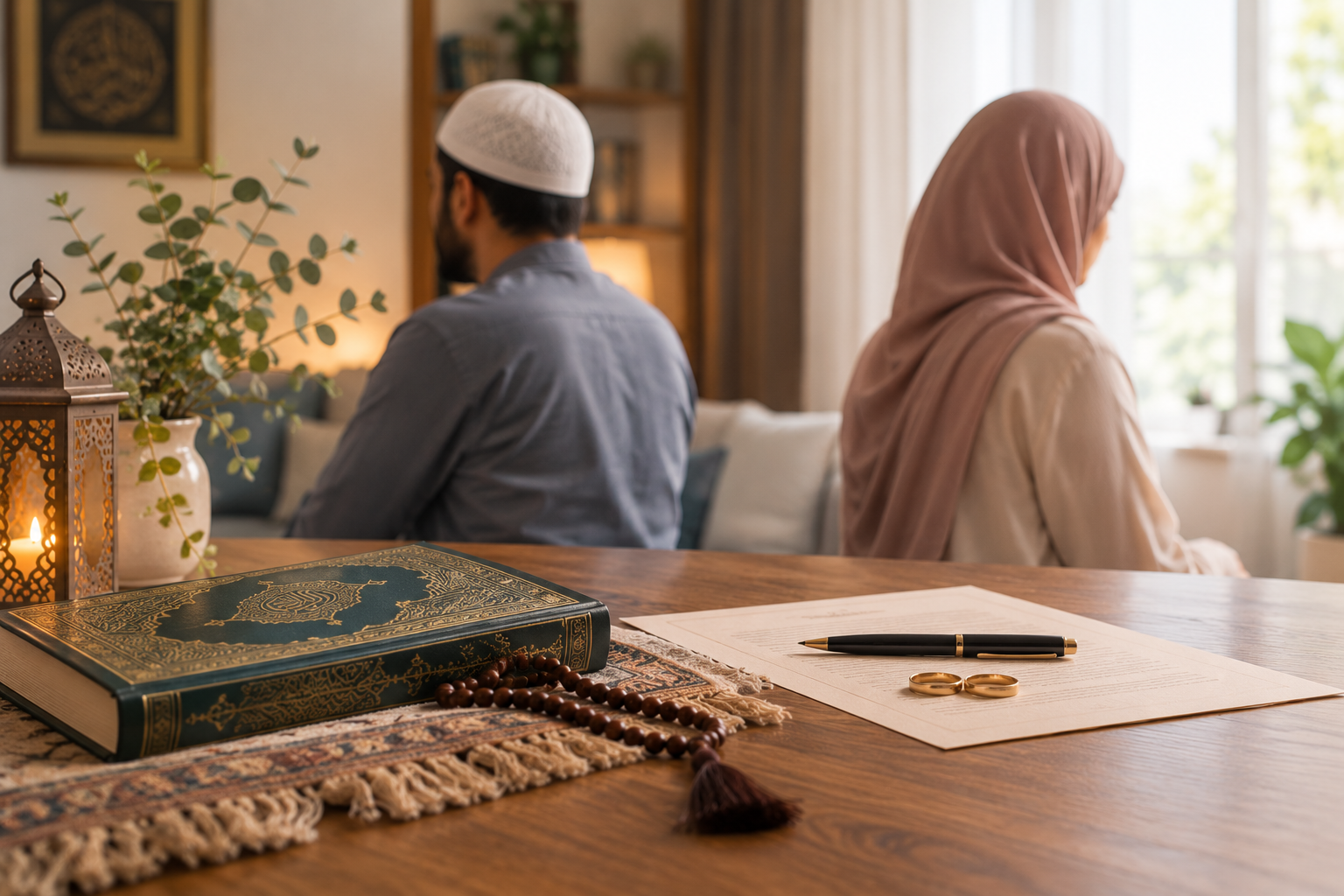
Every marriage has moments when words run out. An argument ends, feelings are hurt, and a silence settles between two people who usually can’t stop sharing their day with each other. If you’re in the middle of one of those silences right now — sleeping with your back to your spouse, moving around the same home like polite strangers — you already know how heavy that quiet can feel.
And somewhere in that heaviness, a question surfaces: how long is this actually okay? Is there a limit in Islam? Am I doing something wrong by staying silent — or is my spouse?
It’s a question people search for quietly, often late at night, hoping for clarity. And Islam does give a remarkably clear answer — one rooted in an authentic teaching of the Prophet ﷺ. But the answer comes with wisdom and nuance that most people miss. So let’s walk through exactly what Islam says, what the “three-day rule” really means, and — most importantly — how to break a painful silence and find your way back to each other.
Quick answer
In Islam, a husband and wife (like any two Muslims) should not stop speaking to each other out of anger for more than three days. This is based on an authentic hadith in which the Prophet ﷺ said it is not permissible for a Muslim to abandon (stop speaking to) his brother for more than three nights, and that the better of the two is the one who greets the other first. The three days are understood as a mercy — a short window to cool down and regain composure. Beyond that, deliberately continuing the silent treatment out of anger or to punish becomes sinful. The one exception is when distance is temporarily kept for a legitimate, sincere religious reason (such as gently discouraging clear wrongdoing) — but even then, cruelty, prolonged coldness, and emotional punishment are never justified.
The Three-Day Limit: What the Hadith Actually Says
The clearest guidance on this comes directly from the Sunnah. Anas ibn Malik (may Allah be pleased with him) reported that the Prophet ﷺ said:
"Do not hate one another, do not envy one another, do not desert (turn away from) one another. Be, O servants of Allah, brothers. It is not permissible for a Muslim to desert (stop talking to) his brother for more than three days."
(Sahih al-Bukhari 6065; Sahih Muslim)
In another authentic narration, the Prophet ﷺ added a beautiful detail:
"...they meet, and this one turns away and that one turns away. And the better of the two is the one who initiates the greeting (salam)."
(Al-Bukhari and Muslim)
So the guidance is explicit: three days is the outer limit for turning away from a fellow Muslim in anger — and your spouse is not only a fellow Muslim, but the closest companion you have. If the limit applies to any believer, it applies with even greater weight to the person you share your life, home, and bed with.
The term used in these hadith is hajr — deserting, boycotting, giving the cold shoulder. What Islam is addressing here is precisely the “silent treatment”: deliberately withholding speech and warmth from someone out of anger or to punish them.
Why Islam Allows Three Days — The Wisdom Behind It
You might wonder: if reconciliation is so encouraged, why allow three days at all? Why not require spouses to make up immediately?
Here lies the beautiful practical wisdom of Islam. It doesn’t demand the impossible. When we’re hurt or angry, we’re not always in a state to have a productive conversation. Forcing an immediate resolution while emotions are raw often makes things worse — leading to more hurtful words and deeper wounds.
So Islam grants a mercy: a short cooling-off period. Three days is enough time to let the initial heat of anger subside, to reflect, to gain perspective, and to return to the conversation with a calmer heart. It acknowledges our humanity — that “human beings get angry by nature,” as the scholars note — while placing a firm limit so that a temporary pause doesn’t harden into lasting estrangement.
The three days are meant to be a bridge back to each other, not a weapon. That distinction is everything.
When Silence Crosses the Line into Sin
Here’s what many people miss: the three-day allowance is for cooling down — not for punishing. The moment silence becomes a tool to hurt, control, or make your spouse “pay,” it has already lost its permissibility, even within those three days.
And beyond three days, deliberately continuing the silent treatment out of anger becomes clearly sinful. The scholars derived stern warnings from the narrations about prolonged abandonment. In one narration, the Prophet ﷺ indicated that whoever boycotts his brother beyond the permitted limit and dies in that state is in grave spiritual danger. This is not a small matter.
This is especially serious in marriage, because the silent treatment as a long-term pattern is a form of emotional harm. Using prolonged silence to control, punish, or manipulate a spouse is a kind of emotional cruelty — and it directly contradicts Allah’s command to “live with them in kindness” (Surah An-Nisa, 4:19).
If you recognize this pattern in your marriage — where silence stretches for weeks, or is used deliberately to wound — this is no longer about a cooling-off period. It has become something that needs to be addressed honestly. Our guide on what to do when your husband stops talking to you explores this pattern and how to respond to it in depth.
The One Legitimate Exception
Islamic scholars note a single exception to the three-day rule: when distance is kept temporarily for a sincere, legitimate religious reason — for example, a brief, measured distancing intended to gently discourage a spouse from persisting in a clear and serious wrong, in the hope it prompts reflection and return.
But this exception comes with heavy conditions, and it is widely misused, so it must be understood carefully:
- The intention must be genuinely for Allah’s sake and the other person’s benefit — not personal ego, revenge, or punishment.
- It applies to clear, serious wrongdoing — not everyday disagreements, hurt feelings, or getting your own way.
- It must be the approach most likely to bring good. If distancing would only worsen matters (as it often does in marriage), then it is not the right tool at all.
- It should never involve cruelty, contempt, or emotional abuse.
In the context of marriage, this exception is far narrower than people assume. It is not a license to give your spouse the cold shoulder for a week because they upset you. In the overwhelming majority of marital conflicts, the correct path is not distancing at all — it is patient, kind communication.
How the Prophet ﷺ Modelled Handling Conflict
It’s worth remembering that even when the Prophet ﷺ experienced tension in his own marriages, his way was never cruelty or cold, punishing silence.
There was an occasion when he chose to keep apart from his wives for a period over a specific matter — but even this was open, known, and time-bound, not a campaign of emotional punishment. His general character with his wives, as documented throughout the Seerah, was one of gentleness, humour, listening, and quick reconciliation. He raced with Aisha (may Allah be pleased with her), confided in his wives, and consistently returned warmth to his home.
This is the model: even in disagreement, the believer’s default is to move toward repair, not to entrench in distance. The goal is always to restore the mawaddah and rahmah — the love and mercy — that Allah placed between spouses.
The Better of the Two Is the One Who Greets First
Perhaps the most healing part of the entire teaching is this: the Prophet ﷺ said the better of the two people is the one who breaks the silence first with a greeting.
Think about what this reframes. In our culture of ego, we often see the one who “caves” first as the loser — the weaker one, the one who lost the standoff. Islam flips this completely. In Allah’s eyes, the one who swallows their pride, sets aside their anger, and reaches out first is the better of the two. The winner, spiritually, is the one who ends the coldness.
This single teaching, if a couple truly internalized it, could end the majority of drawn-out marital standoffs. Because when both spouses are quietly competing to not be the one who gives in, someone reaching out first — and knowing that Islam calls that person the better one — becomes an act of strength, not weakness.
So if you’re in a silence right now: be the better of the two. Offer the salam. Make the tea. Send the message. It is not defeat. It is exactly what the Prophet ﷺ praised.
How to Break the Silence — Practical Steps
Knowing you should end the silence and actually knowing how are two different things. Here are gentle, practical ways to bridge the gap:
- Start small and low-pressure. You don’t have to solve the entire conflict in your first words. A simple salam, a small gesture, a cup of tea placed beside them — these reopen the door without demanding an immediate deep conversation.
- Lead with warmth, not the argument. Reconnect emotionally before revisiting the issue. “I’ve missed talking to you” lands very differently than immediately relaunching the disagreement.
- Make dua before you approach. Ask Allah to soften both your hearts and guide the conversation. A few moments of sincere dua can transform the entire tone of what follows.
- Address the actual issue once calm. After warmth is restored, revisit what caused the rift — this time gently, without accusation. Our guide on how to talk to your spouse without starting a fight offers scripts for exactly this.
- Aim for understanding, not victory. The goal isn’t to win or extract an apology. It’s to understand each other and restore the closeness. When both spouses drop the scoreboard, reconciliation comes quickly.
Conclusion
So, how long can a husband and wife go without talking in Islam? The clear answer is: no more than three days — and even those three days are meant as a merciful pause to cool down, never as a weapon to wound.
Islam takes the bond between spouses seriously enough to protect it from the slow poison of prolonged silence. It acknowledges our human need to sometimes step back and breathe, while firmly refusing to let that pause harden into lasting distance. And it hands us the key to ending any standoff with dignity: be the one who reaches out first, and know that in doing so, you are the better of the two.
If your marriage has fallen into a pattern of long, painful silences, take heart. The very fact that you’re seeking guidance shows a heart that wants repair. Turn to Allah, take the first gentle step toward your spouse, and trust that the One who placed love between you can restore it — often faster than you expect.
A Dua to End With
Allahumma allif bayna quloobina, wa aslih dhata baynina, wahdina subula-s-salam.
“O Allah, unite our hearts, rectify what is between us, and guide us to the paths of peace.”
Say this before you reach out to your spouse. Ask Allah to melt the coldness between you and to make the first words easy. He is the Turner of hearts, and no silence is too long for Him to heal.
Frequently Asked Questions
How long can a husband and wife not talk to each other in Islam?
No more than three days. Based on an authentic hadith (Bukhari and Muslim), it is not permissible for a Muslim to stop speaking to a fellow Muslim out of anger for more than three days — and this applies to spouses, who share the closest of bonds.
Is the silent treatment haram in Islam?
Using silence to punish, control, or emotionally hurt your spouse is not permitted, and deliberately extending it beyond three days out of anger becomes sinful. A brief cooling-off period is allowed, but prolonged silent treatment is a form of emotional harm that contradicts the command to treat one’s spouse with kindness.
What does the three-day rule actually mean?
It means that after a conflict, spouses may have a short cooling-off period of up to three days to let anger subside — but they should not deliberately continue turning away from each other beyond that. The pause is a mercy for regaining composure, not a license for lasting estrangement.
Who should speak first after an argument in Islam?
The Prophet ﷺ said the better of the two is the one who greets the other first. Reaching out first is not weakness — it is exactly what earns the higher spiritual rank. Whoever ends the silence with a greeting is praised in Islam.
Is there ever a valid reason to keep distance longer than three days?
The only exception is a brief, sincere distancing for a legitimate religious reason — to gently discourage clear, serious wrongdoing in the hope of prompting reflection. But this is narrow, easily misused, must never involve cruelty, and rarely applies to ordinary marital disagreements, where kind communication is the correct path.
What if my spouse refuses to talk to me for a long time?
If your spouse maintains prolonged silence as a pattern, this is a form of emotional harm that needs addressing. Try reaching out with warmth first, involve a trusted mediator if needed, and if it’s part of a larger pattern of emotional cruelty, seek guidance from a knowledgeable, compassionate counselor or scholar.
On this page
Dua of the week
- "O Allah, I ask You for Your love, and the love of those who love You."
- Tirmidhi 3490