Introduction
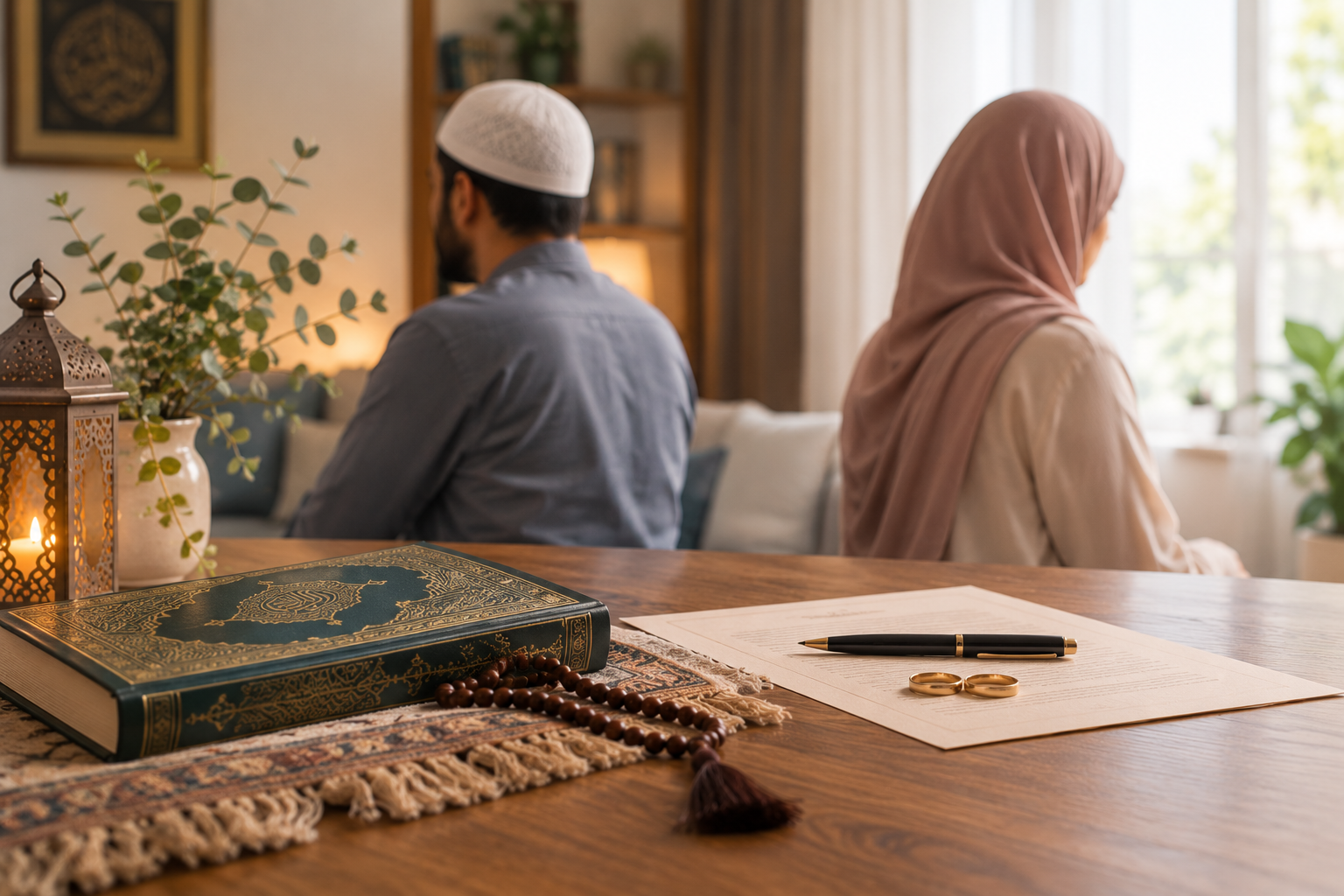
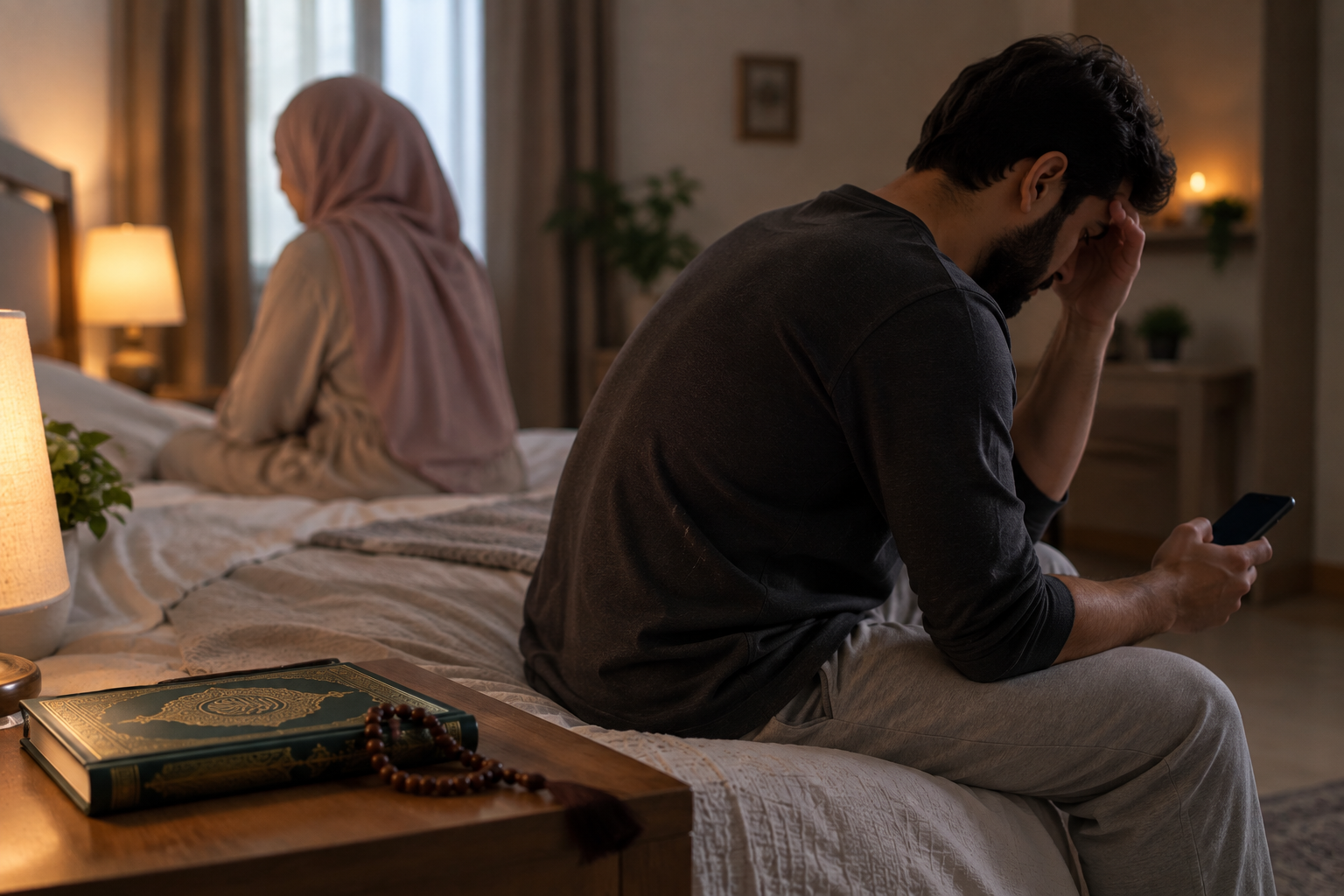
If you’ve found yourself lying next to your spouse at night, both of you exhausted, both of you quietly wondering where the closeness went — you’re not failing at marriage. You’re living through one of the most common and least talked-about seasons a Muslim couple goes through.
Children are a mercy and a trust from Allah. They’re also, in very practical terms, exhausting — physically, emotionally, and in ways that quietly eat into the space a marriage used to have for itself. What usually happens in practice isn’t a dramatic falling-out. It’s smaller than that: bedtime routines that stretch past 10pm, a body that’s touched-out by 8 different small hands all day, two people who used to talk for an hour now trading three-word updates about diapers and school pickup.
This isn’t a sign your marriage is broken. It’s a sign it’s carrying more weight than it used to — and like anything under new weight, it needs some deliberate support to stay steady.
Quick answer
A drop in intimacy after having children is one of the most common experiences in marriage, not a warning sign that something is wrong between you. Islam doesn’t treat physical closeness between spouses as separate from faith — it’s described as a source of comfort, a right owed to each other, and something worth actively protecting. The path back usually isn’t one dramatic conversation; it’s small, consistent effort: protected time together, honest communication about exhaustion instead of silence, and leaning on Allah through this season rather than assuming it’s permanent.
Why This Happens (And Why It's Not a Red Flag)
A common issue couples run into is assuming that reduced intimacy means reduced love. In most cases, it’s simpler and far less alarming than that:
- Physical exhaustion, especially for the parent doing most of the nighttime care
- Postpartum recovery and hormonal changes that genuinely affect desire
- A shift in identity — from “spouse” to “parent” — that both partners are adjusting to
- Loss of privacy, especially with young children sleeping nearby or co-sleeping
- Mental load — one or both spouses are so occupied managing the household that there’s little bandwidth left for anything else
- Simply not having talked about it, so both partners are quietly assuming things about the other that aren’t true
Recognizing which of these applies to your situation matters more than jumping straight to “we’ve lost our connection.”
What NOT to Assume
- Don’t assume this means your spouse is no longer attracted to you
- Don’t assume this is permanent — for the overwhelming majority of couples, this is a season, not a new normal
- Don’t assume your spouse is deliberately withholding affection out of resentment
- Don’t assume silence about it means your spouse doesn’t care — often it means they’re just as unsure how to bring it up as you are
- Don’t assume you’re the only couple experiencing this — this is one of the most common private struggles in early parenthood, Muslim or not
Self-Reflection Questions
- When was the last time we had an uninterrupted conversation that wasn’t about the kids or the household?
- Have I actually told my spouse how tired or touched-out I feel, or have I just gone quiet?
- Am I assuming my spouse isn’t interested, or have I actually asked?
- What would even ten minutes of undistracted time together look like this week — realistically?
Spiritual Remedies
Turning to Allah in this specific area isn’t separate from the practical work — it’s what makes the practical work sustainable.
Dua together, not just individually
Making dua as a couple — even briefly, even just “Ya Allah, help us stay close through this season” — creates a shared spiritual moment that itself rebuilds closeness.
Gratitude before frustration
Before raising what’s missing, take a moment to thank Allah for the children who are the reason things feel different. This isn’t about suppressing the difficulty — it’s about holding both truths: the exhaustion is real, and so is the blessing causing it.
Istighfar for resentment
If quiet resentment has built up on either side, regular istighfar helps soften what logic alone won’t touch.
Dua for barakah in your time
There’s a simple honesty in asking Allah to expand the blessing in the little time you do have together, since you can’t manufacture more hours in the day.
Can Allah Restore What Feels Lost?
Yes — and this is worth saying plainly, because in the middle of an exhausting season it doesn’t always feel true. Marriages that go quiet during the early parenting years reconnect all the time, often faster and more fully than either spouse expects, once the immediate physical demands ease even slightly. Allah placed mercy between you before children arrived, and that mercy doesn’t have an expiration date tied to how tired you both are this month.
Think of Umm Sulaym and Abu Talha (may Allah be pleased with them) — their household, like every household, went through hard and exhausting seasons, yet their marriage is remembered for its depth of loyalty and closeness. Difficulty in a season was never treated as evidence against the marriage itself.
Sabr and Tawakkul in This Season
Sabr here doesn’t mean silently accepting distance forever. It means giving yourselves permission to be in a hard season without treating it as a verdict on your marriage. Tawakkul means doing what’s within your control — talking honestly, protecting small windows of time, making dua together — and trusting Allah with how quickly things ease, instead of panicking that this is who you are now as a couple.
What Should You Do Today?
Not eventually. Today.
- Protect fifteen minutes tonight with no phones, even if you just sit together
- Make dua together for your marriage, even a short one
- Hank your spouse for one specific thing they did today
- Say one kind, non-logistical sentence to your spouse before you fall asleep tonight
- Put the kids to bed ten minutes earlier than usual, just once this week, and see what that space does
- Send your spouse one honest message about how you've been feeling — no blame, just honesty
How to Talk About This Without It Becoming Awkward or Hurtful
Mistakes to Avoid
- Letting resentment build silently instead of naming it early
- Comparing your marriage to how things were before kids as if that comparison is fair
- Bringing this up during an already exhausted, tense moment
- Treating this as a problem to fix in one conversation rather than a season to walk through together
- Assuming your spouse’s exhaustion is a reflection on you
When to Seek Additional Help
If this has stretched on for a long time with no honest conversation happening at all, if one spouse feels consistently rejected or resentful without resolution, or if postpartum depression or anxiety seems to be part of what’s going on, it’s worth speaking to a trusted counselor — Muslim marriage counselors and postpartum-informed therapists exist specifically for this. Seeking support here isn’t a sign of a failing marriage. It’s often what protects a good marriage through a genuinely hard stretch.
Key Takeaways
Reduced intimacy after having kids is common and does not mean your marriage has lost its foundation
Islam treats physical closeness between spouses as meaningful, rewarded, and worth protecting — not as an afterthought
Small, honest communication does more than one big dramatic conversation
Dua together, not just individually, rebuilds closeness in a way logistics alone can’t
If exhaustion turns into prolonged resentment or silence, get support rather than letting it sit
A Closing Word
If you’re in the middle of this season right now, know that you are not the only couple lying awake feeling this quiet distance and wondering if it means something’s wrong. It usually doesn’t. It usually just means you’re both stretched thin by something beautiful and demanding at the same time. Be gentle with each other. Say the honest thing instead of the resentful thing. And give it to Allah, the One who placed mercy between you in the first place.
A Dua to End With
"Rabbana hab lana min azwajina wa dhurriyyatina qurrata a'yun, waj'alna lil-muttaqeena imama." "Our Lord, grant us from among our spouses and offspring comfort to our eyes, and make us leaders for the righteous."
(Surah Al-Furqan, 25:74)
Frequently Asked Questions
Is it normal for intimacy to decrease after having a baby?
Yes, this is extremely common due to physical recovery, exhaustion, and the major identity and routine shifts that come with new parenthood.
What does Islam say about intimacy between spouses?
Islam treats it as a right owed to each other and a rewarded act, not merely a permitted one — described alongside affection and mercy as part of the purpose of marriage.
How long does this phase usually last?
It varies significantly by couple, but for most, the sharpest drop eases within the first year or two as routines stabilize, especially once open communication is happening.
How can we reconnect without pressuring each other?
Start with non-physical closeness — conversation, small gestures of appreciation, protected time together — and let physical intimacy follow naturally rather than forcing it.
Should I talk to my spouse about feeling distant?
Yes — silence tends to let resentment grow, while honest, gentle communication usually brings relief to both partners.
Is it selfish to want more intimacy while caring for young kids?
No. Wanting closeness with your spouse alongside caring for your children isn’t selfish — Islam doesn’t ask you to sacrifice your marriage for your parenting; both matter.
What if my spouse doesn't seem to feel the same lack of connection?
Yes, but frame it as an invitation to talk rather than an accusation — this dramatically changes how the conversation goes.
Can dua really help with something this practical?
Yes — dua doesn’t replace practical effort, but it changes the state both spouses are acting from, and many couples report real ease after making this a shared habit.
On this page
Dua of the week
- "O Allah, I ask You for Your love, and the love of those who love You."
- Tirmidhi 3490